


Santa Cristina (Antinori)
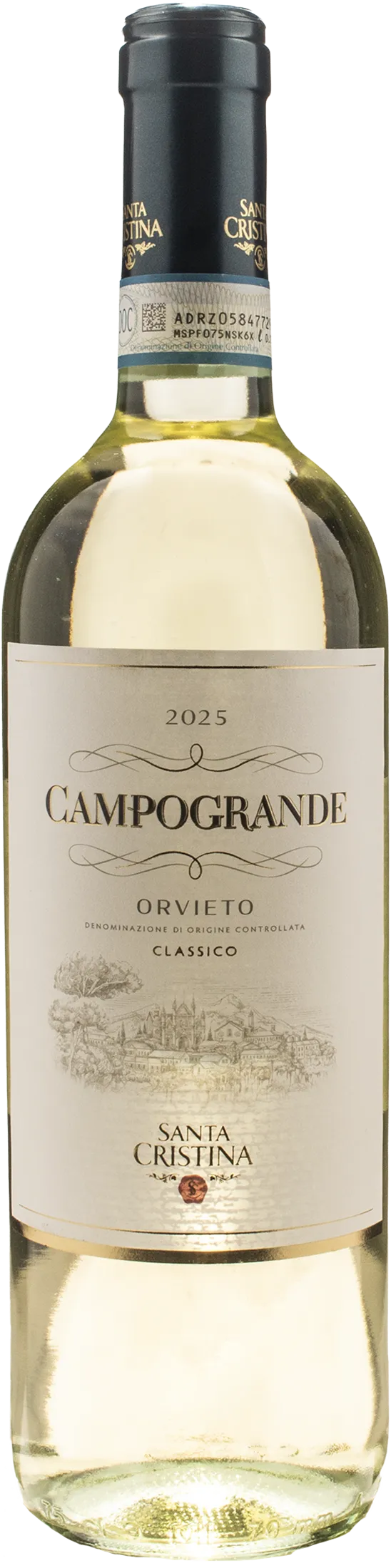
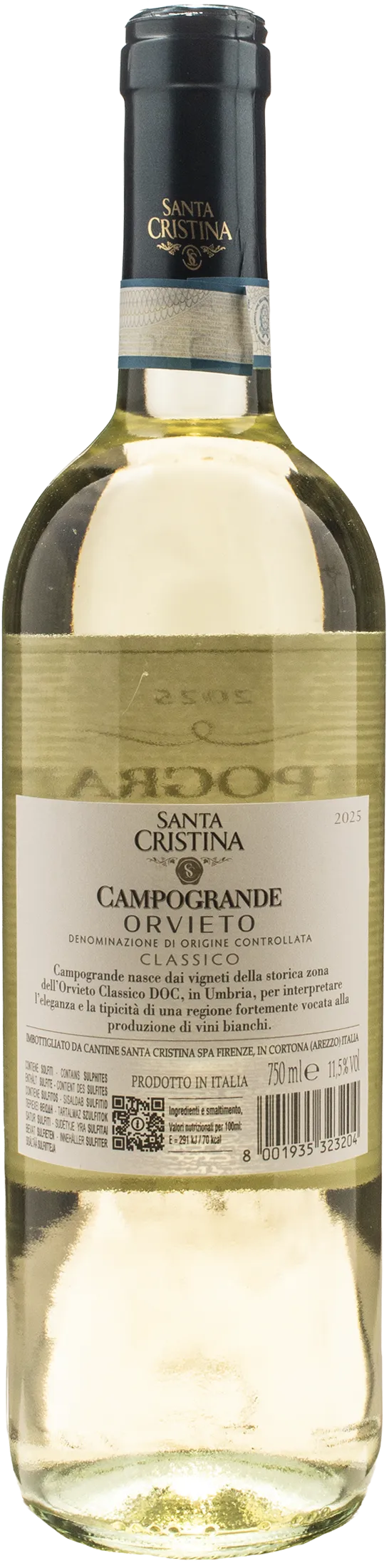
Orvieto Classico Campogrande 2025
| Denomination | DOC Orvieto Classico |
|---|---|
| Size | 0,75 l |
| Alcohol content | 11.5% by volume |
| Area | Umbria (Italy) |
| Grape varieties | Grechetto, Trebbiano Toscano |
| Aging | The wine was stored in stainless steel tanks at a controlled temperature of 10°C until bottling. |
- Name and vintage: Orvieto Classico DOC 2025, dry white wine from Umbria
- Grapes: blend of Grechetto and Procanico, harvested from mid-September
- Aromas: notes of apple, peach, apricot, orange blossom and hints of pear
- Vinification: must kept at 10°C, fermentation in stainless steel up to 18°C
- Serving and pairings: temperature of 11-13°C; ideal with aperitifs, fish, seafood and white meats
Description
What kind of wine it is
Campogrande Orvieto Classico by Santa Cristina is a refined Umbrian white wine with a fresh and pleasantly aromatic profile. Crafted from a skilful blend of Grechetto and Procanico grapes, it stands out for its fruity and floral bouquet with hints of apple, peach and delicate orange blossom. On the palate, it is smooth and rounded, balanced by a subtle acidity that leads to a distinctly dry finish. Thanks to its versatile nature, it is an excellent choice for an aperitif and pairs perfectly with seafood dishes and white meats.
Where it comes from
This white wine originates from the historic hilly area surrounding the city of Orvieto, a prime territory for viticulture. The vines grow on predominantly clay soils with fluvio-lacustrine deposits of volcanic origin, elements that give the wine structure and elegance. The hilltop microclimate, influenced by the valleys of the Paglia and Tiber rivers, ensures optimal ripening of the grapes, enhancing the natural freshness of the white wines typical of Orvieto Classico.
How it is produced
The production process begins in mid-September with the separate harvesting of the different varieties. In the winery, the grapes are destemmed and subjected to a gentle pressing. The must is immediately cooled to encourage natural clarification, then moves on to fermentation in stainless steel tanks at a controlled temperature, thus preserving all the aromatic intensity. Afterwards, the wine matures in steel at low temperatures, a crucial step to stabilise its balance and maintain the liveliness of the primary aromas intact.
History and Curiosities
Born at the Santa Cristina Estate, whose winery celebrated sixty years since its first vintage, Campogrande embodies the excellence of Orvieto Classico DOC. The designation represents a cornerstone of Umbrian production, thanks to the unique volcanic geology and the microclimate of the Paglia and lower Tiber valleys. This area, stretching around the famous Tuff Cliff, pays homage to one of the few cities in the world whose name is inextricably linked with that of its wine.
Tasting notes

Perfume

Color

Taste
Serve at:
08 - 10 °C
Longevity:
03 - 05 years

- Start up year: 2006
- Oenologist: Filippo Bezzi, Fabrizio Balzi
The care and attention always given to the vineyards and in the cellar have been the stimulus for constant innovation and to deal with native and international varietals, giving rise to a family of different products but distinguished by the same style, the result of an unbreakable bond between the vineyard, terroir, and human labor.
The products of the family Santa Cristina were born from this simple philosophy, thanks to an ongoing dialogue with the earth. Since 1946 continues this dedication, to keep still pristine quality of Santa Cristina. Read more


| Name | Santa Cristina Orvieto Classico Campogrande 2025 |
|---|---|
| Type | White still |
| Denomination | Orvieto DOC |
| Vintage | 2025 |
| Size | 0,75 l |
| Alcohol content | 11.5% by volume |
| Grape varieties | Grechetto, Trebbiano Toscano |
| Country | Italy |
| Region | Umbria |
| Vendor | Santa Cristina (Antinori) |
| Story | History and Curiosities Born at the Santa Cristina Estate, whose winery celebrated sixty years since its first vintage, Campogrande embodies the excellence of Orvieto Classico DOC. The designation represents a cornerstone of Umbrian production, thanks to the unique volcanic geology and the microclimate of the Paglia and lower Tiber valleys. This area, stretching around the famous Tuff Cliff, pays homage to one of the few cities in the world whose name is inextricably linked with that of its wine. |
| Origin | Cortona (Arezzo) |
| Soil composition | Predominantly clayey with fluvio-lacustrine deposits |
| Harvest | Second week of September |
| Fermentation temperature | 18 °C |
| Production technique | Fermentation in stainless steel tanks at controlled temperature (maximum 18°C), with must cooling to 10°C and resting in steel until bottling |
| Wine making | The Procanico and Grechetto grapes are harvested separately, then destemmed and very gently pressed; the must is cooled to 10°C to encourage natural clarification and transferred to stainless steel tanks, where alcoholic fermentation takes place at a controlled temperature not exceeding 18°C; the wine then rests in stainless steel at a low temperature until bottling. |
| Aging | The wine was stored in stainless steel tanks at a controlled temperature of 10°C until bottling. |
| Allergens | Contains sulphites |