


Ricasoli 1141
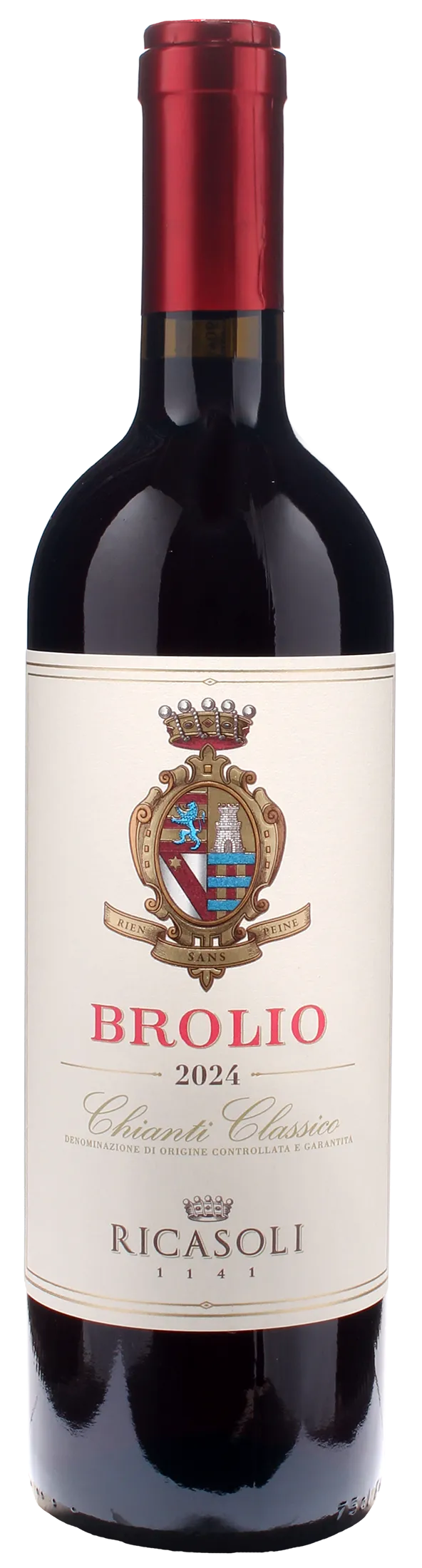
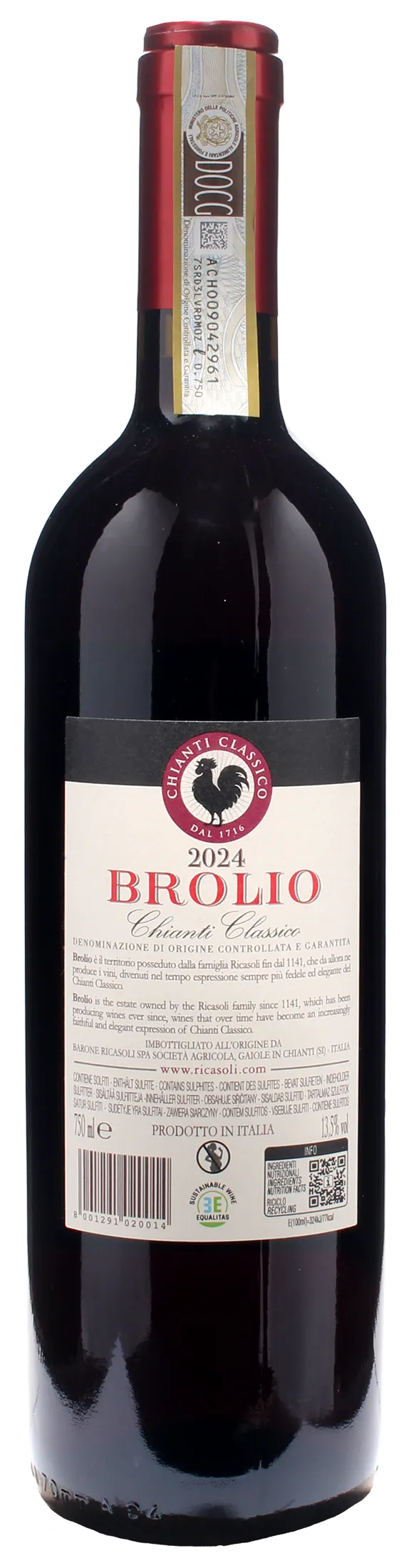
Chianti Classico Brolio 2024
Other years:
2023| Denomination | DOCG Chianti Classico |
|---|---|
| Size | 0,75 l |
| Alcohol content | 13.5% by volume |
| Area | Tuscany (Italy) |
| Grape varieties | 95% Sangiovese, 5% Colorino |
| Aging | Ageing for approximately 9 months in second and third-fill tonneaux, followed by 3–6 months in the bottle |
| Other years | 2023 |
- Name: Ricasoli 1141 Chianti Classico Brolio 2024 DOCG
- Grapes: 95% Sangiovese and 5% Colorino; dry and elegant style
- Vinification: Fermentation in steel at 24–27°C and maceration on the skins
- Maturation: approximately 9 months in small, previously used oak barrels (second or third use)
- Profile: Notes of cherry and herbs; serve at 16–18°C with meats and cheeses
Description
What type of wine it is
Chianti Classico Brolio is a still red wine that embodies the essence of the Ricasoli estate. This blend of Sangiovese and Colorino is distinguished by an intense ruby colour and a bouquet ranging from red fruits and cherry to violet and Mediterranean herbs. On the palate, it proves elegant, with a lively acidity and velvety tannins that shape its structure, accompanied by a long, persistent finish enhanced by delicate spicy notes. It represents an authentic and harmonious interpretation of the Chianti Classico territory in every sip, thanks to fermentation in steel and ageing in barrels.
Where it comes from
This red originates in Tuscany, from the vineyards surrounding the historic Brolio Castle. The vines, grown between 280 and 480 metres above sea level, benefit from an ideal south-facing exposure. The terroir is characterised by an extraordinary geological variability, with soils composed of sandstone, galestro, alberese, marine deposits, and clayey river terraces. This complex stratification gives the wine a remarkable mineral complexity and an impeccable structural balance.
How it is produced
The harvest involves a careful selection of the grapes. The vinification begins with fermentation in stainless steel at a controlled temperature, accompanied by maceration on the skins for about two weeks for a balanced extraction of colour. Afterwards, the wine matures for nine months in second and third-passage wooden barrels, a choice that allows the tannins to be refined while preserving the integrity of the fruit. A period of ageing in the bottle completes the process, stabilising the aromatic profile and providing a clear, harmonious sip of great definition.
History and interesting facts
The Barone Ricasoli family has been producing wine at Castello di Brolio since 1141. This Chianti Classico combines Sangiovese and Colorino in a unique territory: the vineyards grow on five geological formations, including galestro and alberese, providing an extraordinary mineral complexity. An excellence awarded 91 points by James Suckling and 90 by Wine Spectator.
Awards
-
2024
 91
91/100
James Suckling is an influential American wine critic and journalist who worked at Wine Spectator for 30 years. He left the magazine in 2010 to start his own website and guidebook (JamesSuckling.com). He specialises in Italian and Bordeaux wines.
-
2024
 90
90/100
Wine spectator is the most influential wine guide on the internet.
Tasting notes

Perfume

Color

Taste
Serve at:
16 - 18 °C
Longevity:
05 - 10 years
Decanting time:
1 hour
- Start up year: 1141
- Oenologist: Carlo Ferrini
- Bottles produced: 2.500.000
- Hectares: 235
Francesco Ricasoli, current owner and President of the company, has generated new ideas and concepts to render the vineyards sustainable. The ongoing study of soil types and the clonal selection of the Brolio Sangiovese are among his greatest passions, and he has totally renovated the vineyards and completely mapped them. The new wines are therefore the expression of research carried out with the same scientific rigor of his illustrious ancestor but with a contemporary spirit, like a runner receiving the baton and carrying it forward with renewed energy. Read more


| Name | Ricasoli 1141 Chianti Classico Brolio 2024 |
|---|---|
| Type | Red green still |
| Denomination | Chianti Classico DOCG |
| Vintage | 2024 |
| Size | 0,75 l |
| Alcohol content | 13.5% by volume |
| Grape varieties | 95% Sangiovese, 5% Colorino |
| Country | Italy |
| Region | Tuscany |
| Vendor | Ricasoli 1141 |
| Story | History and interesting factsThe Barone Ricasoli family has been producing wine at Castello di Brolio since 1141. This Chianti Classico combines Sangiovese and Colorino in a unique territory: the vineyards grow on five geological formations, including galestro and alberese, providing an extraordinary mineral complexity. An excellence awarded 91 points by James Suckling and 90 by Wine Spectator. |
| Origin | Brolio Castle, Chianti Classico (Tuscany, Italy) |
| Soil composition | Five main geological formations: Chianti Macigno (sandstones), Scaglia Toscana (galestro), Monte Morello (alberese), marine deposits (sandy deposits with clay at depth) and ancient fluvial terrace (silty deposits with the presence of clay). |
| Cultivation system | Spurred cordon and Guyot |
| Harvest | September–October |
| Fermentation temperature | 24 to 27 °C |
| Fermentation | 14–16 days |
| Production technique | Fermentation in stainless steel at a controlled temperature (24–27 °C) with maceration on the skins for 14–16 days; ageing for approximately 9 months in second- and third-passage tonneaux. |
| Wine making | Fermentation in stainless steel at a controlled temperature of 24–27 °C, with maceration on the skins for 14–16 days; ageing for approximately 9 months in second and third-fill tonneaux. |
| Aging | Ageing for approximately 9 months in second and third-fill tonneaux, followed by 3–6 months in the bottle |
| Total acidity | 5.42 gr/L |
| PH | 3.37 |
| Residual sugar | 1.4 gr/L |
| Dry extract | 27.69 gr/L |
| Allergens | Contains sulphites |