


Pico Maccario
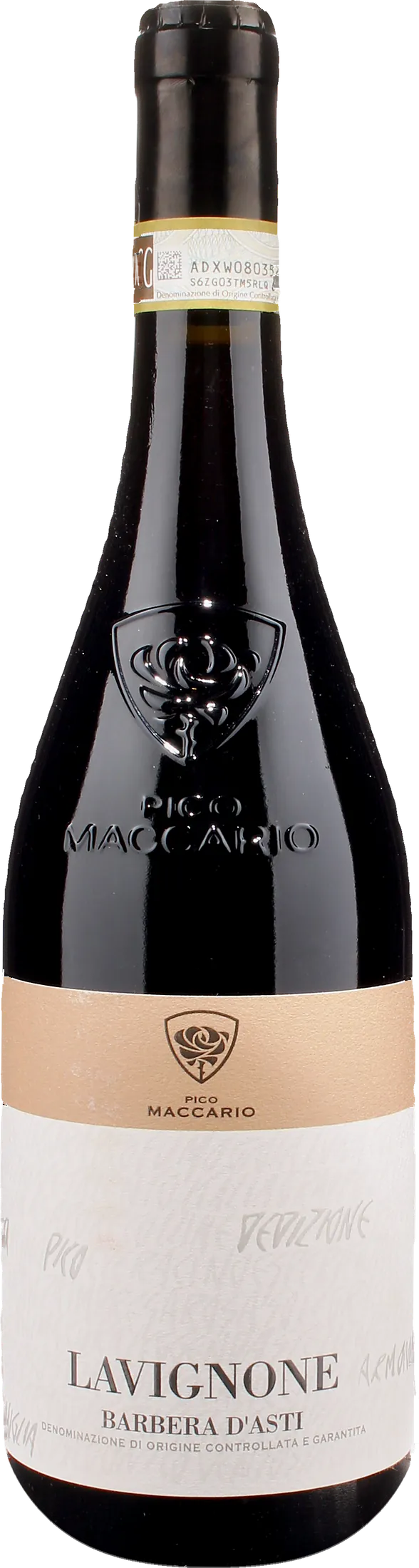
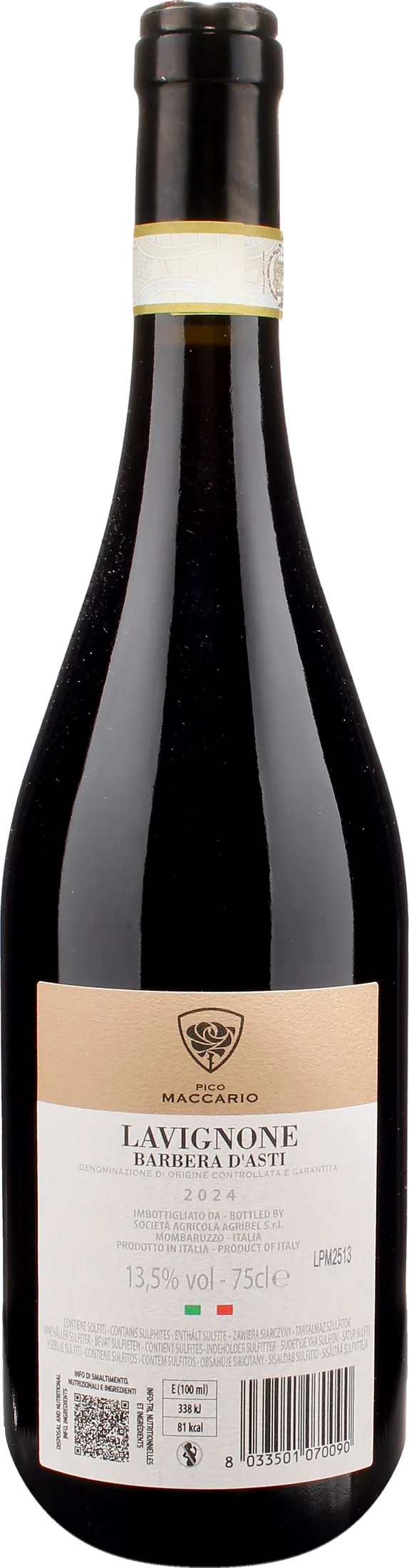
Barbera d'Asti Lavignone 2024
| Denomination | DOCG Barbera d'Asti |
|---|---|
| Size | 0,75 l |
| Alcohol content | 13.5% by volume |
| Area | Piedmont (Italy) |
| Grape varieties | 100% Barbera |
| Aging | Stainless steel tanks for a period of 9 months during which several rackings are carried out. Further ageing in the bottle before sale. |
- Name and grape: Barbera d’Asti DOCG 2024, 100% Barbera grapes
- Intense aroma: notes of cherry, plum and violet, enriched by warm spices and wild herbs
- Balanced flavour: lively acidity, delicate tannins, medium body and long finish
- Vinification in steel: fermentation 28-30°C, maceration 10-12 days, ageing for 9 months
- Serving and pairings: at 16-18°C, ideal with meat sauces, mushrooms, roasts and cheeses
Description
Style of wine
Lavignone by Pico Maccario is a Piedmontese red wine that expresses the soul of Barbera, revealing an intense ruby colour. Part of the Barbera d’Asti Denominazione di Origine Controllata e Garantita (DOCG), it offers a rich aromatic profile of cherry, plum and violet, enriched by warm spices and wild herbs. Produced through fermentation and ageing in stainless steel, on the palate it is distinguished by a vibrant acidity, balanced by soft tannins and a medium body leading to a harmonious and persistent finish, embellished with light nuances of vanilla.
Origin
The grapes are grown on the Monferrato hills, in the municipality of Mombaruzzo, at an altitude of approximately 180 metres with a west-southwest exposure. The vineyards are rooted in sandy and clay soils of Pleistocene origin with fluvial deposits, which give the wine freshness and balance. The environment benefits from a temperate continental climate, with cold winters and hot summers that favour the optimal ripening of the bunches and the aromatic development typical of the Asti area.
Winemaking
The process begins with a careful selection of the bunches and gentle destemming. Fermentation in stainless steel takes place at a controlled temperature, with maceration for about twelve days accompanied by frequent punching down and pumping over to extract colour and aromas. The wine ages for nine months in stainless steel with regular racking, followed by a period of resting to consolidate the structure.
History and interesting facts
Lavignone originates from hills of Pleistocene origin with ancient fluvial deposits. The wine boasts prestigious accolades such as the Tre Bicchieri from Gambero Rosso, 90 points from James Suckling and inclusion in Wine Spectator’s Top 100.
Awards
-
2024
 3
3This guide is highly respected and offers the most comprehensive review of Italian wines. It has a long tradition and is based on blind tastings carried out by over 100 experts.
-
2024
 90
90/100
James Suckling is an influential American wine critic and journalist who worked at Wine Spectator for 30 years. He left the magazine in 2010 to start his own website and guidebook (JamesSuckling.com). He specialises in Italian and Bordeaux wines.
-
2024
 3
3Italian Sommelier Association (AIS) guide
Tasting notes

Perfume

Color

Taste
Serve at:
14 -16 °C
Longevity:
05 - 10 years
Decanting time:
1 hour

- Start up year: 1997
- Oenologist: Roberto Olivieri
- Bottles produced: 800.000
- Hectares: 100
Since 1997 it has been run by the two brothers Pico and Vitaliano Maccario who have been able to combine the main native vine also with international vines. Thus, most of the 85 hectares of vineyards are dedicated to Barbera, then subdivided into Merlot, Cabernet Sauvignon, Chardonnay, Sauvignon, Freisa and Favorita.
The company is in contemporary style both in the management of the vineyards and in the technological innovations in the cellar. Even the logo is very innovative with a stylized rose that wants to indicate its position instead of traditional and important next to each row.
We are pleased to officially inform you that the Barbera d'Asti Lavignone 2023 has been awarded the Tre Bicchieri® of the guide Vini d'Italia 2025. An achievement that also this year confirms the loyalty of our customers and our continuous commitment to guarantee, from the vineyard to the glass, the highest quality that distinguishes us. Read more


| Name | Pico Maccario Barbera d'Asti Lavignone 2024 |
|---|---|
| Type | Red still |
| Denomination | Barbera d'Asti DOCG |
| Vintage | 2024 |
| Size | 0,75 l |
| Alcohol content | 13.5% by volume |
| Grape varieties | 100% Barbera |
| Country | Italy |
| Region | Piedmont |
| Vendor | Pico Maccario |
| Story | History and interesting facts Lavignone originates from hills of Pleistocene origin with ancient fluvial deposits. The wine boasts prestigious accolades such as the Tre Bicchieri from Gambero Rosso, 90 points from James Suckling and inclusion in Wine Spectator’s Top 100. |
| Origin | Mombaruzzo (Asti) |
| Climate | Continental climate tempered by Mediterranean influence |
| Soil composition | Hills of Pleistocene origin with ancient fluvial deposits; predominantly sandy and clayey soils. |
| Cultivation system | Guyot |
| Harvest | September |
| Fermentation temperature | 28–30 °C |
| Fermentation | 10–12 days |
| Production technique | Careful selection of the grapes and gentle crushing and destemming; fermentation in temperature-controlled stainless steel tanks with maceration, punching down and pumping over; ageing in steel followed by subsequent ageing in the bottle. |
| Wine making | Careful selection of the grapes and gentle crushing and destemming. Fermentation in stainless steel tanks at a controlled temperature (28–30°C) with maceration for 10–12 days, with frequent punching down and pumping over. Regular racking during ageing. |
| Aging | Stainless steel tanks for a period of 9 months during which several rackings are carried out. Further ageing in the bottle before sale. |
| Total acidity | 5.8 gr/L |
| Allergens | Contains sulphites |