


Dorigati
Trento Blanc de Blancs "Om de Fer" Brut
| Denomination | DOC Trento Spumante Bianco |
|---|---|
| Size | 0,75 l |
| Alcohol content | 13.0% by volume |
| Area | Trentino Alto Adige (Italy) |
| Grape varieties | Chardonnay, Pinot Bianco |
| Aging | In steel and old barriques before bottling, then about 24 months of ageing on the lees. |
- Name and style: Trento DOC, white sparkling wine Metodo Classico Brut, 13% vol
- Grape varieties: Chardonnay and Pinot Blanc; hand-picked in early September
- Aroma and taste: notes of citrus, baked apple and pastry; creamy and very fresh on the palate
- Perlage and ageing: fine and persistent bubbles; around 24 months on the lees
- Serving and pairings: 8–10 °C; ideal as an aperitif and with fish, shellfish, cheeses
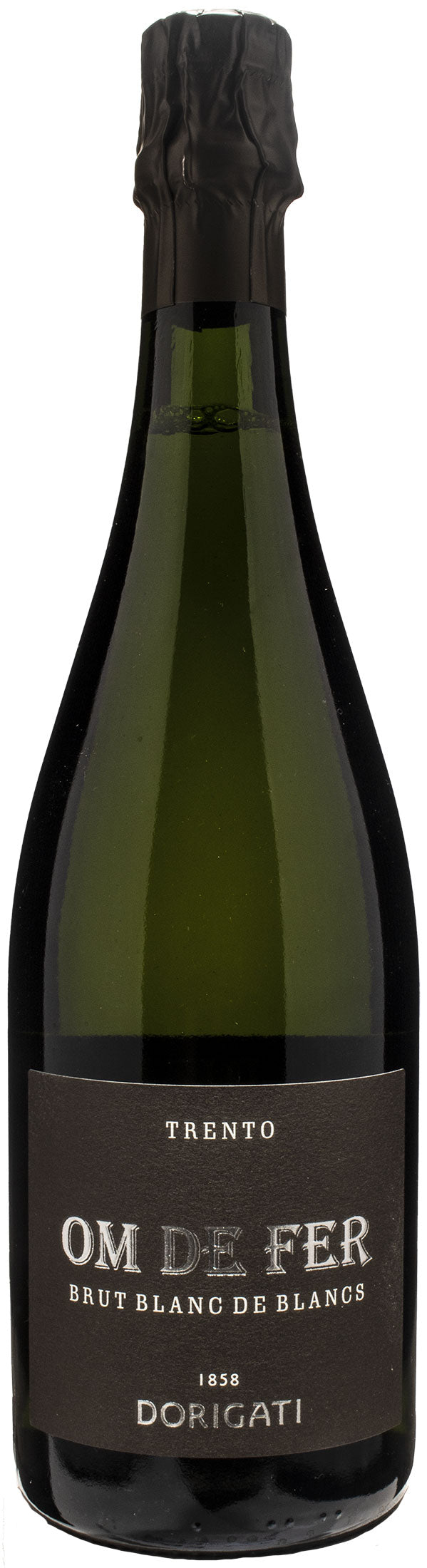
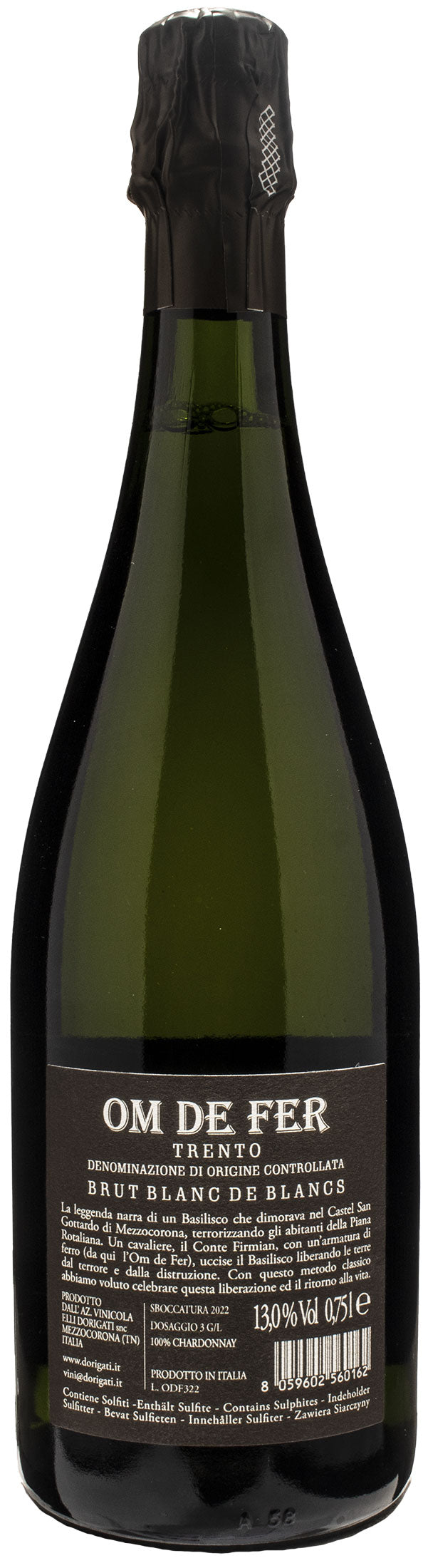
Description
What kind of wine it is
The Trento Blanc de Blancs “Om de Fer” Brut is an Traditional Method sparkling wine with an intense profile, crafted by the Dorigati winery. Made from Chardonnay and Pinot Blanc grapes, it offers lively citrus nuances on the nose, aromas of baked apple and delicate pastry notes. On the palate, it stands out for its remarkable freshness, supported by a solid acidic balance and an elegant structure. The sip is extremely smooth and creamy, enriched by a fine and persistent mousse that makes it an ideal accompaniment for seafood dishes, white meats and cheese selections.
Where it comes from
This sparkling wine originates in Trentino-Alto Adige, between the hills of Mezzocorona and the Avisiane heights, within the prestigious Trento denomination. The vineyards grow at an altitude between two hundred and five hundred metres, with roots in soils rich in calcareous gravel, red earth and porphyritic matrices, which give the glass a well-defined mineral character. The name recalls a local legend linked to Castel San Gottardo, where the valiant knight Om de Fer defeated a basilisk to free the Piana Rotaliana, a fragment of history that Dorigati celebrates through this wine.
How it is produced
After a careful manual harvest, the grapes undergo gentle pressing. Part of the must undergoes its first fermentation in old wooden barrels to encourage measured oxidative development, while the remaining portion matures in steel tanks. To enrich the aromatic range, the winery creates a meticulous blend that also includes Chardonnay from previous harvests. The subsequent secondary fermentation takes place according to the rules of the Traditional Method, followed by ageing on the lees for about twenty-four months, which shapes the enveloping mousse and the overall harmony of the tasting experience.
History and Curiosities
This Metodo Classico sparkling wine celebrates the legacy of the Dorigati family, winemakers in Trentino-Alto Adige since 1858. The name Om de Fer recalls a famous legend from Mezzocorona: that of a fearsome basilisk that haunted Castel San Gottardo, later defeated by the courageous Count Firmian protected by his iron armour. Through this refined Trento DOC, the winery pays tribute to the historic liberation of the Piana Rotaliana, offering a wine that combines great oenological expertise with a deep respect for its territory of origin.
Tasting notes

Perlage

Perfume

Color

Taste
Serve at:
08 - 10 °C
Longevity:
05 - 10 years

- Start up year: 1858
- Oenologist: Michele Dorigati, Paolo Dorigati
- Bottles produced: 100.000
- Hectares: 10


| Name | Dorigati Trento Blanc de Blancs Om de Fer Brut |
|---|---|
| Type | White classic method sparkling wine brut |
| Denomination | Trento DOC |
| Size | 0,75 l |
| Alcohol content | 13.0% by volume |
| Grape varieties | Chardonnay, Pinot Bianco |
| Country | Italy |
| Region | Trentino Alto Adige |
| Vendor | Dorigati |
| Story | History and Curiosities This Metodo Classico sparkling wine celebrates the legacy of the Dorigati family, winemakers in Trentino-Alto Adige since 1858. The name Om de Fer recalls a famous legend from Mezzocorona: that of a fearsome basilisk that haunted Castel San Gottardo, later defeated by the courageous Count Firmian protected by his iron armour. Through this refined Trento DOC, the winery pays tribute to the historic liberation of the Piana Rotaliana, offering a wine that combines great oenological expertise with a deep respect for its territory of origin. |
| Origin | Calcareous gravelly foothills of Mezzocorona, Avisian hills |
| Soil composition | Calcareous gravel, red soils, porphyric soils |
| Cultivation system | Simple Trentino pergola |
| Yield per hectare | 100 quintali per ettaro |
| Harvest | Manuale, nella prima decade di settembre |
| Fermentation | Circa 24 mesi sui lieviti |
| Production technique | Classic method (traditional method) |
| Wine making | Soft pressing with fractionation of the musts; part of the base wine ferments in old barriques (about a quarter of the mass) for oxidative development, with the possible addition of small percentages of Chardonnay from previous vintages; maturation in stainless steel and old barriques before bottling, then sparkling using the traditional method and about 24 months of ageing on the lees. |
| Aging | In steel and old barriques before bottling, then about 24 months of ageing on the lees. |
| Residual sugar | 3.0 gr/L |
| Allergens | Contains sulphites |