


Saint Clair
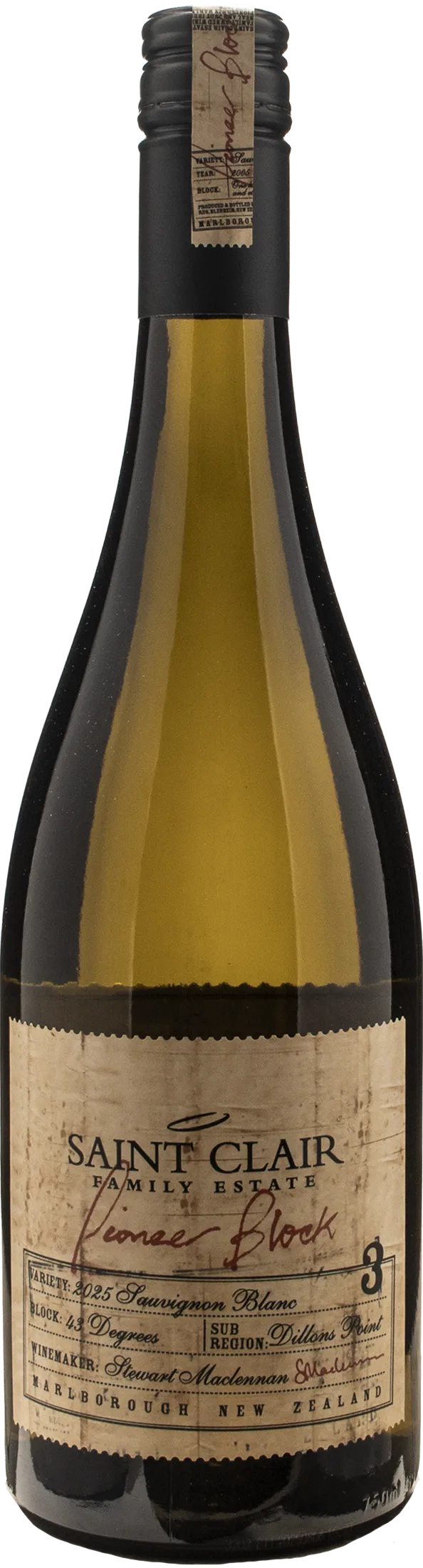
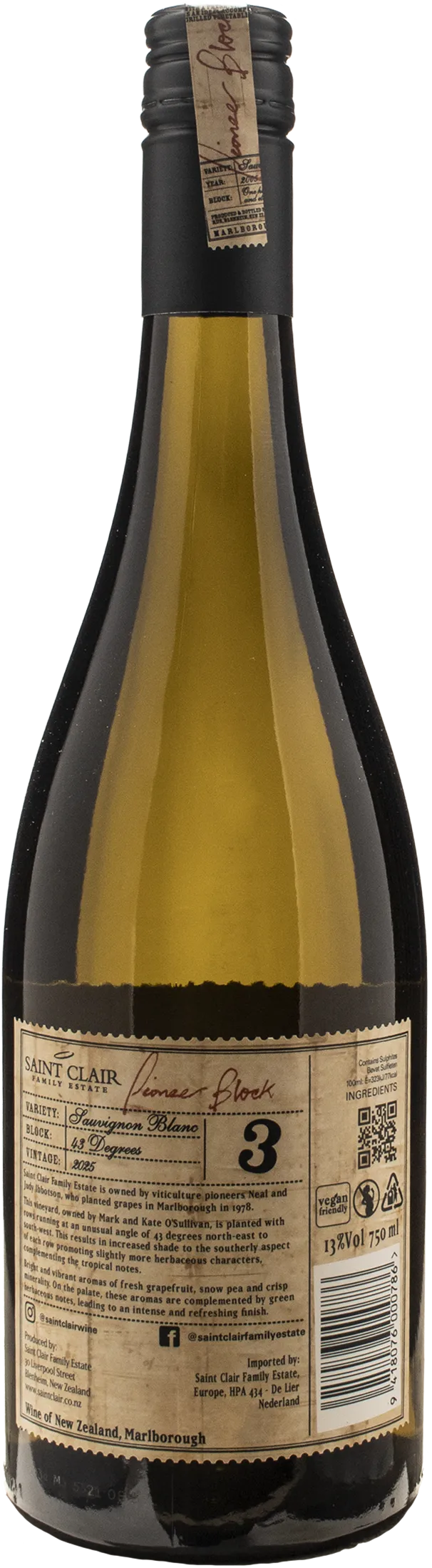
Sauvignon Pioneer Block 3 2025
| Denomination | N/A |
|---|---|
| Size | 0,75 l |
| Alcohol content | 13.0% by volume |
| Area | New Zealand (New Zealand) |
| Grape varieties | 100% Sauvignon |
| Aging | Ready to drink but improves with a few months of bottle ageing; best consumed within the next two years |
- Marlborough Origin: From Lower Wairau, a single low-yield vineyard near the coast
- Intense aromas: Notes of passion fruit, gooseberry, grapefruit, fresh herbs and saline hints
- Dry palate: White peach, mandarin, lemongrass, saline minerality, persistent finish
- Steel vinification: Immediate pressing and cold fermentation with selected yeasts
- Serving and pairings: At 8-10 °C, ideal with oysters and goat's cheese; vegan wine
Description
What kind of wine it is
The Pioneer Block 3 Sauvignon Blanc, produced by Saint Clair, is a refined still white wine from Marlborough, New Zealand. Vinified in stainless steel from Sauvignon Blanc grapes using vegan methods, it stands out for its extremely lively sensory profile. On the nose, it reveals notes of passion fruit, gooseberry and grapefruit, complemented by hints of fresh herbs. The palate is elegant, supported by a pronounced saline minerality and juicy acidity that leads to a long and refreshing finish.
Where it comes from
This white originates from the Marlborough region, specifically the Lower Wairau subzone. The grapes are grown in a single low-yield vineyard, on deep, well-drained silty-clay soils. Situated three metres above sea level, the area benefits from a maritime climate that ensures a slow ripening of the grapes. The precise orientation of the rows balances sun exposure, harmonising tropical notes with vegetal hints, while the coastal influence enriches the bouquet with intriguing spicy and savoury notes.
How it is produced
Saint Clair's vinification involves immediate pressing to limit contact between the must and skins, preserving the purity of the aromas. After settling, low-temperature fermentation takes place in stainless steel tanks with selected yeasts. This technical choice preserves the varietal liveliness of the fruit. The result is a wine with low residual sugar and vibrant acidity, offering a taut and clean drink, with a remarkable ability to evolve positively in the bottle.
History and Curiosities
The Saint Clair Pioneer Block 3 originates from small, low-yield plots. A tribute to the historic Sinclair family estate in Blenheim, this wine comes from the exclusive vineyard of Mark and Kate O’Sullivan. The rows, characterised by a distinctive 43-degree incline, combine various sun exposures with the refreshing influence of the sea, giving the wine a unique and distinctive profile. Boasting prestigious international awards and a score of 95 points, the 2025 vintage offers elegance of the highest prestige.
Awards
-
2025
 88
88/100
James Suckling is an influential American wine critic and journalist who worked at Wine Spectator for 30 years. He left the magazine in 2010 to start his own website and guidebook (JamesSuckling.com). He specialises in Italian and Bordeaux wines.
Tasting notes
Perfume

Color
Taste
Serve at:
10 - 12 °C
Longevity:
05 - 10 years
- Start up year: 1994
- Oenologist: Matt Thomson e Hamish Clark
The Sinclair family initially settled the property on which this vineyard is located. The pioneer James Sinclair built one of the first houses in Blenheim and was closely associated with the town's early development.
Over time, the property's name reverted to the original Saint Clair.
The company's mission is to create world-class wines that exceed our customers' expectations. As a result, Neal puts his extensive experience in viticulture, the unique combination of Marlborough's climate and soils, and the talents of one of New Zealand's leading winemaking teams to achieve this mission. Read more


| Name | Saint Clair Sauvignon Pioneer Block 3 2025 |
|---|---|
| Type | White green still |
| Denomination | N/A |
| Vintage | 2025 |
| Size | 0,75 l |
| Alcohol content | 13.0% by volume |
| Grape varieties | 100% Sauvignon |
| Country | New Zealand |
| Region | New Zealand |
| Vendor | Saint Clair |
| Story | History and Curiosities The Saint Clair Pioneer Block 3 originates from small, low-yield plots. A tribute to the historic Sinclair family estate in Blenheim, this wine comes from the exclusive vineyard of Mark and Kate O’Sullivan. The rows, characterised by a distinctive 43-degree incline, combine various sun exposures with the refreshing influence of the sea, giving the wine a unique and distinctive profile. Boasting prestigious international awards and a score of 95 points, the 2025 vintage offers elegance of the highest prestige. |
| Origin | Blenheim (New Zealand) |
| Climate | Maritime, slightly cooler than most of the Marlborough valley, with a slower annual ripening period |
| Soil composition | Terreno profondo, fertile e ben drenante |
| Cultivation system | Vertical shoot positioning with four shoots |
| Production technique | Immediate pressing to minimise contact with the skins; must clarified and fermented with selected yeasts in 100% stainless steel tanks at low temperatures. |
| Wine making | The fruit is pressed quickly to minimise contact with the skins. This is followed by fermentation with selected yeasts in stainless steel tanks at cold temperatures to preserve the flavour and freshness of the fruit. |
| Aging | Ready to drink but improves with a few months of bottle ageing; best consumed within the next two years |
| Total acidity | 7.6 gr/L |
| PH | 3.24 |
| Residual sugar | 1.0 gr/L |
| Allergens | Contains sulphites |