


Boveri Luigi
Derthona Timorasso 2024
| Denomination | DOC Colli Tortonesi Timorasso |
|---|---|
| Size | 0,75 l |
| Alcohol content | 13.5% by volume |
| Area | Piedmont (Italy) |
| Grape varieties | 100% Timorasso |
| Aging | Ageing for 12 months in an autoclave on the fine lees with periodic stirring; then 12 months in the bottle. |
- Origin: Still white wine DOC Colli Tortonesi, Piedmont, 2024
- Grape variety and size: 100% Timorasso, 0.75 l bottle and 13.5% vol.
- Winemaking: Gentle pressing and controlled-temperature fermentation (18-20 °C).
- Ageing: 12 months in autoclave on the noble lees and a further 12 months in the bottle.
- Taste and pairings: Warm and structured; perfect with fish, risottos and cheeses.
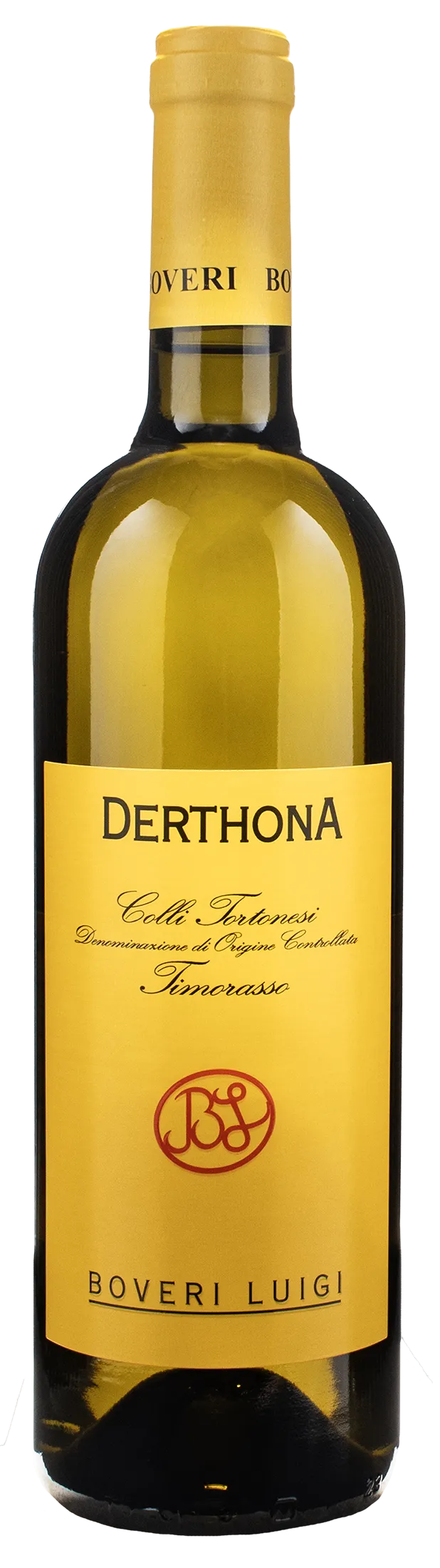
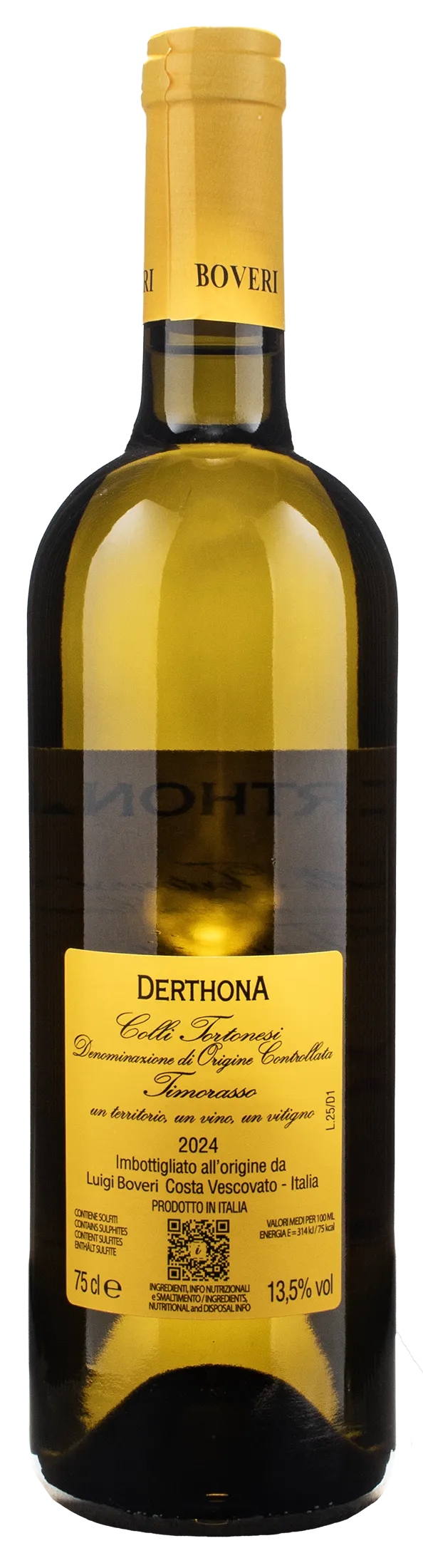
Description
Style of wine
Luigi Boveri's Derthona Timorasso is a still white wine with a Controlled Designation of Origin from Piedmont, produced from the Timorasso grape variety in the Colli Tortonesi. It reveals a warm and structured profile, supported by excellent persistence. The palate is well-balanced by a marked minerality and correct acidity, characteristics that define a glass with a bold character. On the nose, it is elegant, with citrus notes, in a profile completed by temperature-controlled fermentation and ageing in autoclaves on the noble lees.
Where it comes from
Production takes place in the Colli Tortonesi, an area of Piedmont historically linked to the Timorasso grape variety. The vineyards are situated at approximately 250 metres above sea level with an optimal south-east exposure, which favours the perfect ripening of the clusters. The vines root into marly-limestone soil, essential for giving the wine its typical savoury character. The Guyot training system, managed to maintain low yields, fully respects the peculiarities of the region.
How it is produced
Vinification begins with soft pressing and decanting of the must, followed by temperature-controlled fermentation. The process is distinguished by a long ageing on the noble lees lasting twelve months in autoclaves, with periodic stirring, followed by further resting in the bottle. In the glass, it presents a straw-yellow colour that, with evolution, turns towards golden highlights, accompanied by increasingly defined fruity and mineral notes.
History and facts
Luigi Boveri's Derthona Timorasso bears witness to the family's dedication to this noble native grape variety of the Tortona Hills. The first vintage produced dates back to 2005 and the vines from which the grapes originate are 8 years old.
Tasting notes

Perfume

Color

Taste
Serve at:
10 - 12 °C
Longevity:
03 - 05 years

- Start up year: 1992
- Oenologist: Luigi Boveri
- Bottles produced: 80.000
- Hectares: 30
Thirty years of experience, courage and hard work for a wine family that, along with other pioneering producers, has made history in the Tortonese Hills.
Until the 1990s, management was done in the traditional way; it was with the arrival of Luigi, that the method and production were completely revolutionized. since 1992, in fact, Luigi Boveri, the founder’s grandson, with the help of his wife Germana decided to direct production exclusively toward viticulture, abandoning the cultivation of cereals and fodder.
"From those years began the winemaking that I like, That of the winemakers. Not "farmer’s" wine, badly made, not just industrial wine. A new Era began, that of wine made by an ‘artisan of the earth."
We follow production by making use of constant updates and all those technological innovations that allow us to transform grapes into fine wines of great class. Since 1999 we have been featured in all Italian wine guides, placing us at the top for producing high-level wines throughout the Colli Tortonesi hill community. Read more


| Name | Luigi Boveri Derthona Timorasso 2024 |
|---|---|
| Type | White still |
| Denomination | Colli Tortonesi DOC |
| Vintage | 2024 |
| Size | 0,75 l |
| Alcohol content | 13.5% by volume |
| Grape varieties | 100% Timorasso |
| Country | Italy |
| Region | Piedmont |
| Vendor | Boveri Luigi |
| Story | History and facts Luigi Boveri's Derthona Timorasso bears witness to the family's dedication to this noble native grape variety of the Tortona Hills. The first vintage produced dates back to 2005 and the vines from which the grapes originate are 8 years old. |
| Origin | Tortona Hills, Piedmont |
| Soil composition | Calcareous marl |
| Cultivation system | Guyot |
| Plants per hectare | 4,700 plants per hectare |
| Yield per hectare | 70 quintals per hectare (70 q/ha) |
| Fermentation temperature | 18 to 20 °C |
| Production technique | Soft pressing of the grapes, settling of the must and fermentation at a controlled temperature (18–20 °C); 12 months' ageing in an autoclave on the fine lees with periodic stirring, followed by 12 months in the bottle. |
| Wine making | Soft pressing of the grapes, settling of the must and fermentation at a controlled temperature (18–20 °C); ageing for 12 months in pressure tanks on the fine lees with periodic stirring, then bottling and further ageing for 12 months in the bottle. |
| Aging | Ageing for 12 months in an autoclave on the fine lees with periodic stirring; then 12 months in the bottle. |
| Allergens | Contains sulphites |