


Campanelli
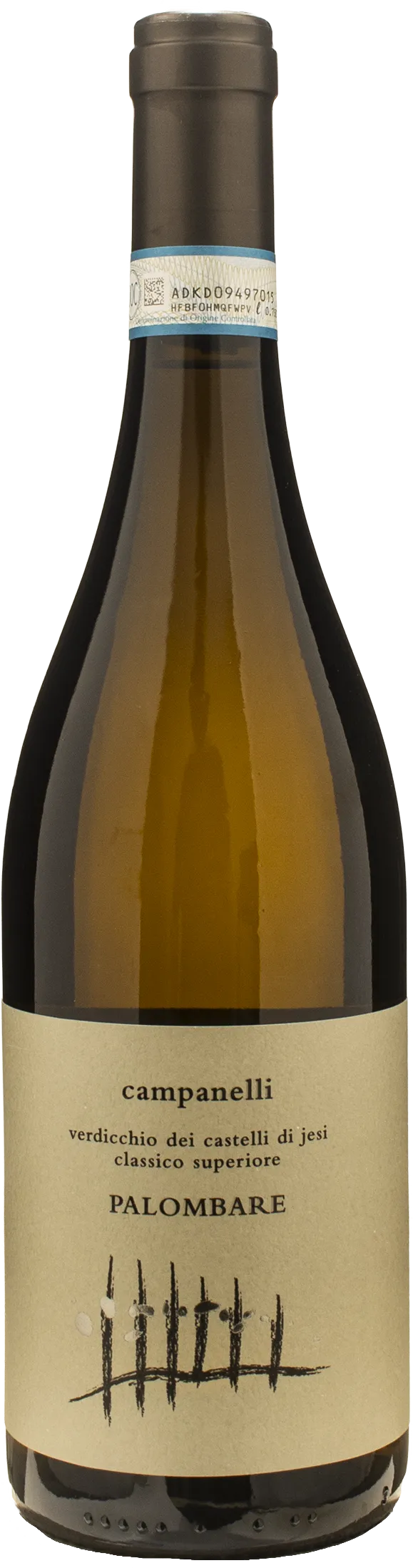
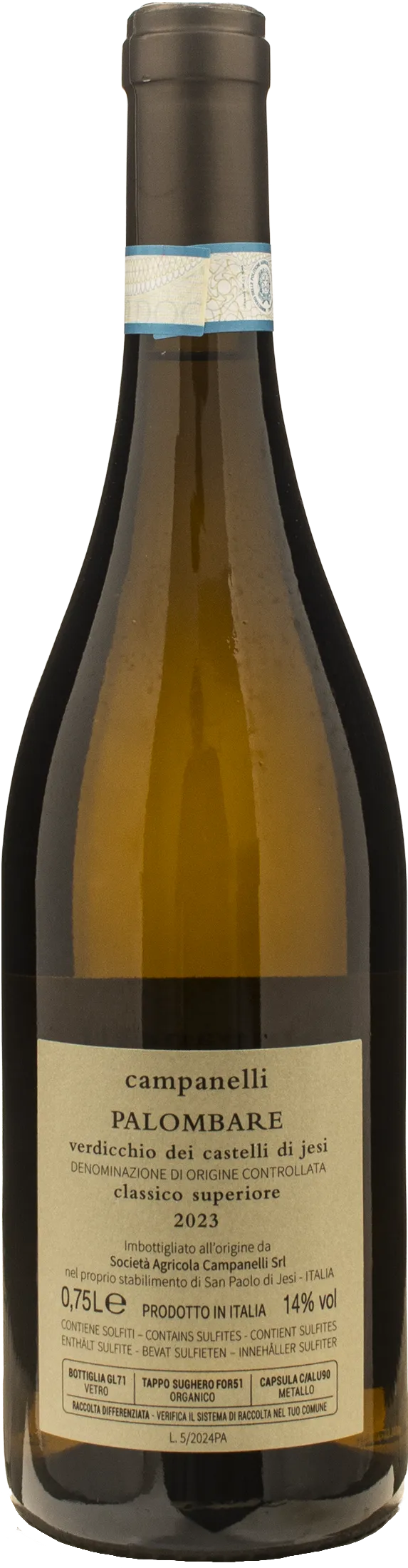
Verdicchio dei Castelli di Jesi Palombare 2023
| Denomination | DOC Verdicchio dei Castelli di Jesi Classico Superiore |
|---|---|
| Size | 0,75 l |
| Alcohol content | 14.0% by volume |
| Area | Marche (Italy) |
| Grape varieties | 100% Verdicchio Bianco |
| Aging | Ageing on the lees in cement with frequent bâtonnage for 7 months, followed by at least 9 months of bottle ageing. |
- Details: DOC Classico Superiore 2023, 100% Verdicchio Bianco, 14% vol, 0.75 l
- Production: organic and artisanal; hand-picked, indigenous yeasts, cement vats
- Vinification: whole bunch pressing and static settling of the must
- Ageing: 7 months on the lees in cement with bâtonnage, then at least 9 months in bottle
- Pairings: seafood, shellfish, lean fish and cheese selections
Description
What kind of wine it is
Verdicchio dei Castelli di Jesi Palombare by Campanelli is a still white wine with an authentic profile, a pure expression of the Verdicchio Bianco grape variety. Recognised as Verdicchio dei Castelli di Jesi Classico Superiore, this wine stands out for its straw-yellow colour with bright greenish highlights. On the palate, it offers an enveloping and structured sip, able to combine fresh drinkability with remarkable ageing potential. Its natural harmony makes it an ideal companion at the table, enhancing shellfish and lean fish, and proving equally balanced when paired with a selection of cheeses.
Where it comes from
The roots of this wine lie in the renowned Palombare district, located in the area of Sasso di Serra San Quirico, in the heart of the Marche hills. Here, the rows of vines, cultivated according to the principles of organic farming, grow at an altitude between 330 and 370 metres above sea level. The geological profile is characterised by a subsoil of marl and sandstone, with medium-textured soils combining clay and limestone and sandy veins that become more pronounced along the slope. This complex matrix ensures optimal ripening of the grapes, giving the wine a pronounced definition and a clear territorial imprint.
How it is produced
The production process begins with a rigorous manual harvest, followed by whole bunch pressing to preserve the integrity of the fruit. After static settling of the must, fermentation takes place in cement tanks thanks to the exclusive action of indigenous yeasts, reflecting a handcrafted approach aimed at enhancing the vineyard's identity. Maturation continues in cement, where the wine rests on its lees for seven months, enriched by frequent bâtonnage that impart complexity and volume. Ageing in bottle for at least nine months completes the process, consolidating the elegant texture of this limited production.
History and Curiosities
Founded in 2021 in the Marche region, the Campanelli winery enhances the local area with its elegant Verdicchio dei Castelli di Jesi DOC Classico Superiore. The grapes, grown organically in the renowned Palombare district, are harvested entirely by hand. This artisanal cuvée ferments with indigenous yeasts and matures for seven months in cement vats with frequent bâtonnage, before resting in the bottle. The expert craftsmanship delivers a full-bodied and structured sip, ideal for harmoniously accompanying shellfish and lean fish.
Awards
-
2023
 3
3Italian Sommelier Association (AIS) guide
Tasting notes

Color
Serve at:
12 - 14 °C
Longevity:
03 - 05 years

- Start up year: 2021
- Oenologist: Marco Gozzi
- Bottles produced: 25.000
- Hectares: 9
This vision guides us in the challenge of connecting the symbolic grape variety of the Castelli di Jesi with its place of origin, exploring the nuances that distinguish one village from another and one district from the next within a complex, layered area that requires an in‑depth reading capable of enhancing its specific characteristics. Read more


| Name | Campanelli Verdicchio dei Castelli di Jesi Classico Superiore Palombare 2023 |
|---|---|
| Type | White green still |
| Denomination | Verdicchio dei Castelli di Jesi DOC |
| Vintage | 2023 |
| Size | 0,75 l |
| Alcohol content | 14.0% by volume |
| Grape varieties | 100% Verdicchio Bianco |
| Country | Italy |
| Region | Marche |
| Vendor | Campanelli |
| Story | History and Curiosities Founded in 2021 in the Marche region, the Campanelli winery enhances the local area with its elegant Verdicchio dei Castelli di Jesi DOC Classico Superiore. The grapes, grown organically in the renowned Palombare district, are harvested entirely by hand. This artisanal cuvée ferments with indigenous yeasts and matures for seven months in cement vats with frequent bâtonnage, before resting in the bottle. The expert craftsmanship delivers a full-bodied and structured sip, ideal for harmoniously accompanying shellfish and lean fish. |
| Origin | Contrada Palombare, Sasso di Serra San Quirico |
| Soil composition | Subsoil of marl and sandstone; medium-textured soils composed of clay and limestone, with increasingly significant sandy layers as you go deeper. |
| Production technique | Whole bunch pressing; static decantation; fermentation with indigenous yeasts in concrete tanks; ageing on lees in concrete with frequent bâtonnage; bottle ageing |
| Wine making | Whole bunch pressing, static settling, fermentation with indigenous yeasts in concrete tanks. |
| Aging | Ageing on the lees in cement with frequent bâtonnage for 7 months, followed by at least 9 months of bottle ageing. |
| Allergens | Contains sulphites |