


Bosco del Merlo
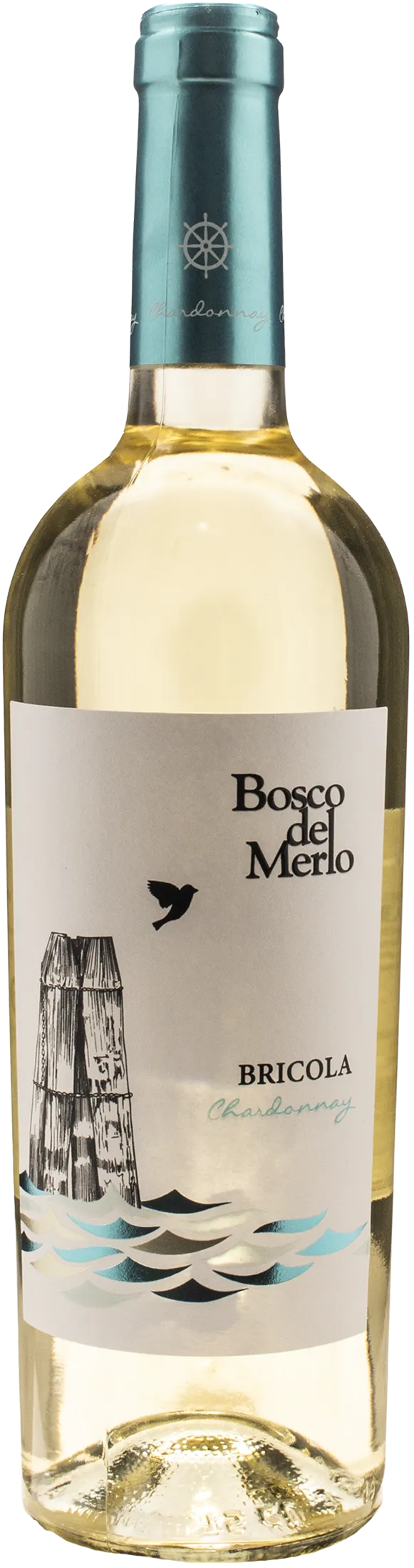
Chardonnay Bricola 2024
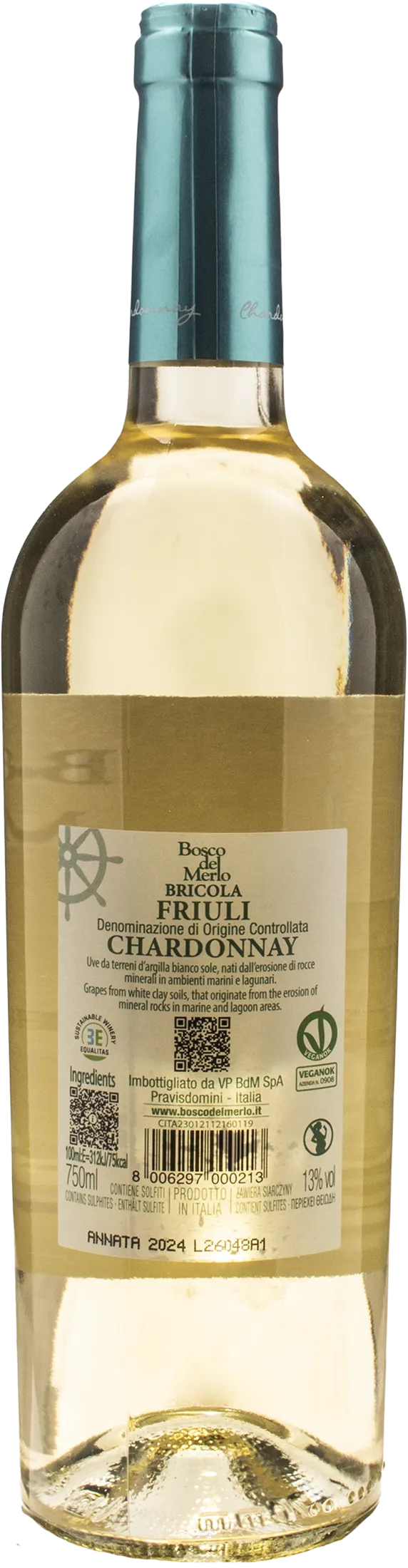
| Denomination | DOC Friuli Chardonnay |
|---|---|
| Size | 0,75 l |
| Alcohol content | 13.0% by volume |
| Area | Friuli-Venezia Giulia (Italy) |
| Grape varieties | 100% Chardonnay |
| Aging | Maturation on the lees |
- Magredi Terrain: gravelly soils of Western Friuli, minerality and vibrancy
- Aromas: floral notes, ripe peach and tropical fruit, with a delicate toasted hint
- Vinification in steel: night harvesting and fermentation at a controlled temperature of 18°C
- Ageing on the lees: greater smoothness, harmony and refined structure
- Data and serving: 13% vol, suitable for vegans; temperature 6–8°C; 93 points Luca Maroni
Description
What kind of wine it is
Bricola by Bosco del Merlo is a dry white wine that showcases Chardonnay within the Venezia denomination, in Friuli. Fermented in steel and matured on the lees, this vegan expression stands out for its clear aromatic profile and pronounced mineral character. The bouquet weaves together floral notes, ripe peach and exotic fruit, enriched by a subtle toasted nuance. On the palate, it is fresh and balanced, blending a pleasant softness with a good structure that leads to a full-bodied and persistent finish.
Where it comes from
The grapes are grown in Western Friuli, near the Meduna river and at the foot of the Dolomites, in vineyards situated at around two hundred metres above sea level. The soul of this territory lies in the stony soils of the Magredi, a substrate formed by glacial debris that gives the grapes a distinctive savoury character. The abundance of stones and the excellent temperature variations encourage the development of aromas and ensure a clear aromatic expression. The vineyards are managed using a double Guyot system, maintaining a dense planting of five thousand vines per hectare.
How it is produced
The process begins with a night-time harvest, organised to preserve the integrity of the grapes by taking advantage of the coolest hours. After gentle pressing and static decantation at low temperature, the clarified must undergoes fermentation in steel tanks at eighteen degrees, preserving the natural liveliness of the fruit. The process is completed with careful maturation on the lees, an essential technique to enhance balance on the palate and impart marked softness. This winemaking journey ensures a dry sip with great aromatic precision.
History and Curiosities
The name “Bricola” is a tribute to the traditional wooden poles that have always guided boats through the lagoons. Bosco del Merlo dedicates a wine to this symbol, born on the stony soils of the Magredi, formed by the debris of the Meduna river and perfect for imparting an intense mineral vibrancy. To preserve its absolute aromatic purity, the grapes benefit from a meticulous night-time harvest during the coolest hours. This constant dedication enhances the qualities of the 2024 Chardonnay, an outstanding expression celebrated with the prestigious award of 93 points from Luca Maroni.
Awards
-
2024
 4
4Italian Sommelier Foundation (FIS) guide This has been one of the most prestigious wine guides in Italy for over 10 years.
-
2024
 93
93/100
One of the most prestigious wine guides in Italy.
Tasting notes
Perfume

Color

Taste
Serve at:
06 - 08 °C
Longevity:
03 - 05 years
- Start up year: 1988
- Oenologist: Antonio Lucarelli
- Bottles produced: 880.000
- Hectares: 70
The Bosco del Merlo estate winery started up in 1977 in Annone Veneto, founded by siblings Carlo, Lucia and Roberto Paladin. Thanks to a profitable collaboration with the Istituto Sperimentale per la Viticoltura di Conegliano, a careful and modern zoning technique was immediately implemented in order to get the best out of the terroir, working the vineyard piece by piece. In the nineties, in the small town of Lison di Portogruaro, the cradle of viticulture in this wine-making region, a further 50 hectares of land was acquired, which therefore doubled capacity, increasing it to around 100 hectares in total.
Over the course of the years Bosco del Merlo has benefited from the advice of famous oenologists and experts from the Faculties of Oenology and Agriculture in Padua and Milan, such as Franco Bernabei and Leonardo Valenti, in its quest to find the most forward-thinking solutions for achieving optimal quality with the lowest environmental impact. Read more


| Name | Bosco del Merlo Chardonnay Bricola 2024 |
|---|---|
| Type | White green still |
| Denomination | Friuli DOC |
| Vintage | 2024 |
| Size | 0,75 l |
| Alcohol content | 13.0% by volume |
| Grape varieties | 100% Chardonnay |
| Country | Italy |
| Region | Friuli-Venezia Giulia |
| Vendor | Bosco del Merlo |
| Story | History and Curiosities The name "Bricola" is a tribute to the traditional wooden poles that have always guided boats through the lagoons. Bosco del Merlo dedicates a wine to this symbol, born on the stony soils of the Magredi, formed by the debris of the Meduna river and perfect for imparting an intense mineral vibrancy. To preserve its absolute aromatic purity, the grapes benefit from a meticulous night-time harvest during the coolest hours. This constant dedication enhances the qualities of the 2024 Chardonnay, an outstanding expression celebrated with the prestigious award of 93 points from Luca Maroni. |
| Origin | Western Friuli (Friuli-Venezia Giulia), near the Meduna river, at the foot of the Dolomites |
| Climate | Excellent temperature variations. |
| Soil composition | Stony soil of the Magredi, originating from glacial debris deposited by the Meduna river, close to the Dolomites. |
| Cultivation system | Double arched cane |
| Plants per hectare | 5000 vines per hectare |
| Harvest | Le uve sono raccolte nelle ore più fresche della giornata con vendemmia notturna a perfetta maturazione. |
| Fermentation temperature | 18 °C |
| Production technique | Soft pressing; static decantation at low temperature; alcoholic fermentation in stainless steel tanks at a controlled temperature (18 °C); ageing on the lees |
| Wine making | Night-time harvest; gentle pressing; cooling of the must and static decantation at low temperature; alcoholic fermentation in stainless steel tanks at controlled temperature (18°C); ageing on the lees. |
| Aging | Maturation on the lees |
| Allergens | Contains sulphites |