


Magnum 2019
Andere Jahre:
2023| Bezeichnung | IGT Toscana |
|---|---|
| Flaschengröße | 1,50 l |
| Alkoholgehalt | 14.0% nach Volumen |
| Gebiet | Tuscany (Italy) |
| Rebsorten | 85% Sangiovese, 10% Cabernet Sauvignon, 5% Cabernet Franc |
| Reifung | Placed in new oak barriques where malolactic fermentation took place by the end of the year. They were then blended and aged for 12 months in barriques, racked and then tasted barrique by barrique before bottling. After another year ageing in the bottles the wine was released for sale |
| Andere Jahre | 2023 |
Beschreibung
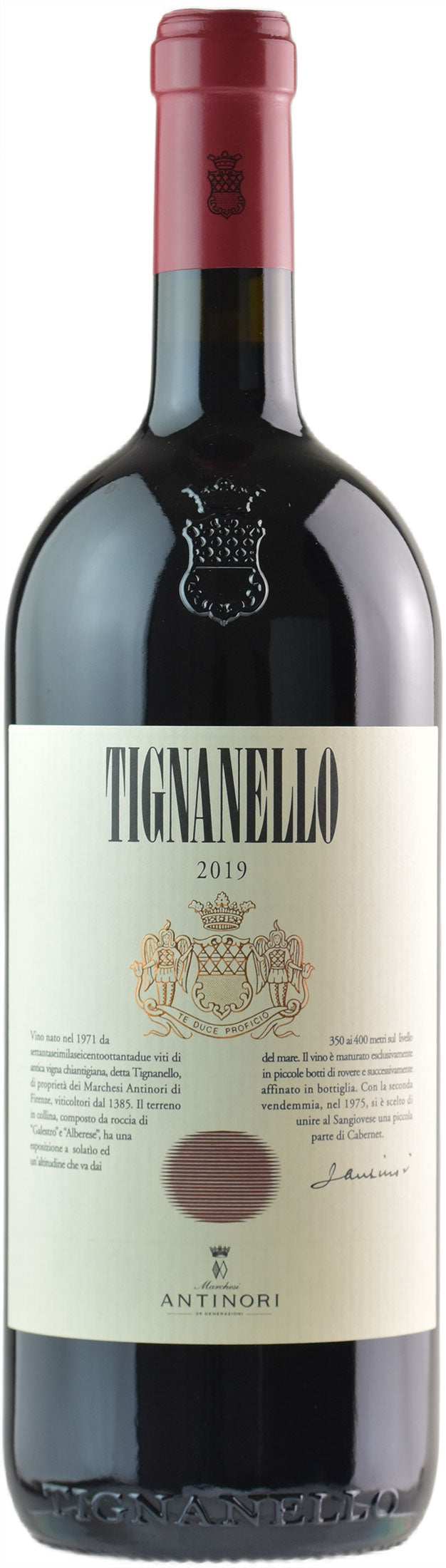
Tignanello, produced by the Antinori winery, is a still red wine that enjoys the Tuscan IGT designation. It is an unconventional wine, considering that it was the first to be blended using non-traditional methods, without the inclusion of white grapes. The grapes come from vines that are 85% Sangiovese, 10% Cabernet Sauvignon, and 5% Cabernet Franc. Careful climatic conditions are required for all three varieties during the harvest. Fermentation takes place at a temperature of around 27 degrees Celsius, never rising above 31 degrees, so as to preserve the organoleptic properties of the three grapes. The fermentation is initially alcoholic, after which the wines are placed in new oak barrels, where a second malolactic fermentation takes place to reduce acidity. Aging takes place in barriques for 12 months. After this period, the wine is bottled, where it rests for another year. Tignanello is born in Tuscany, more precisely in the vineyard of the same name, located on the Tigneto estate at an altitude of between 350 and 400 meters, covering an area of over 47 hectares. The soil is calcareous in origin, with numerous tuffaceous components, which contribute to giving the wine its unique characteristics, including its longevity (approximately 25 years). The validity of Tignanello wine has also been recognized by Bibenda and Gambero Rosso, who awarded it 5 bunches and three glasses respectively, synonymous with wine excellence.
Auszeichnungen
-
2019
 5
5Italian Sommelier Foundation (FIS) guide This has been one of the most prestigious wine guides in Italy for over 10 years.
-
2019
 3
3This guide is highly respected and offers the most comprehensive review of Italian wines. It has a long tradition and is based on blind tastings carried out by over 100 experts.
-
2019
 95
95/100
James Suckling is an influential American wine critic and journalist who worked at Wine Spectator for 30 years. He left the magazine in 2010 to start his own website and guidebook (JamesSuckling.com). He specialises in Italian and Bordeaux wines.
-
2019
 95
95/100
One of the most prestigious wine guides in Italy.
-
2019
 96
96/100
The prestigious international wine guide from the renowned Robert Parker, the world's most experienced and trusted wine taster.
-
2019
 95
95/100
Vinous is the online guide from Antonio Galloni, one of the world's leading wine connoisseurs.
-
2019
 4
4Italian Sommelier Association (AIS) guide
-
2019
 96
96/100
Wine spectator is the most influential wine guide on the internet.
Verkostungsnotiz

Parfüm

Farbe

Geschmack
Servieren bei:
16 - 18 °C
Langlebigkeit:
Over 25 years
Dekantierzeit:
1 hour
- Hektar: 127
Hier verwirklicht die Familie Antinori auf 127 Hektar, mehr als sonst irgendwo, ihre Prinzipien und ihre Arbeitsphilosophie: die Tradition mit der Moderne zu verbinden, durch Weine die streng und authentisch ihr jeweiliges Terroir widerspiegeln. Solaia und Tignanello, die beiden Kult-Weine des Anwesens, wurden von der internationalen Presse 'zu den bedeutendsten Weinen in der Geschichte der italienischen Weinproduktion' gezählt. Für die Familie Antinori sind sie eine ständige Herausforderung und Leidenschaft ohne Ende.
Der Historiker Carocci beschreibt Tignanello in seinem 1829 geschriebenen historisch-künstlerischen Führer der Stadt San Casciano Val di Pesa, als ein Anwesen mit großem Weinberg, der den höchsten Punkt der Gegend darstellt und von dem aus man die besten Aussichten auf die Stadt und das Umland hat. Auf dem Gipfel des Hügels findet man aufgrund des wunderbaren Panoramas und des fruchtbaren Bodens eine kleine Ansammlung von Häusern, von denen einige durchaus recht alt sind.
Die Patrizier-Villa aus dem 16. Jahrhundert wurde im Stil der Renaissance erbaut und steht auf dem Fundament eines Anwesens, das sich 1346 hier befand, als sich das Land, so wie ein Großteil des gesamten Pesa-Tals, noch im Besitz der Familie Buondelmonti befand. Das Anwesen wurde anschließend an die Familie Niccolini verkauft, die es in Poggio Niccolini umbenannten, und wechselte im Laufe der Jahre mehrmals den Besitzer. Im 17. Jahrhundert wurde es an einen Ableger der Familie Medici verkauft, und Fonte dei Meidic umbenannt, bevor es schließlich Mitte des 19. Jahrhunderts an die Familie Antinori ging.


| Name | Antinori Tignanello Magnum 2019 |
|---|---|
| Typ | Red still |
| Weinbezeichnung | Toscana IGT |
| Jahrgang | 2019 |
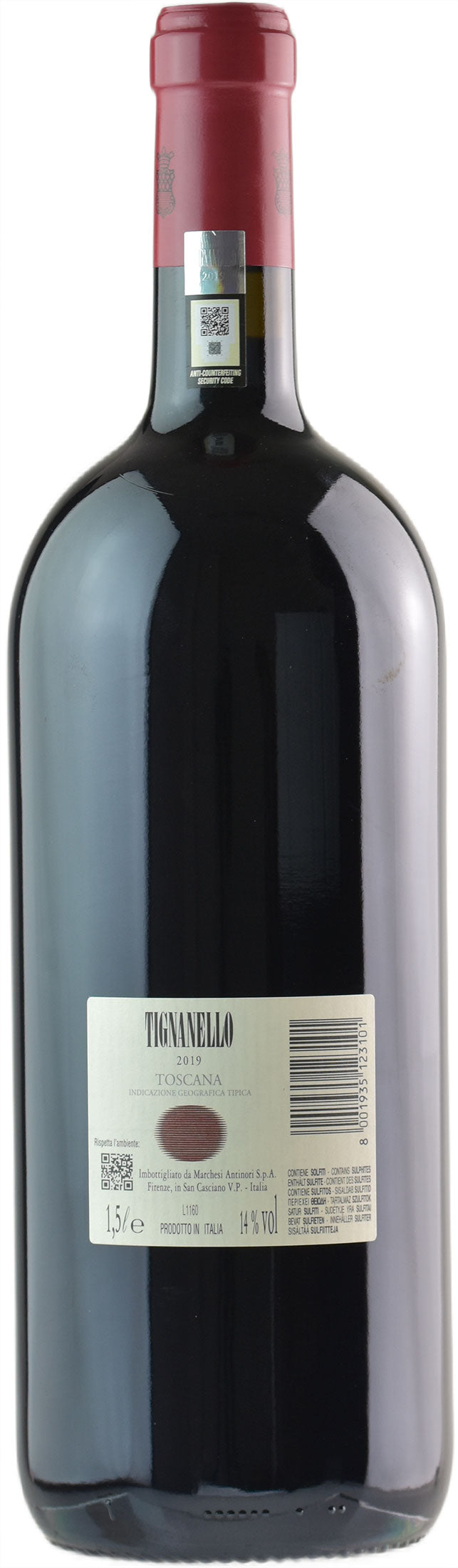
| Größe | 1,50 l |
| Alkoholgehalt | 14.0% nach Volumen |
| Rebsorten | 85% Sangiovese, 10% Cabernet Sauvignon, 5% Cabernet Franc |
| Land | Italy |
| Region | Tuscany |
| Anbieter | Tignanello (Antinori) |
| Herkunft | Tignanello is made exclusively from the vineyard of the same name which is situated on the Tignanello estate covering 47 south-west-facing hectares at altitudes between 350 and 400 metres a.s.l. |
| Bodenzusammensetzung | Limestone and tufaceous soil. |
| Ertrag pro Hektar | Less than 8,000kg. |
| Weinbereitung | For all three varieties, fermentation took placed at an average temperature of 27°, and an absolute maximum of 31°, to preserve as greatly as possible the aromas and typical features of the fruit. Devatting, at the end of alcoholic fermentation, the wines were placed in new oak barriques where malolactic fermentation took place by the end of the year. |
| Reifung | Placed in new oak barriques where malolactic fermentation took place by the end of the year. They were then blended and aged for 12 months in barriques, racked and then tasted barrique by barrique before bottling. After another year ageing in the bottles the wine was released for sale |
| Produktionsjahr | 300000 Flaschen |
| Allergene | Enthält Sulfite |