


Castello della Sala (Antinori)
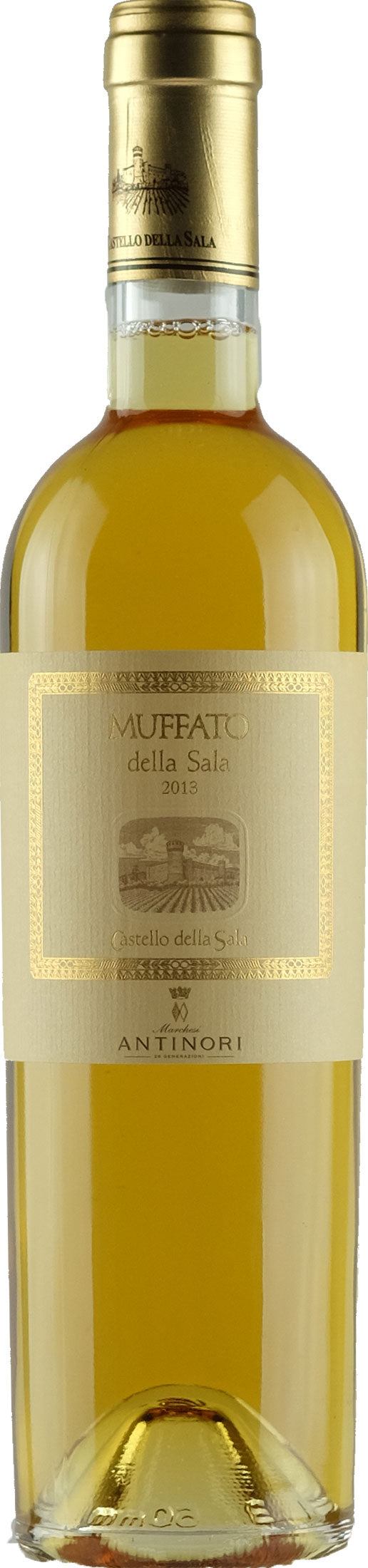
Muffato della Sala 0.5L 2013
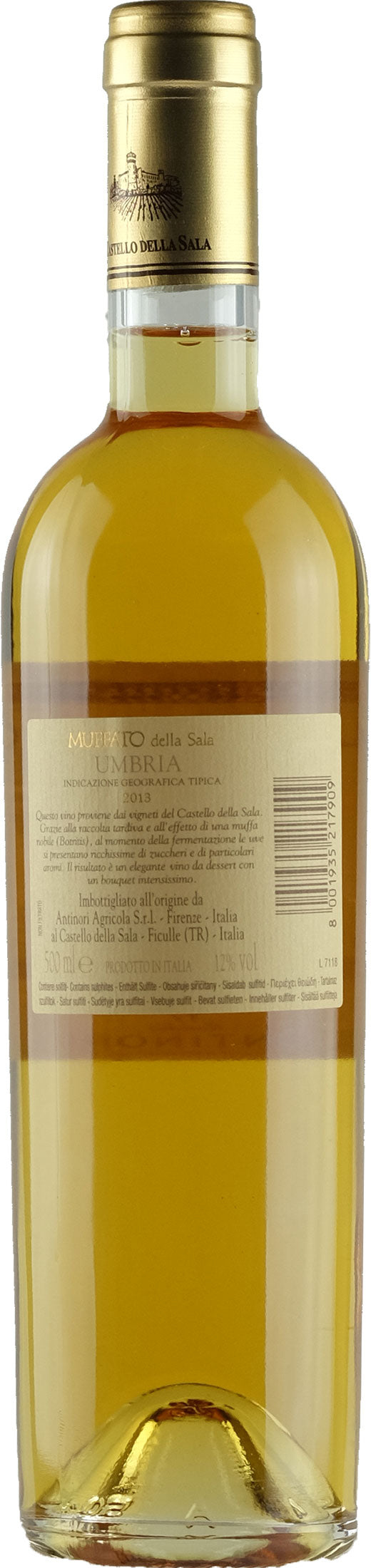
| Denomination | IGT Umbria |
|---|---|
| Size | 0,50 l |
| Alcohol content | 12.0% by volume |
| Area | Umbria (Italy) |
| Grape varieties | Grechetto, Riesling, Sauvignon, Semillon, Traminer Aromatico |
| Aging | The wine, while still sweet, was transferred into French oak barriques (Alliers and Tronçais) where it remained for approximately six months, before continuing its ageing in steel for a further two years. |
| Other years | 2023 , 2024 |
- Wine type: Sweet white from late harvest with noble rot, Sauternes style
- Grape varieties used: Sauvignon Blanc, Grechetto, Gewürztraminer, Sémillon and Riesling
- Ageing: 6 months in small French oak barrels, then approximately 2 years in stainless steel
- Aromas and flavour: Apricot, candied fruit and saffron; balanced sweetness and a persistent finish
- Serving and pairings: 50 cl, 13% vol; 12-14°C with foie gras and blue cheeses
Description
What type of wine it is
Muffato della Sala is a refined sweet white wine from a late harvest by Antinori, born from the allure and action of noble rot. The result of a sophisticated blend of Sauvignon Blanc, Grechetto, Gewürztraminer, Sémillon, and Riesling, it is a prestigious IGT (Typical Geographical Indication) from Umbria, aged in oak barrels and steel. To the eye, it boasts an intense golden yellow colour, while on the nose it offers a complex bouquet of dried fruit, saffron, ripe apricot, and spices. On the palate, it exhibits a harmonious balance between an enveloping sweetness and fresh savouriness, closing with a long, persistent finish with subtle iodised notes.
Where it comes from
The Castello della Sala vineyards are located in Umbria, near Orvieto, in a landscape framed by the course of the Paglia river and Mount Nibbio. The vines grow at altitudes between two hundred and four hundred and fifty metres on clay and limestone soils, rich in marine fossils. The climate is characterised by typical morning mists, essential for encouraging the uniform development of Botrytis cinerea on the clusters. This peculiar microclimate allows for slow dehydration of the berries, leading to that extraordinary concentration of sugars and aromas that defines the unmistakable character of this wine.
How it is produced
The production process involves a rigorous manual harvest between the end of October and the beginning of November, carried out in several passes to collect only the botrytised berries. In the cellar, after meticulous selection, the grapes undergo gentle crushing and soft pressing. The must undergoes fermentation in steel for about eighteen days at a controlled temperature. To preserve its natural sweetness, the wine matures for about six months in small French oak barrels from Allier and Tronçais, before completing its refinement process by resting for a further two years in steel tanks.
Awards
-
2013
 94
94/100
The prestigious international wine guide from the renowned Robert Parker, the world's most experienced and trusted wine taster.
Tasting notes
Perfume

Color
Taste
Serve at:
10 - 12 °C
Longevity:
05 - 10 years
- Start up year: 1940
- Oenologist: Massimiliano Pasquini
- Bottles produced: 866.586
- Hectares: 229
The estate’s 229 hectares (566 acres) of vineyards are located at an altitude of 220 - 470 meters above sea level (722-1542 feet) and are planted with traditional varieties such as Procanico and Grechetto but also with Chardonnay, Sauvignon Blanc, Sèmillon, Pinot Blanc, Viognier and a small quantity of Traminer and Riesling.
The region is exceptional for producing white varieties with one exception, Pinot Noir, that has found ideal conditions in this terroir to best express its full potential. The vines grow in clay and calcareous based soils, rich in fossil shells, and they are well exposed to the rising of the sun with an excellent difference of temperature between day and night. Read more


| Name | Antinori Muffato della Sala 0.5L 2013 |
|---|---|
| Type | White dessert wine from grapes with noble rot sweet |
| Denomination | Umbria IGT |
| Vintage | 2013 |
| Size | 0,50 l |
| Alcohol content | 12.0% by volume |
| Grape varieties | Grechetto, Riesling, Sauvignon, Semillon, Traminer Aromatico |
| Country | Italy |
| Region | Umbria |
| Vendor | Castello della Sala (Antinori) |
| Origin | Umbria, Italy (Orvieto area, near the River Paglia and Mount Nibbio) |
| Soil composition | Clayey and calcareous soils, rich in marine fossils |
| Harvest | From the end of October to the end of November |
| Fermentation temperature | 17 degrees Celsius |
| Fermentation | 18 days |
| Production technique | Late harvest with noble rot (Botrytis cinerea) |
| Wine making | After transport to the winery, the bunches were further selected on a sorting belt; a light crushing without destemming followed. After pressing, the must fermented for 18 days at approximately 17 °C. |
| Aging | The wine, while still sweet, was transferred into French oak barriques (Alliers and Tronçais) where it remained for approximately six months, before continuing its ageing in steel for a further two years. |
| Allergens | Contains sulphites |