


Cantine Tornatore
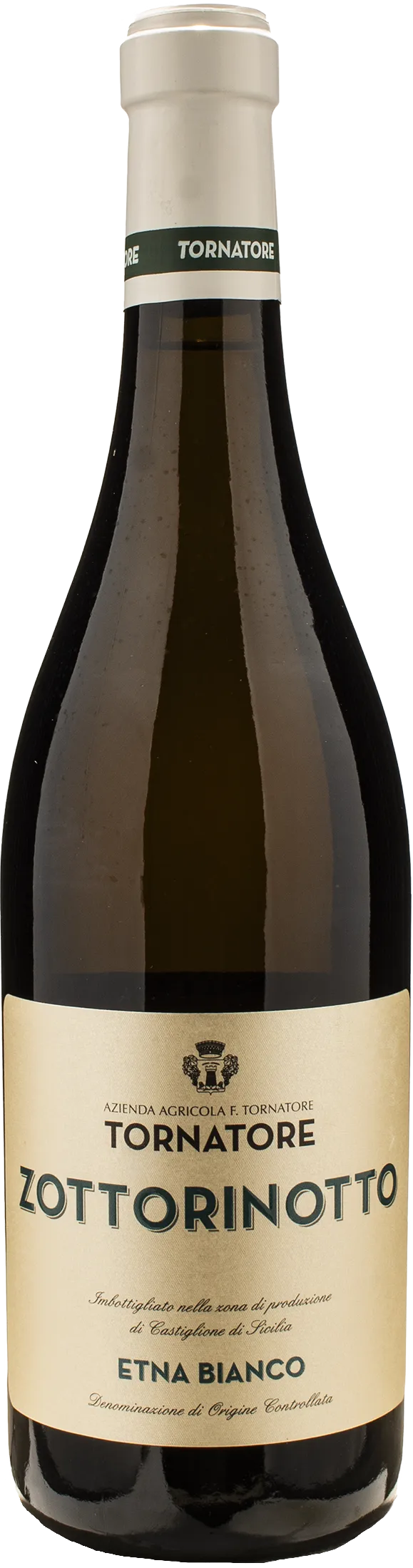
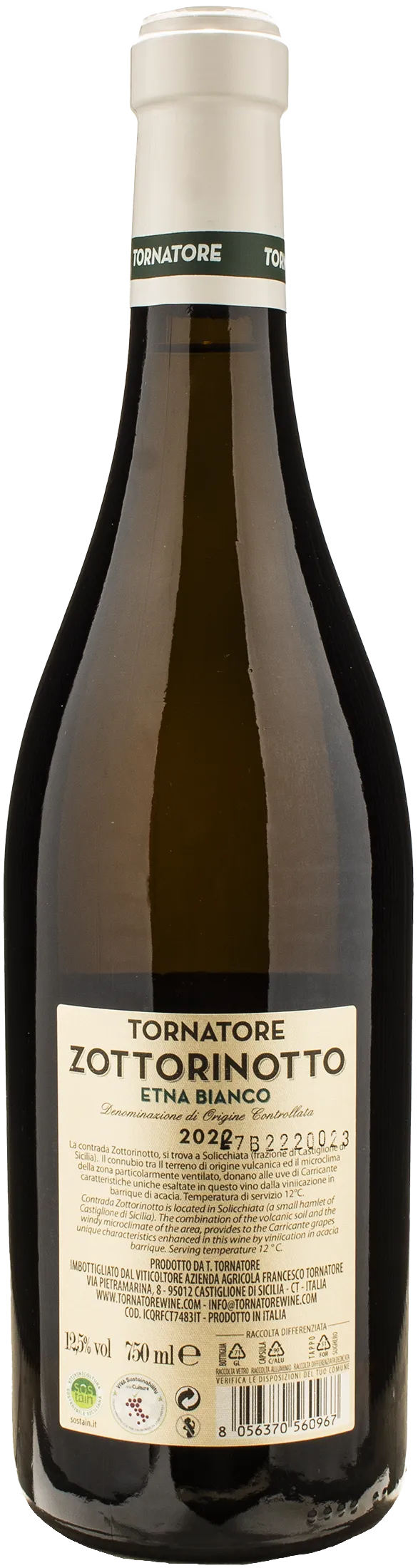
Etna Bianco Zottorinotto 2022
| Denomination | DOC Etna Bianco |
|---|---|
| Size | 0,75 l |
| Alcohol content | 12.5% by volume |
| Area | Sicily (Italy) |
| Grape varieties | 100% Carricante |
| Aging | About 8 months in acacia barriques and 6 months in bottle. |
- Name and vintage: Etna DOC 2022, still white wine with 12.5% alcohol by volume
- Grape variety and origin: 100% Carricante from volcanic soils of Castiglione di Sicilia
- Aroma and taste: notes of vanilla, honey, broom and yellow peach; pronounced savouriness and minerality
- Vinification: in acacia barriques, aged 8 months on fine lees and 6 months in bottle
- Serving: at 10-12 °C with fish and cheese. Awards: 94 pts Suckling, 92 pts Parker
Description
What kind of wine it is
Tornatore Etna Bianco Zottorinotto is a still white wine that expresses the authenticity of Sicilian viticulture through the use of Carricante grapes. In the glass, it stands out for its straw yellow colour enriched with bright golden reflections. The aromatic profile is intense, with hints of vanilla and honey intertwined with notes of broom flowers and ripe yellow peach. On the palate, it reveals a complex structure, harmonised by a pronounced savouriness and refined persistence. It is an ideal companion for fish dishes and flavourful cheeses, best served at a temperature between ten and twelve degrees.
Where it comes from
This white originates on the northern slope of the volcano, in the territory of Castiglione di Sicilia. The vineyards, managed according to organic farming principles, are trained using the spur-pruned cordon method on deep volcanic soil, a fundamental element that gives the wine a vibrant mineral tension. Tornatore has been operating in these lands since 1865, overseeing every stage of production to enhance the characteristics of the grape variety. The unbreakable bond with the Etna area ensures a distinctive character and a close connection with its place of origin.
How it is produced
The production process begins in autumn with a rigorous manual harvest, followed by the selection of the best bunches. The grapes are destemmed and gently pressed to preserve the quality of the must. Fermentation occurs spontaneously, without temperature control, inside acacia barrels. Subsequently, the wine rests on the fine lees for eight months to enrich its aromatic range. Ageing continues in the same barrels for a further eight months, concluding with a final rest of six months that shapes its ultimate elegance.
History and Curiosities
On the volcanic slopes of Castiglione di Sicilia, the historic Tornatore winery produces a superb Etna Bianco DOC 2022, made exclusively from Carricante grapes grown organically. Following a meticulous manual harvest, the refined maturation in acacia barriques on fine lees for eight months releases enveloping aromas of broom, ripe yellow peach and honey. Praised by critics such as James Suckling and Robert Parker, this wine caresses the palate with extraordinary savouriness and intense minerality.
Awards
-
2022
 94
94/100
James Suckling is an influential American wine critic and journalist who worked at Wine Spectator for 30 years. He left the magazine in 2010 to start his own website and guidebook (JamesSuckling.com). He specialises in Italian and Bordeaux wines.
-
2022
 92
92/100
The prestigious international wine guide from the renowned Robert Parker, the world's most experienced and trusted wine taster.
Tasting notes

Perfume

Color

Taste
Serve at:
10 - 12 °C
Longevity:
05 - 10 years

- Start up year: 1865
- Oenologist: Angelo Di Grazia
- Bottles produced: 350.000
- Hectares: 72


| Name | Tornatore Etna Bianco Zottorinotto 2022 |
|---|---|
| Type | White green still |
| Denomination | Etna DOC |
| Vintage | 2022 |
| Size | 0,75 l |
| Alcohol content | 12.5% by volume |
| Grape varieties | 100% Carricante |
| Country | Italy |
| Region | Sicily |
| Vendor | Cantine Tornatore |
| Story | History and Curiosities On the volcanic slopes of Castiglione di Sicilia, the historic Tornatore winery produces a superb Etna Bianco DOC 2022, made exclusively from Carricante grapes grown organically. Following a meticulous manual harvest, the refined maturation in acacia barriques on fine lees for eight months releases enveloping aromas of broom, ripe yellow peach and honey. Praised by critics such as James Suckling and Robert Parker, this wine caresses the palate with extraordinary savouriness and intense minerality. |
| Origin | Northern slope of Mount Etna, in the municipality of Castiglione di Sicilia (Catania) |
| Soil composition | Volcanic soil |
| Cultivation system | Spurred cordon |
| Yield per hectare | 6.000 kg/ettaro |
| Harvest | Second and third ten days of October |
| Production technique | Manual harvest in small crates; manual selection on a sorting belt; destemming and gentle crushing; soft pressing; fermentation in 225-litre acacia barriques without temperature control; ageing on fine lees for about 8 months; ageing in acacia barriques for about 8 months and then 6 months in bottle. |
| Wine making | Grapes are destemmed and lightly crushed, then gently pressed; the must ferments without temperature control in 225-litre acacia barriques; at the end of fermentation, it rests on the fine lees for about 8 months, with maturation in acacia barriques for about 8 months and subsequently 6 months in bottle. |
| Aging | About 8 months in acacia barriques and 6 months in bottle. |
| Allergens | Contains sulphites |