


Daniele Ricci
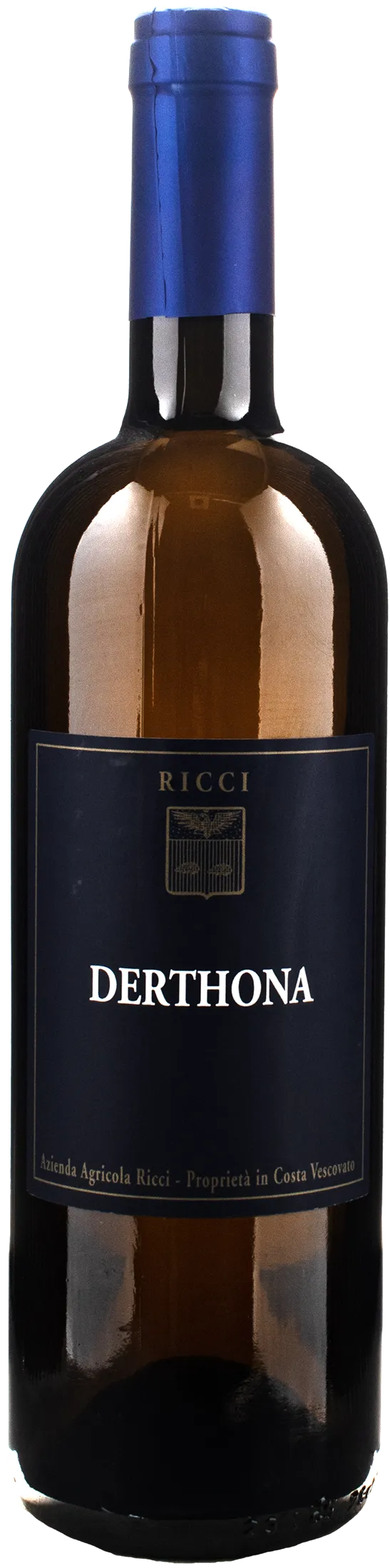
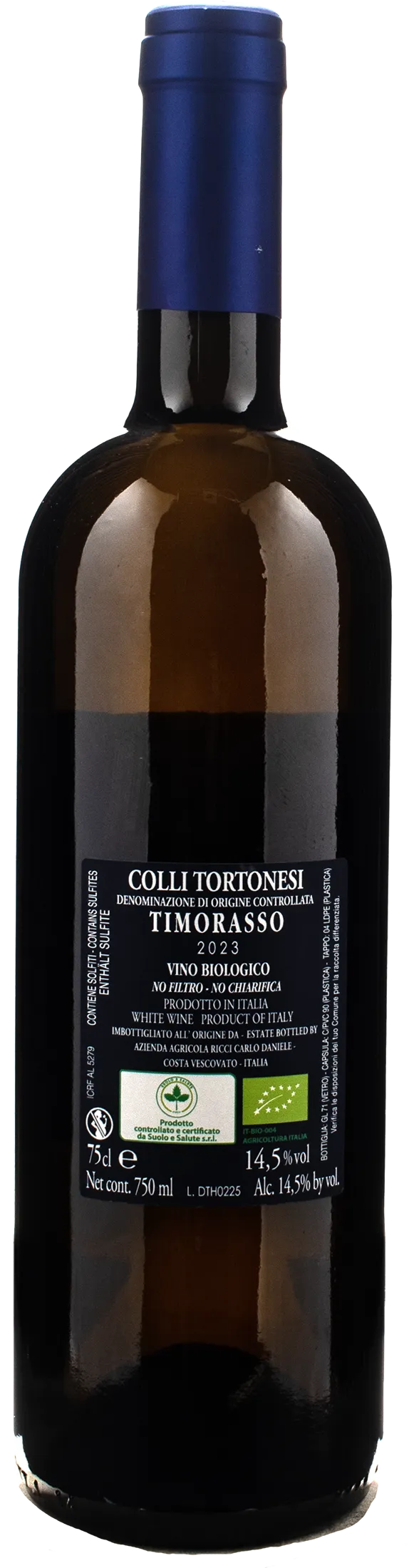
Derhona 2023
| Denomination | DOC Colli Tortonesi Timorasso |
|---|---|
| Size | 0,75 l |
| Alcohol content | 14.5% by volume |
| Area | Piedmont (Italy) |
| Grape varieties | 100% Timorasso |
| Aging | Aged for 10 months in stainless steel tanks, followed by bottle ageing; bottled without filtration or fining. |
- Timorasso organic white wine: Colli Tortonesi denomination, 14.5% vol, 0.75 l bottle
- Origin Costa Vescovato: vineyards at 300 metres on Tortonian marls, family-run since 1929
- Natural fermentation: indigenous yeasts and skin maceration for 3 days
- Maturation: 10 months in stainless steel and bottle ageing, no filtration or fining
- Tasting notes: citrus and sweet spice notes; fresh, balanced and harmonious palate
Description
What kind of wine it is
Daniele Ricci's Derhona is an organic white wine made from Timorasso grapes, an authentic expression of the Piedmontese landscape of the Colli Tortonesi. Characterised by a bright straw-yellow hue, it reveals an olfactory profile that pairs crisp citrus aromas with delicate hints of sweet spices. On the palate, it is fresh, dynamic, and balanced, with a harmonious taste progression. Bottled without filtration or fining, it preserves its aromatic character intact for a satisfying and well-structured tasting experience.
Where it comes from
The grapes originate in Costa Vescovato, in the Colli Tortonesi area, from vineyards situated at an altitude of approximately three hundred metres. The soils are distinguished by the presence of Tortonian marl, a fundamental geological element that provides structure and profoundly influences the character of the wine. The natural conditions of the hilly environment ensure the ideal development of the bunches, allowing the plants to express a clear and recognisable territorial identity, typical of the Piedmont region.
How it is produced
The winemaking process involves spontaneous fermentation carried out exclusively by indigenous yeasts. This is followed by three days of maceration on the skins in stainless steel tanks, conducted without temperature control. The wine ages for ten months in the same containers and completes its journey with a period of rest in the bottle. The decision not to carry out filtration or fining protects the original aromatic integrity, ensuring a structural balance supported by a solid freshness.
History and curiosities
Since 1929, the Ricci family has been championing the Colli Tortonesi, a tradition that finds its peak expression in the 2023 Derhona. This 100% Timorasso is produced in Costa Vescovato on Tortonian marl soils. The artisanal approach involves spontaneous fermentation using indigenous yeasts and three days of skin maceration. Following ten months of ageing in stainless steel, the wine is bottled without filtration, ensuring a vibrant, authentic glass that is deeply rooted in the local area.
Tasting notes

Perfume

Color

Taste
Serve at:
12 - 14 °C
Longevity:
03 - 05 years

- Start up year: 1929
- Hectares: 15
Today, the estate's vineyard area covers approximately 15 hectares, out of a total of 25 hectares of land. Most of it (12 hectares) is concentrated in a single block around Cascina San Leo, where small quantities of ancient grains are also grown, and there is an orchard, a vegetable garden and a farmhouse. The rest (3 hectares) is in Carezzano, where in 2022 Daniele started a new project together with his son Mattia, who was born in 1996 and represents the fourth generation. Read more



| Name | Ricci Derhona 2023 |
|---|---|
| Type | White organic still |
| Denomination | Colli Tortonesi DOC |
| Vintage | 2023 |
| Size | 0,75 l |
| Alcohol content | 14.5% by volume |
| Grape varieties | 100% Timorasso |
| Country | Italy |
| Region | Piedmont |
| Vendor | Daniele Ricci |
| Story | History and curiosities Since 1929, the Ricci family has been championing the Colli Tortonesi, a tradition that finds its peak expression in the 2023 Derhona. This 100% Timorasso is produced in Costa Vescovato on Tortonian marl soils. The artisanal approach involves spontaneous fermentation using indigenous yeasts and three days of skin maceration. Following ten months of ageing in stainless steel, the wine is bottled without filtration, ensuring a vibrant, authentic glass that is deeply rooted in the local area. |
| Origin | Costa Vescovato, Tortona Hills, Piedmont, Italy |
| Soil composition | Soils rich in Tortonian marl |
| Fermentation temperature | Without temperature control |
| Production technique | Spontaneous alcoholic fermentation with indigenous yeasts; short maceration on the skins (3 days) in stainless steel tanks without temperature control; ageing for 10 months in stainless steel; bottled without filtration or fining. |
| Wine making | Spontaneous alcoholic fermentation with indigenous yeasts only; maceration on the skins for 3 days in stainless steel vats without temperature control; ageing for 10 months in stainless steel followed by resting in the bottle; bottled without filtration or fining. |
| Aging | Aged for 10 months in stainless steel tanks, followed by bottle ageing; bottled without filtration or fining. |
| Allergens | Contains sulphites |