


Cantina Kurtatsch
Gewurztraminer Arenis 2025
| Denomination | DOC Alto Adige Traminer Aromatico |
|---|---|
| Size | 0,75 l |
| Alcohol content | 13.5% by volume |
| Area | Trentino Alto Adige (Italy) |
| Grape varieties | 100% Traminer Aromatico |
| Aging | Ageing on fine lees and for 3 months in the bottle |
- Grape variety and style: 100% Gewürztraminer, still dry white wine, full-bodied and structured
- Intense aromas: hints of rose, magnolia, jasmine, lychee, pear and exotic spices
- Balanced palate: enveloping, almost oily body, persistent freshness and a mineral note
- Origin and soils: Cortaccia, Alto Adige DOC, 300-400 m, red sandstone and clay soils
- Winemaking and service: cold maceration, ageing on fine lees; 10-12°C, 13.5% vol
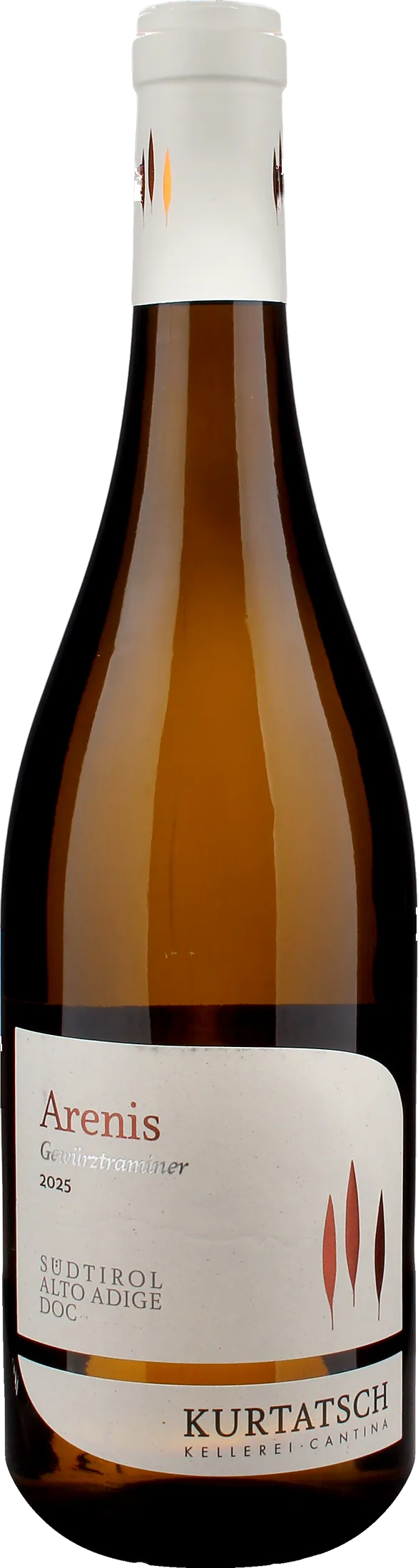
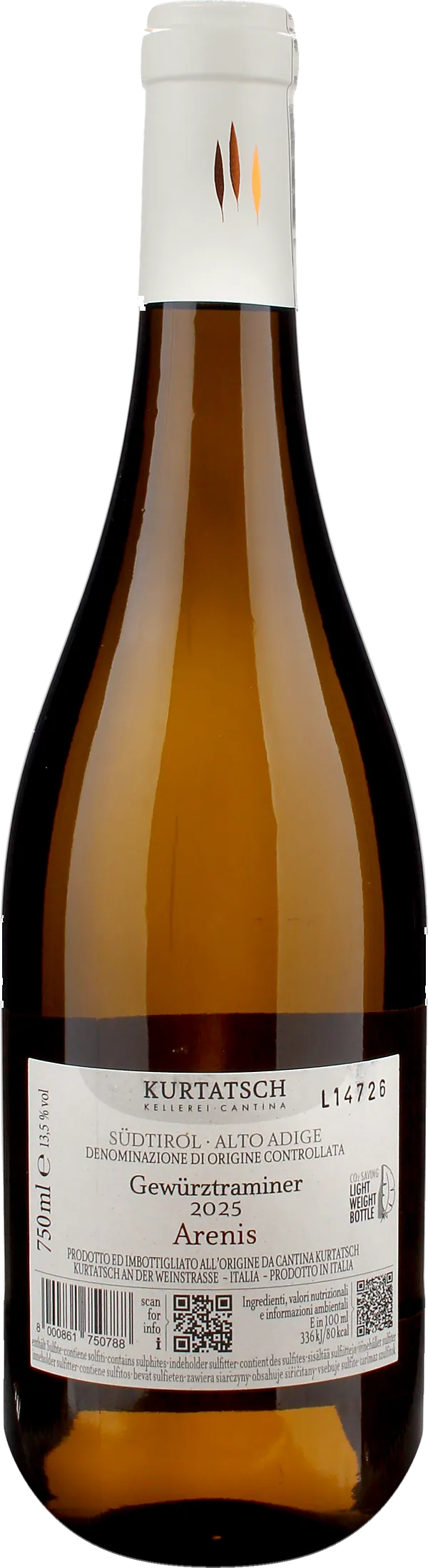
Description
What type of wine it is
Arenis by Kurtatsch is a still white wine with a clear identity, made from Gewürztraminer grapes grown in the Alto Adige appellation. The style is full-bodied and well-structured, enhanced by an almost oily texture that softly coats the palate. The tasting reveals a persistent freshness and a distinct minerality, resulting from fermentation in stainless steel and ageing on fine lees, giving great balance and momentum to every sip.
Where it comes from
The grapes come from east-facing hillside vineyards in the municipality of Cortaccia, cultivated between 300 and 400 metres above sea level according to mountain viticulture principles. The silty-sandy soils are rich in clay, limestone elements and red sandstone, the local rock that gave Arenis its name. This geological setup imparts a marked mineral imprint to the Gewürztraminer, defining the gustatory tension of a variety historically rooted in nearby Tramin.
How it is produced
Production begins with cold maceration, followed by temperature-controlled fermentation in stainless steel, which is essential for protecting the aromatic clarity of the must. Subsequent ageing on fine lees shapes the wine's structure before the final maturation. The bouquet expresses intense floral aromas of rose and magnolia, combined with hints of lychee, pear and exotic spices, introducing a vigorous palate with a long, clean finish.
History and curiosities
Originally from Tramin, Gewürztraminer embodies the authentic soul of Alto Adige DOC. This wine from Cantina Kurtatsch is born from the passion of 190 families dedicated to mountain viticulture in the hillside vineyards of Cortaccia, situated between 300 and 400 metres above sea level. The name Arenis pays tribute to red sandstone, a rock that enriches the silty-sandy soils, giving the glass an unmistakable identity. This elegant white fascinates with its exceptional longevity, being capable of evolving in the bottle beautifully for 3-5 years.
Tasting notes

Perfume

Color

Taste
Serve at:
12 - 14 °C
Longevity:
03 - 05 years
- Start up year: 1900
- Oenologist: Erwin Carli
- Bottles produced: 1.600.000
- Hectares: 190
Outstanding wine is made in the vineyard. That’s why we consider our members – who do the vineyard work – to be the protagonists. For generations, they have cultivated a special connection to their vineyards, and know every single grapevine. This invaluable knowledge, paired with the small structure of our winery, offers the best prerequisites for the production of unique, characterful wines.
Thanks to the 190 small-structured family farms that cultivate 190 hectares of vineyards in a sustainable way, we are able to select the best grape material for each individual location.
We, together with our 190 members, have committed ourselves to producing nature-oriented wines through a comprehensive policy of sustainibility. The goal: sustainability in all areas – from the work in the vineyard through to the final product. During the year, we are in continuous exchange with our members to advise and support. Sustainibility is also a topic in the cellars: continuing education and optimizing guarantee sustainably designed work methods. Read more


| Name | Kurtatsch Gewurztraminer Arenis 2025 |
|---|---|
| Type | White still aromatic |
| Denomination | Alto Adige DOC |
| Vintage | 2025 |
| Size | 0,75 l |
| Alcohol content | 13.5% by volume |
| Grape varieties | 100% Traminer Aromatico |
| Country | Italy |
| Region | Trentino Alto Adige |
| Vendor | Cantina Kurtatsch |
| Story | History and curiosities Originally from Tramin, Gewürztraminer embodies the authentic soul of Alto Adige DOC. This wine from Cantina Kurtatsch is born from the passion of 190 families dedicated to mountain viticulture in the hillside vineyards of Cortaccia, situated between 300 and 400 metres above sea level. The name Arenis pays tribute to red sandstone, a rock that enriches the silty-sandy soils, giving the glass an unmistakable identity. This elegant white fascinates with its exceptional longevity, being capable of evolving in the bottle beautifully for 3-5 years. |
| Origin | Cortaccia (South Tyrol, Trentino-South Tyrol, Italy) |
| Climate | Mountain climate |
| Soil composition | Silty-sandy soils with red sandstone, clay and oxides |
| Fermentation temperature | Temperature controlled |
| Production technique | Cold maceration in the press; temperature-controlled fermentation in stainless steel; ageing on fine lees; bottling under a protective atmosphere (nitrogen) |
| Wine making | Cold maceration in the press; temperature-controlled fermentation in stainless steel; ageing on fine lees; bottling in a protective atmosphere (nitrogen) |
| Aging | Ageing on fine lees and for 3 months in the bottle |
| Total acidity | 5.7 gr/L |
| Residual sugar | 3.9 gr/L |
| Allergens | Contains sulphites |