


San Michele Appiano
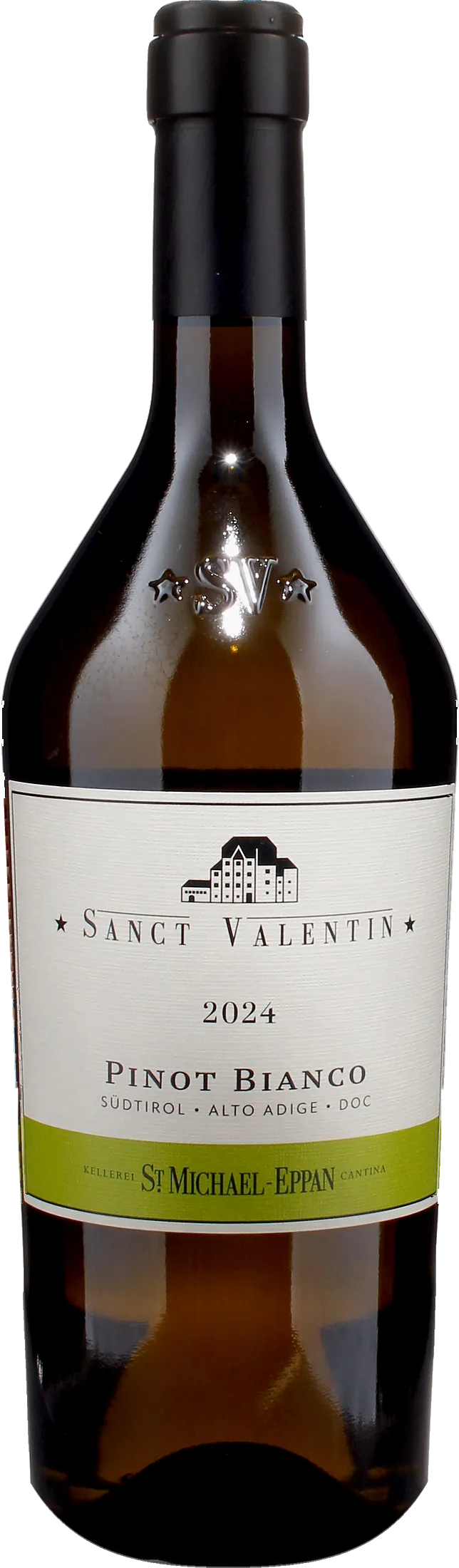
Sanct Valentin Pinot Bianco 2024
| Denomination | DOC Alto Adige Pinot Bianco |
|---|---|
| Size | 0,75 l |
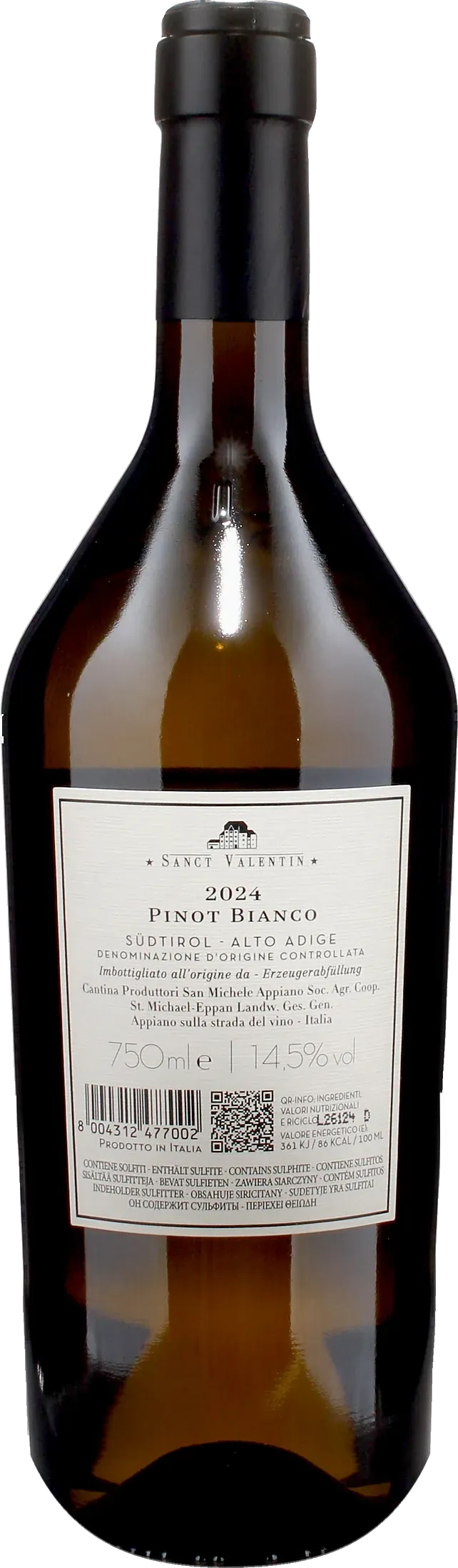
| Alcohol content | 14.5% by volume |
| Area | Trentino Alto Adige (Italy) |
| Grape varieties | 100% Pinot Bianco |
| Aging | One half matures in barriques and tonneaux, while the remaining part ages in large oak casks; after just under a year, the two wines are blended and age together for a further six months in steel tanks. |
- Designation and grape: Alto Adige DOC, 100% Pinot Bianco, 2024 vintage
- Aromas and colour: notes of apple, melon and vanilla; yellow with greenish tints
- Flavour: smooth and intense, fresh and refined, with a subtle and lively minerality
- Vinification: maturation in small and large oak barrels; final ageing in stainless steel
- Origin and pairings: vineyards in Appiano at 450–600 m; ideal with starters and delicate dishes
Description
What type of wine it is
Sanct Valentin Pinot Bianco from San Michele Appiano is a still white wine with the Alto Adige Denominazione di Origine Controllata (DOC) designation. Produced from Pinot Bianco grapes, it presents a yellow colour to the eye, enhanced by greenish reflections. The aromatic bouquet is characterised by scents of apple and melon that blend with delicate nuances of vanilla. On the palate, it proves velvety and concentrated, balanced by a vibrant freshness and a subtle minerality, with a structure enriched by vinification and ageing in oak barrels and steel tanks.
Where it comes from
The vineyards are located in the municipality of Appiano. Situated at an altitude between 450 and 600 metres, the vines enjoy south and south-east exposure. The soil is distinguished by the presence of gravel and limestone with clay veins, fundamental elements for giving the wine its typical mineral character. The vines are managed with very low yields per hectare, thus ensuring fruit of extraordinary expressive intensity.
How it is produced
Production begins with a meticulous manual selection of the Pinot Bianco bunches. In the cellar, one part undergoes alcoholic and malolactic fermentation with maceration on the lees in small wooden barrels, while the remaining part is vinified in large oak casks. After an ageing period of about a year in wood, the various components are assembled into a harmonious final blend. The process concludes with a further rest of six months in stainless steel tanks, a fundamental phase for harmonising the wine's structure and preserving its lively flavour.
History and trivia
Introduced in 2001 as part of the prestigious Sanct Valentin range, this wine showcases grapes that were unfairly undervalued for a long time. The San Michele Appiano winery, which has cared for the most important wine-growing municipality in South Tyrol for over a century, guarantees its exceptional quality. Its extraordinary longevity bears witness to a value that is out of the ordinary for this still white wine.
Tasting notes

Perfume

Color

Taste
Serve at:
12 - 14 °C
Longevity:
05 - 10 years
Decanting time:
1 hour

- Start up year: 1907
- Oenologist: Hans Terzer
- Bottles produced: 2.800.000
- Hectares: 390
The surrounding soils offer exceptional characteristics for the cultivation of unique wines. Harvest after harvest, passion has become culture. Read more


| Name | San Michele Appiano Sanct Valentin Pinot Bianco 2024 |
|---|---|
| Type | White still |
| Denomination | Alto Adige DOC |
| Vintage | 2024 |
| Size | 0,75 l |
| Alcohol content | 14.5% by volume |
| Grape varieties | 100% Pinot Bianco |
| Country | Italy |
| Region | Trentino Alto Adige |
| Vendor | San Michele Appiano |
| Story | History and trivia Introduced in 2001 as part of the prestigious Sanct Valentin range, this wine showcases grapes that were unfairly undervalued for a long time. The San Michele Appiano winery, which has cared for the most important wine-growing municipality in South Tyrol for over a century, guarantees its exceptional quality. Its extraordinary longevity bears witness to a value that is out of the ordinary for this still white wine. |
| Origin | Appiano (Bolzano) |
| Climate | Altitude: 450–600 m above sea level; exposure: south and south-east. |
| Soil composition | Gravelly soils with a calcareous content and the presence of clay. |
| Cultivation system | Guyot |
| Yield per hectare | 45 hectolitres |
| Harvest | From mid- to late September (manual harvesting and selection of the grapes). |
| Production technique | Alcoholic and malolactic fermentation in barriques and tonneaux with maceration on the lees; the remainder vinified in large oak casks. |
| Wine making | One half undergoes alcoholic and malolactic fermentations and maceration on the lees in barriques and tonneaux; the remaining part is vinified in large oak casks. |
| Aging | One half matures in barriques and tonneaux, while the remaining part ages in large oak casks; after just under a year, the two wines are blended and age together for a further six months in steel tanks. |
| Total acidity | 5.5 gr/L |
| Allergens | Contains sulphites |