
Under the law of Hong Kong, intoxicating liquor must not be sold or supplied to a minor in the course of business. | 根據香港法律,不得在業務過程中,向未成年人售賣或供應令人醺醉的酒類。


Lis Neris
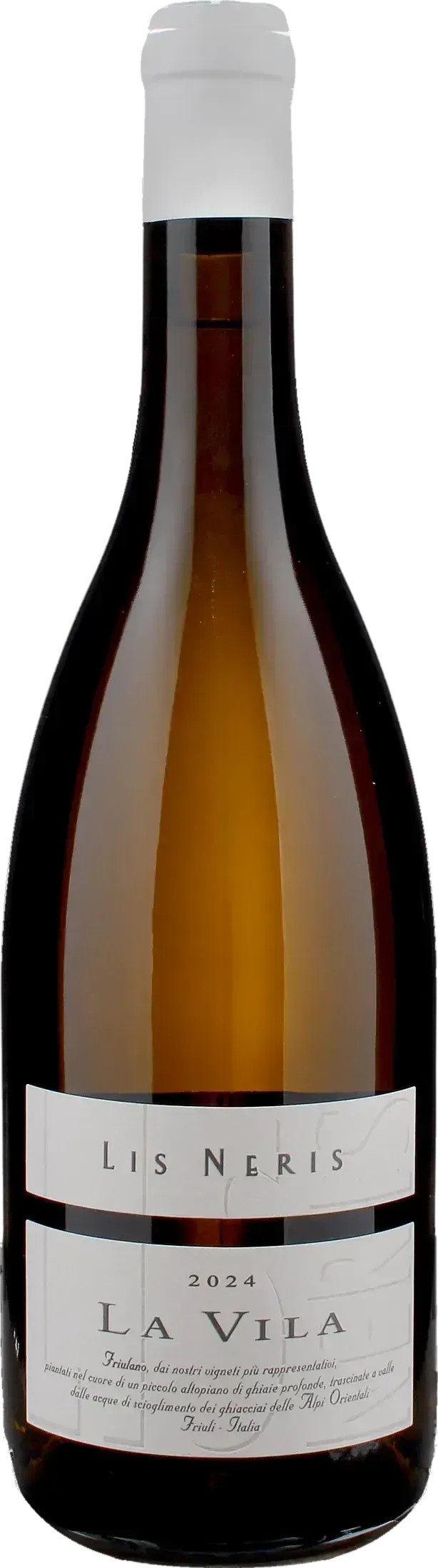
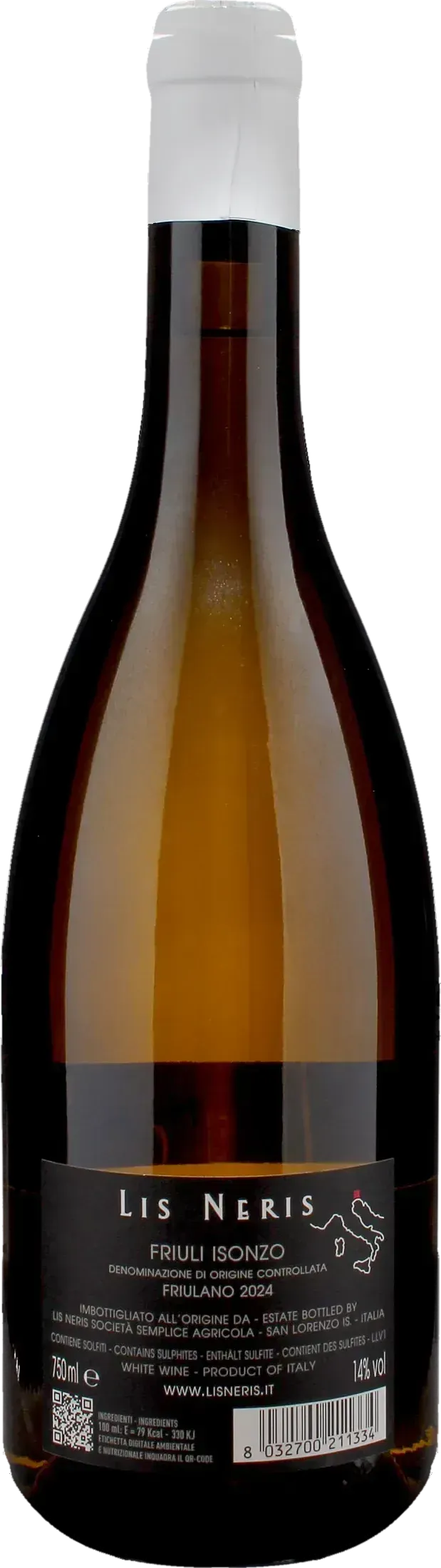
Friuli Isonzo Friulano La Vila 2024
| Denomination | DOC Friuli Isonzo Friulano |
|---|---|
| Size | 0,75 l |
| Alcohol content | 14.0% by volume |
| Area | Friuli-Venezia Giulia (Italy) |
| Grape varieties | 100% Friulano/Sauvignon Vert |
| Aging | Maturation for 11 months, blended between stainless steel and barrels (resting on the fine lees with frequent bâtonnage), followed by 4 months of final ageing. |
- Type: Still white wine DOC from 100% Friulano grapes.
- Nose: Notes of yellow peach and wild flowers, with delicate hints of almond.
- Palate: Rich and enveloping palate, supported by freshness and a persistent finish.
- Origin: Feudi vineyard, on a gravelly limestone plateau in Friuli Isonzo.
- Winemaking: 11 months in steel and barrels with lees stirring, plus 4 months of final ageing.
Description
What type of wine it is
La Vila Lis Neris is a still white wine produced in Friuli-Venezia Giulia from Friulano grapes. It falls under the Friuli Isonzo designation and faithfully represents the profile of its territory of origin. It presents a rich and enveloping style, characterised by notes of yellow peach, wildflowers and hints of almond, supported by a pleasant freshness and good structural balance. Careful vinification, which includes stages in steel and wood, defines its elegant character and persistent finish.
Where it comes from
The grapes come from the Feudi vineyard, located in the municipality of Romans, within the Friuli-Venezia Giulia region. The vineyards grow at an altitude of twenty-three metres, rooted on a unique calcareous gravel plateau in the San Lorenzo area, strategically positioned between the Isonzo river and the border with Slovenia. This specific geological and territorial conformation favours slow and steady ripening of the grapes, ensuring optimal aromatic concentration for the vines grown using the Guyot system.
How it is produced
The production process begins with fermentation in steel at a controlled temperature, maintained between 20 and 22 °C, to preserve the freshness and integrity of the grape variety. Subsequently, the wine matures for eleven months in a blend of steel and barrels. During this resting phase on the fine lees, frequent bâtonnage is performed, a practice that gives greater breadth and volume to the sip. The process is completed with a final ageing of four months, essential for harmonising the wine's structure before it is released onto the market.
History and curious facts
La Vila wine celebrates the ancient local traditions of Friuli, specifically evoking that area where the social and public life of the territory once actively flourished. This label is born from the great mastery of oenologist Alvaro Pecorari, a key figure in one of the most dynamic and lively wineries in the entire region. The grape used for its production, historically also known as Sauvignon Vert, represents a fundamental piece of local oenological history. The historic plateau between the Isonzo river and the Slovenian border enriches the story.
Tasting notes

Perfume

Color

Taste
Serve at:
12 - 14 °C
Longevity:
10 - 15 years
- Start up year: 1879
- Oenologist: Alvaro Pecorari
- Bottles produced: 450.000
- Hectares: 74


| Name | Lis Neris Friuli Isonzo Friulano La Vila 2024 |
|---|---|
| Type | White still |
| Denomination | Friuli Isonzo DOC |
| Vintage | 2024 |
| Size | 0,75 l |
| Alcohol content | 14.0% by volume |
| Grape varieties | 100% Friulano/Sauvignon Vert |
| Country | Italy |
| Region | Friuli-Venezia Giulia |
| Vendor | Lis Neris |
| Story | History and curious facts La Vila wine celebrates the ancient local traditions of Friuli, specifically evoking that area where the social and public life of the territory once actively flourished. This label is born from the great mastery of oenologist Alvaro Pecorari, a key figure in one of the most dynamic and lively wineries in the entire region. The grape used for its production, historically also known as Sauvignon Vert, represents a fundamental piece of local oenological history. The historic plateau between the Isonzo river and the Slovenian border enriches the story. |
| Origin | Municipality of Romans, Feudi vineyard |
| Soil composition | Calcareous gravelly plateau |
| Cultivation system | Guyot |
| Plants per hectare | Four thousand, eight hundred |
| Yield per hectare | 50 hectolitres |
| Fermentation temperature | 20–22°C |
| Production technique | Fermentation in temperature-controlled stainless steel tanks; maturation in steel and barrels with ageing on the fine lees and frequent bâtonnage; final ageing. |
| Wine making | Fermentation in temperature-controlled stainless steel tanks (20–22 °C); maturation for 11 months with a blend of stainless steel and barrels, with ageing on the fine lees and frequent bâtonnage; final ageing for 4 months. |
| Aging | Maturation for 11 months, blended between stainless steel and barrels (resting on the fine lees with frequent bâtonnage), followed by 4 months of final ageing. |
| Allergens | Contains sulphites |