

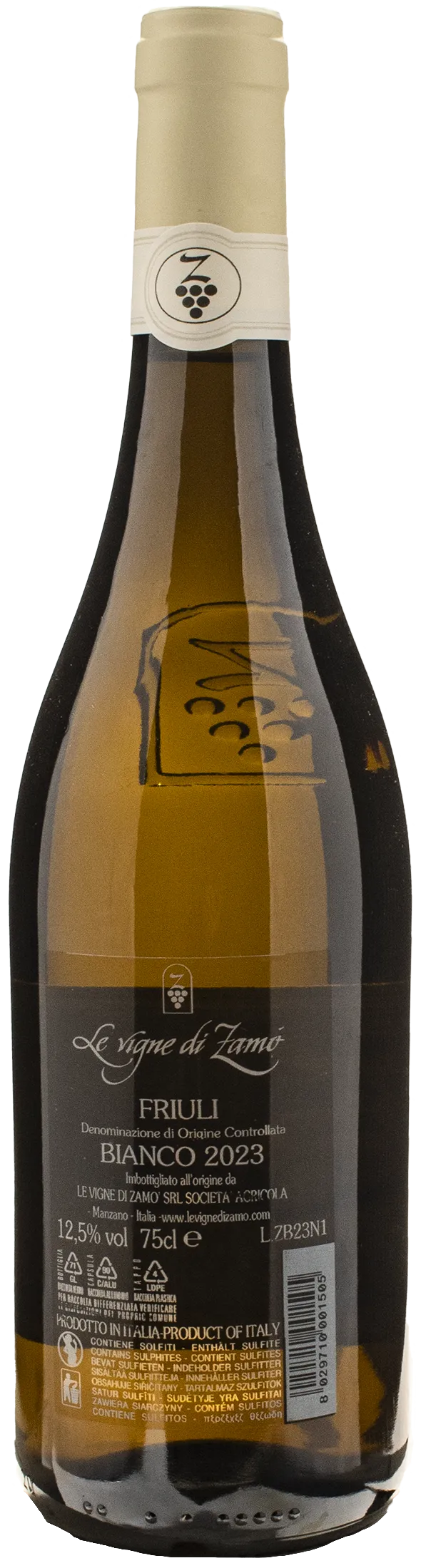
Le Vigne di Zamo
Bianco 2023
| Denomination | DOC Friuli Bianco |
|---|---|
| Size | 0,75 l |
| Alcohol content | 12.5% by volume |
| Area | Friuli-Venezia Giulia (Italy) |
| Grape varieties | Friulano/Sauvignon Vert, Pinot Grigio, Ribolla Gialla, Riesling, Sauvignon |
| Aging | 6 months of ageing on the lees; then blended and bottled |
| Other years | 2022 , 2024 |
- Origin: Still white Friuli DOC 2023 produced by Le Vigne di Zamo
- Grape varieties: Composed of Friulano, Pinot Grigio, Ribolla Gialla, Riesling and Sauvignon
- Vinification: In steel at 16–18°C for separate varieties, without malolactic fermentation
- Ageing: 6 months on the lees for structure, followed by blending
- Profile: Apple and bread crust; fresh and velvety, ideal with fish and vegetarian dishes

Description
What kind of wine it is
Le Vigne di Zamo Bianco is a blend of grapes made from Friulano, Pinot Grigio, Ribolla Gialla, Riesling and Sauvignon. In the glass, it displays a golden yellow colour with bright greenish highlights. The bouquet reveals delicate aromas of apple, straw and bread crust, which precede a sip with a refreshing and velvety texture, enriched by clear notes of fruit and aromatic herbs. This precise sensory identity makes it perfect for accompanying fish-based starters and vegetarian dishes, as well as being an elegant aperitif.
Where it comes from
This expression of the Friuli region originates in Manzano, in the heart of Friuli Venezia Giulia. The Le Vigne di Zamo estate works on three distinct terroirs that impart complementary organoleptic nuances to the wine. The vineyards are managed with strict attention to sustainability, a virtuous path that has led the company to achieve organic certification. The interaction between suitable soils and a favourable climate produces excellent grapes, capable of reflecting the truest nature of the Friulian wine landscape.
How it is produced
The harvest takes place in mid-September, followed by pressing and vinification carried out separately for each variety. The musts ferment in temperature-controlled stainless steel to preserve the precise fragrance of the varietal aromas. To maintain the wine's natural freshness on the palate, the winery avoids malolactic fermentation. The wine then matures through six months of ageing on the lees, an essential step to enhance structure and volume on the palate. Once this phase is complete, the different batches are harmoniously combined in the final blend.
History and Curiosities
Since 1978, the family-run winery Le Vigne di Zamò has cultivated 43 hectares in the municipality of Manzano, enhancing three unique terroirs of Friuli. Under the guidance of Nicola Piccoli, the company combines tradition and sustainability, achieving its first organic harvest in 2021. After the harvest, which takes place in mid-September, the different varieties are vinified separately in stainless steel at controlled temperatures and mature for 6 months on the lees before the meticulous final blending, resulting in an elegant white wine with authentic charm.
Tasting notes
Perfume

Color
Taste
Serve at:
08 - 10 °C
Longevity:
03 - 05 years
- Start up year: 1978
- Oenologist: Nicola Piccoli
- Bottles produced: 250.000
- Hectares: 43
The company is fortunate to draw from three different terroirs that give the wines different and unique characters and personalities. The Zamò family has been cultivating the land for centuries: first the grandfather, then the father and finally the sons, all united under the same goal: cultivating the land and making wine as a sign of civilisation and respect for their origins and traditions,
In addition to great white wines, including Friulano and Ribolla Gialla, the company focuses on red wines to maintain the indigenous grape varieties and to pursue new projects and innovations. For years, the Zamò family has been conducting cultivation with sustainability-conscious methods, and in 2021 they obtained the first Certified Organic grape harvest. Read more


| Name | Le Vigne di Zamo Bianco 2023 |
|---|---|
| Type | White still |
| Denomination | Friuli DOC |
| Vintage | 2023 |
| Size | 0,75 l |
| Alcohol content | 12.5% by volume |
| Grape varieties | Friulano/Sauvignon Vert, Pinot Grigio, Ribolla Gialla, Riesling, Sauvignon |
| Country | Italy |
| Region | Friuli-Venezia Giulia |
| Vendor | Le Vigne di Zamo |
| Story | History and Curiosities Since 1978, the family-run winery Le Vigne di Zamò has cultivated 43 hectares in the municipality of Manzano, enhancing three unique terroirs of Friuli. Under the guidance of Nicola Piccoli, the company combines tradition and sustainability, achieving its first organic harvest in 2021. After the harvest, which takes place in mid-September, the different varieties are vinified separately in stainless steel at controlled temperatures and mature for 6 months on the lees before the meticulous final blending, resulting in an elegant white wine with authentic charm. |
| Origin | Manzano (Udine) |
| Harvest | Mid-September |
| Fermentation temperature | 16–18 °C |
| Production technique | Pressing and separate vinification in stainless steel at controlled temperature (16–18 °C), without malolactic fermentation; ageing on the lees for 6 months, then blending and bottling |
| Wine making | The grapes are pressed and vinified separately in stainless steel at a controlled temperature of 16 8°C, without malolactic fermentation. |
| Aging | 6 months of ageing on the lees; then blended and bottled |
| Year production | 250000 bottles |
| Allergens | Contains sulphites |