


Donnhoff
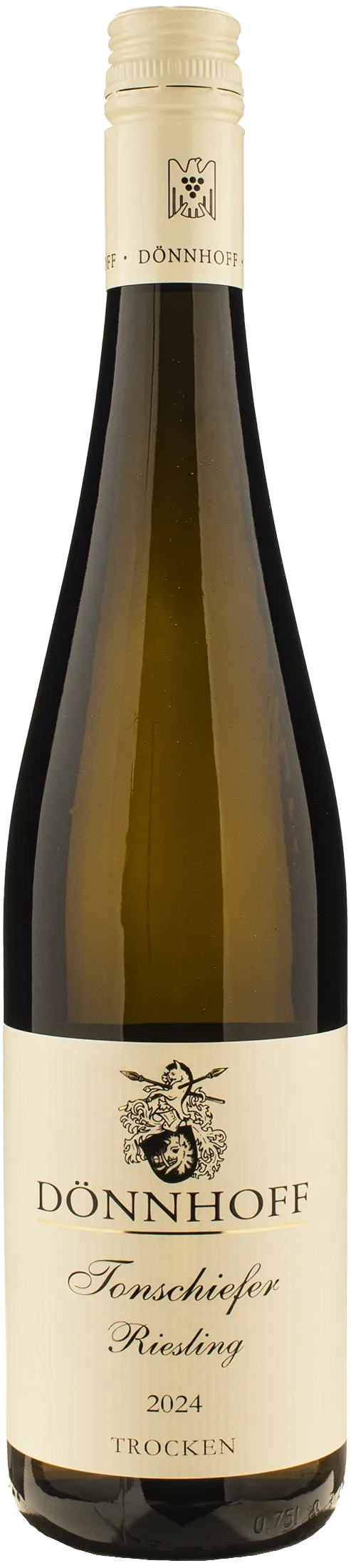
Riesling Tonschiefer Trocken 2024
| Denomination | QbA Mosel-Saar-Ruwer |
|---|---|
| Size | 0,75 l |
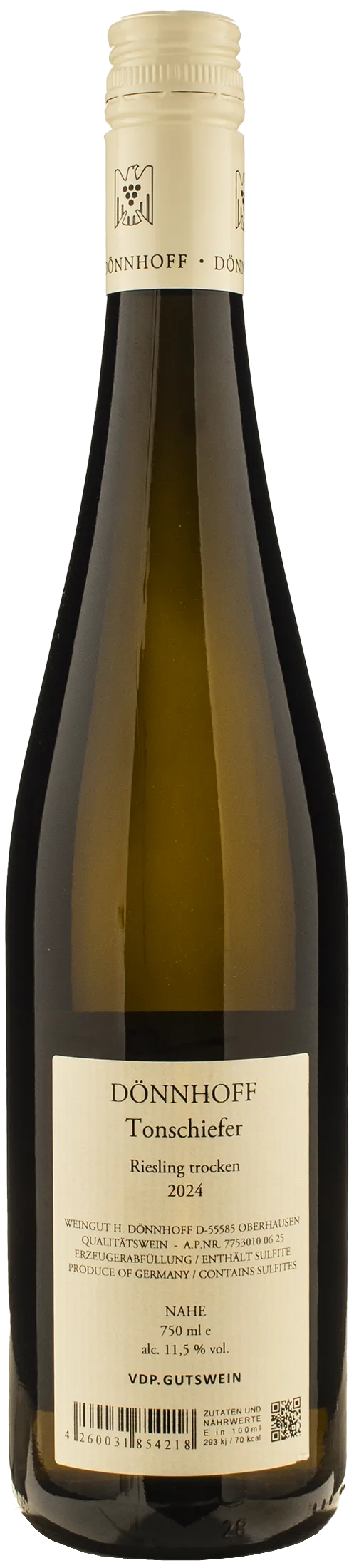
| Alcohol content | 11.5% by volume |
| Area | Mosel-Saar-Ruwer (Germany) |
| Grape varieties | 100% Riesling |
| Aging | Aged partly in stainless steel and partly in traditional large German oak barrels |
- Origin: Leistenberg (Nahe), steep vineyard without irrigation, pronounced minerality
- Vinification: Partly spontaneous fermentation; matured in steel and large barrels
- Aromas: Citrus fruits, unripe pear and white flowers; mineral notes and a hint of hydrocarbon
- Taste: Dry and lively, marked freshness; long finish with light almond nuances
- Recognition: 92 points Robert Parker; ideal with shellfish, fish, white meats and cheeses
Description
What kind of wine it is
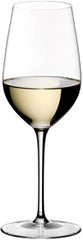
Dönnhoff Riesling Tonschiefer Trocken is a still white wine that precisely expresses the identity of German Riesling. In the glass, it displays a pale straw yellow colour, opening with a fresh bouquet of wisteria, orange blossom and unripe pear, enriched by clear mineral notes and subtle hints of hydrocarbons. On the palate, it is vibrant and driven by a sharp freshness combined with deep minerality. The persistent finish, characterised by almond nuances, makes it ideal for pairing with shellfish dishes, white meats and cheeses.
Where it comes from
This wine originates from the Leistenberg vineyard, a steep site located in the Nahe. The pronounced slope of the land ensures optimal exposure and gradual ripening of the grapes, preserving the purity of the fruit. The vines grow without any artificial irrigation, an agronomic approach that maximises the mineral expression of the soil. This local context gives the wine a defined structure and clear aromas, precisely capturing the essence of the growing area.
How it is produced
Vinification begins with careful manual harvesting carried out in several passes to select the best grapes. The must ferments slowly, partly spontaneously with the help of indigenous yeasts. Ageing is divided between stainless steel tanks, to preserve aromatic tension, and large German oak barrels, to broaden the flavour profile. This technique balances the vigorous mineral component and gives the wine remarkable aromatic complexity, while maintaining its innate elegance.
History and Curiosities
Originating from the steep Erste Lage Leistenberg vineyards in the Nahe, the Dönnhoff Riesling Tonschiefer Trocken 2024 highlights mineral precision by avoiding irrigation. Partial fermentation with indigenous yeasts and maturation between stainless steel and German oak barrels give it great elegance. Awarded 92 points by Robert Parker, it captivates with its absolute purity.
Awards
-
2024
 92
92/100
The prestigious international wine guide from the renowned Robert Parker, the world's most experienced and trusted wine taster.
Tasting notes
Perfume

Color
Taste
Serve at:
10 - 12 °C
Longevity:
05 - 10 years
- Hectares: 25
Read more


| Name | Donnhoff Riesling Tonschiefer Trocken 2024 |
|---|---|
| Type | White still dry |
| Denomination | Mosel-Saar-Ruwer QbA |
| Vintage | 2024 |
| Size | 0,75 l |
| Alcohol content | 11.5% by volume |
| Grape varieties | 100% Riesling |
| Country | Germany |
| Region | Mosel-Saar-Ruwer |
| Vendor | Donnhoff |
| Story | History and Curiosities Originating from the steep Erste Lage Leistenberg vineyards in the Nahe, the Dönnhoff Riesling Tonschiefer Trocken 2024 highlights mineral precision by avoiding irrigation. Partial fermentation with indigenous yeasts and maturation between stainless steel and German oak barrels give it great elegance. Awarded 92 points by Robert Parker, it captivates with its absolute purity. |
| Origin | Leistenberg, Nahe, Germany |
| Cultivation system | null |
| Production technique | Partially spontaneous fermentation with indigenous yeasts; ferments and ages partly in stainless steel and partly in traditional large German oak barrels |
| Wine making | It ferments and matures partly in stainless steel and partly in traditional large German oak barrels; fermentation is partly spontaneous with indigenous yeasts. |
| Aging | Aged partly in stainless steel and partly in traditional large German oak barrels |
| Allergens | Contains sulphites |