
Under the law of Hong Kong, intoxicating liquor must not be sold or supplied to a minor in the course of business. | 根據香港法律,不得在業務過程中,向未成年人售賣或供應令人醺醉的酒類。


Coppo
Barbera d'Asti Camp Du Rouss 2023
Other years:
2021| Denomination | DOCG Barbera d'Asti |
|---|---|
| Size | 0,75 l |
| Alcohol content | 15.0% by volume |
| Area | Piedmont (Italy) |
| Grape varieties | 100% Barbera |
| Aging | 12 months in French oak barriques: 80% second and third use, 20% new |
| Other years | 2021 |
- Name and variety: Barbera d’Asti DOCG made from 100% Barbera grapes from Piedmont
- Origin: Canelli (Asti), altitude 200-250m, south and south-west exposure
- Aged in wood: 12 months in French oak barriques, 80% used and 20% new
- Tasting notes: intense ruby colour, aromas of red fruits, spices, chocolate and liquorice
- Serving: decant for 1 hour at 16-18°C; ideal with porcini risotto, meats and cheeses
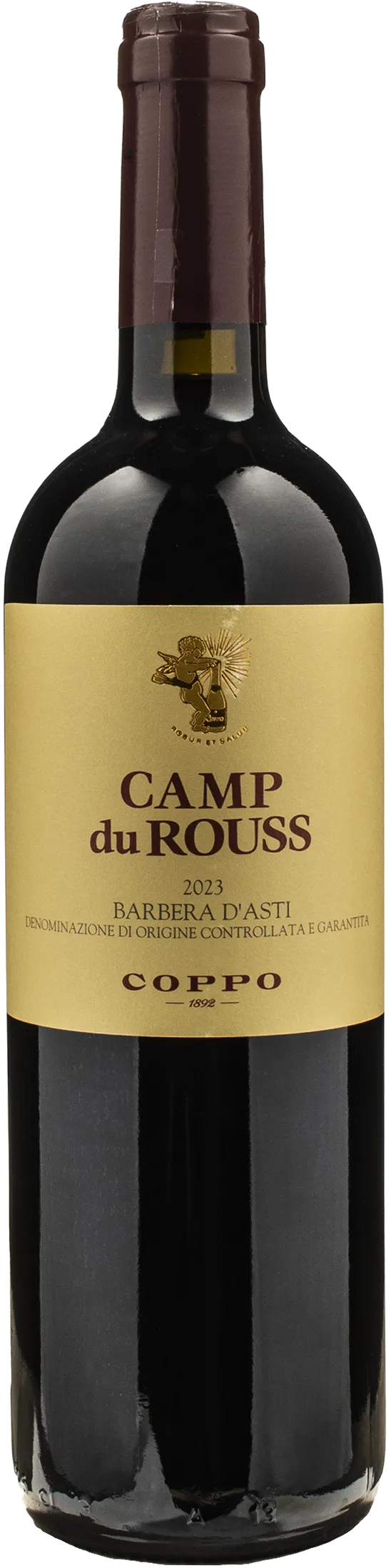
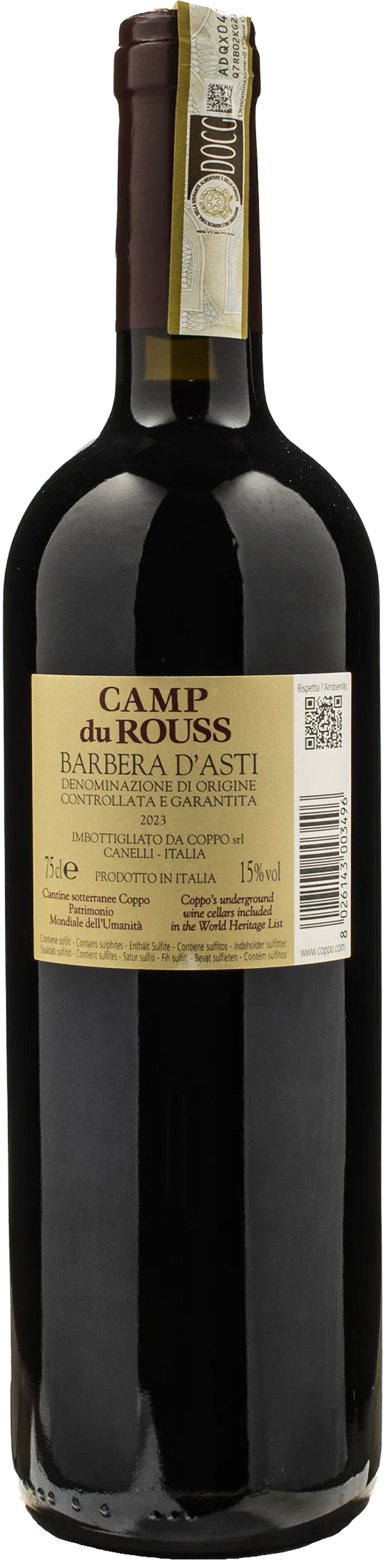
Description
What kind of wine it is
Barbera d’Asti Camp Du Rouss by Coppo is a still red wine made from Barbera grapes in Piedmont. This expression of Barbera d’Asti reveals a deep ruby colour that precedes intense aromas. On the palate, it is a medium-bodied wine, well-structured and persistent, supported by firm tannins and a long, clean finish. Perfect for accompanying rich dishes, it pairs ideally with a porcini mushroom risotto, robust first courses, chicken cacciatore, game, and mature cheeses.
Where it comes from
This Barbera d’Asti originates in Canelli from vineyards situated between 200 and 250 metres above sea level. The favourable south and south-west exposure ensures the grapes achieve optimal ripeness, resulting in a fleshy flavour profile. The vines take root in clay-limestone marl with a predominance of silt, an ideal soil for providing continuity to the palate. The name of the wine, in Piedmontese dialect, means “field of the red”, in memory of the vineyard’s first owner, a man with auburn hair.
How it is produced
Coppo’s production begins in September with the manual selection of bunches. Vinification involves maceration on the skins with gentle pumping over and a delicate fermentation to preserve aromatic freshness. The twelve-month ageing in French oak barrels shapes an olfactory profile rich in notes of red fruit, spices, leather, chocolate, and black olive. The palate is distinguished by a soft and seductive attack, finishing with a characteristic note reminiscent of liquorice.
History and Curiosities
Born in Canelli, in the historic cellars declared a UNESCO World Heritage Site, Coppo's Barbera d’Asti DOCG owes its Piedmontese name “Camp du Rouss” (field of the red) to an ancient and surly owner with red hair. The result of the dedication of a family-run company active since 1892, this excellence stands out for its careful ageing in French oak. Awarded 91 points by James Suckling, it delights the palate with intense aromas of ripe red fruit, a fleshy texture and firm tannins, offering a sip that is always elegant and of great persistence.
Awards
-
2023
 4
4Italian Sommelier Foundation (FIS) guide This has been one of the most prestigious wine guides in Italy for over 10 years.
-
2023
 2
2This guide is highly respected and offers the most comprehensive review of Italian wines. It has a long tradition and is based on blind tastings carried out by over 100 experts.
-
2023
 3
3One of the most prestigious wine guides in Italy.
Tasting notes

Perfume

Color

Taste
Serve at:
16 - 18 °C
Longevity:
05 - 10 years
Decanting time:
1 hour

- Start up year: 1892
- Oenologist: Guglielmo Grasso
- Bottles produced: 420.000
- Hectares: 56
Coppo’s history is one of tradition and bold vision for the future, of sacrifice and innovation. It is a story of the unconditional love that Coppo has for their vines’ origins, for varieties that have always been cultivated in Piedmont, and for old family traditions.
The origins of the winery date back to 1892. For over 120 years, the family has remained the sole owner. Since the beginning, the Coppo family has managed estate vineyards and bottled their wine under the name of Coppo, making it one of the oldest family-run wineries in all of Italy.
In fact, in 2012, the Chamber of Commerce added the winery to the national register of historical businesses, highlighting its uninterrupted activity for over a century in the sector. Read more


| Name | Coppo Barbera d'Asti Camp Du Rouss 2023 |
|---|---|
| Type | Red still |
| Denomination | Barbera d'Asti DOCG |
| Vintage | 2023 |
| Size | 0,75 l |
| Alcohol content | 15.0% by volume |
| Grape varieties | 100% Barbera |
| Country | Italy |
| Region | Piedmont |
| Vendor | Coppo |
| Story | History and Curiosities Born in Canelli, in the historic cellars declared a UNESCO World Heritage Site, Coppo's Barbera d’Asti DOCG owes its Piedmontese name "Camp du Rouss" (field of the red) to an ancient and surly owner with red hair. The result of the dedication of a family-run company active since 1892, this excellence stands out for its careful ageing in French oak. Awarded 91 points by James Suckling, it delights the palate with intense aromas of ripe red fruit, a fleshy texture and firm tannins, offering a sip that is always elegant and of great persistence. |
| Origin | Canelli (Asti) |
| Soil composition | Clayey-calcareous marls with a prevalence of silt |
| Cultivation system | Guyot |
| Plants per hectare | 4000-5000 |
| Harvest | September |
| Production technique | Maceration in contact with the skins with brief and gentle pump-overs; delicate fermentation; ageing for 12 months in French oak barriques |
| Wine making | Skin contact maceration with short and gentle pumping over; gentle fermentation. |
| Aging | 12 months in French oak barriques: 80% second and third use, 20% new |
| Total acidity | 5.54 gr/L |
| PH | 3.56 |
| Residual sugar | 0.1 gr/L |
| Year production | 420000 bottles |
| Allergens | Contains sulphites |