


Abbazia di Novacella
Omnes Dies 2025
| Denomination | IGT Mitterberg |
|---|---|
| Size | 0,75 l |
| Alcohol content | 11.5% by volume |
| Area | Trentino Alto Adige (Italy) |
| Grape varieties | Kerner, Moscato Giallo, Müller Thurgau |
| Aging | 6 months in stainless steel |
| Other years | 2023 , 2022 |
- Blend and style: Still dry white wine from Kerner, Moscato Giallo and Müller-Thurgau
- Alpine origin: Sourced from the Bressanone Basin, Isarco Valley, vineyards at 700–900 metres
- Vinification: Fermentation and maturation for 6 months in stainless steel at 17–19 °C
- Sensory profile: Notes of peach, nutmeg and citrus; fresh and savoury taste
- Serving and pairings: Serving temperature 8–10 °C; ideal with aperitifs, shellfish and fish
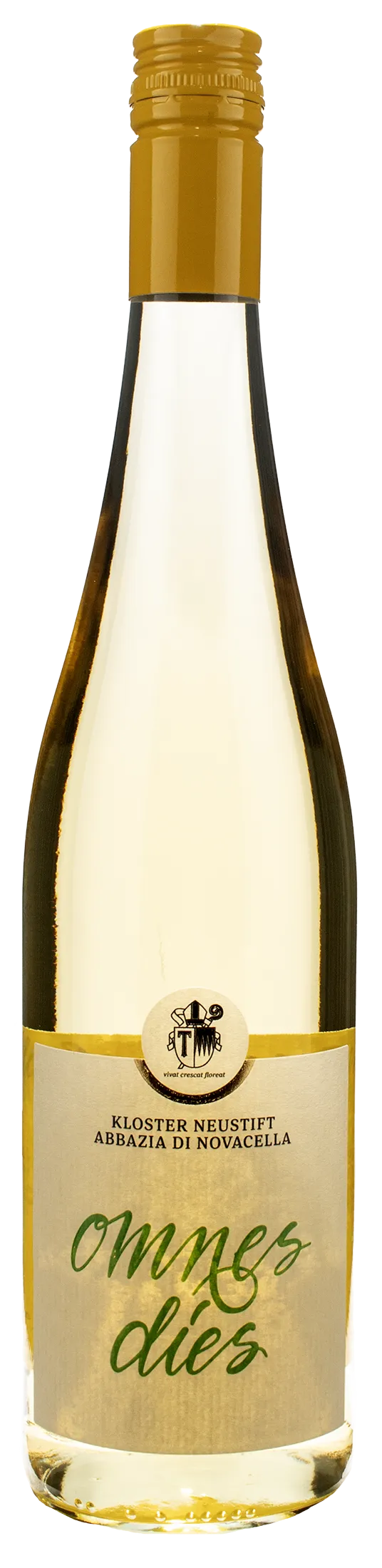
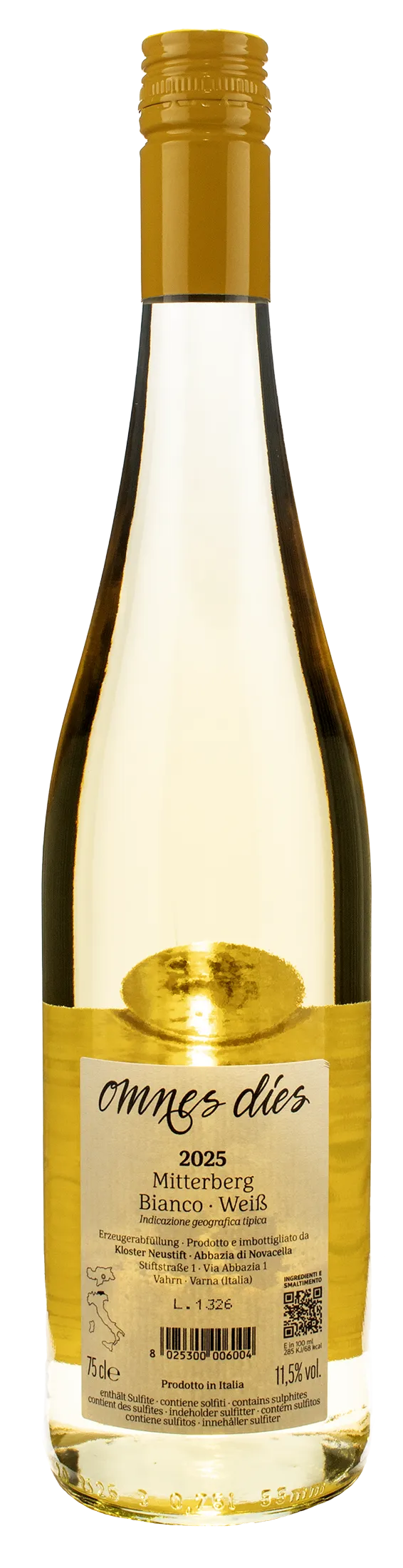
Description
What kind of wine it is
Omnes Dies by Abbazia di Novacella is a still white wine from Alto Adige, the result of a balanced blend of Kerner, Moscato Giallo and Müller Thurgau. An authentic expression of the Vineyards of the Dolomites region, it stands out for its straightforward and fruity style, supported by a pleasant savouriness and well-integrated acidity. The bouquet reveals clear peach notes, accompanied by hints of nutmeg and fresh citrus nuances, which precede a tasty and smooth sip.
Where it comes from
Production originates in Trentino-Alto Adige, on the slopes of the Isarco Valley near Varna, at the historic Abbazia di Novacella estate. The grapes ripen in the Bressanone Basin, one of Italy's northernmost wine-growing areas, where the vineyards grow at altitudes between 700 and 900 metres. The roots sink into a gravelly, silty-sandy soil, essential for giving the wine its typical savoury character. The south, south-east and south-west exposure ensures optimal ripening in the harsh mountain climate, continuing a rural tradition that began in 1142.
How it is produced
Vinification begins with a careful harvest, aimed at selecting only the best bunches. The must ferments in stainless steel tanks at a controlled temperature, a key technique for preserving the original fragrance of the fruit. The wine then matures for six months in the same containers, without the use of barrels, to enhance the brilliance of its greenish-yellow colour and aromatic purity. This meticulous process defines a dynamic, precise and very fresh wine.
History and Curiosities
Produced since 1142 in Italy’s northernmost wine-growing region, Abbazia di Novacella Omnes Dies embodies the centuries-old dedication of the monks. The vines grow on the steep slopes of the Isarco Valley, reaching up to 900 metres above sea level, in an area rich in history. As the Latin name suggests, meaning “every day”, this fresh and fruity wine was created to enhance everyday life. A true gem with surprising longevity, it manages to combine a thousand-year-old tradition with great versatility.
Tasting notes

Perlage

Perfume

Color

Taste
Serve at:
08 - 10 °C
Longevity:
03 - 05 years

- Start up year: 1142
- Oenologist: Celestino Lucin
- Bottles produced: 900.000
- Hectares: 100
Also owned by the Abbey is a vineyard located in South Tyrol's main wine-growing area: the Marklhof estate in Cornaiano, on the 'wine road' near Bolzano. The sandy, dry soil and the airy climate of these hills make it possible to obtain excellent red wines, including a characteristic Kalterersee, a very fine Schiava and a very elegant Pinot Noir.
A third Novacella vineyard is located in Bolzano, around the ancient and tiny St. Mary's Monastery. Here, in the dry and very warm climate of the valley floor, a full-bodied dark Lagrein matures, which is particularly suitable for ageing.
In our wine cellar, the grapes from these three vineyards are raised to wines whose distinct character and quality has been rewarded by the loyalty of generations of friends and connoisseurs. Read more


| Name | Abbazia di Novacella Omnes Dies 2025 |
|---|---|
| Type | White still |
| Denomination | Mitterberg IGT |
| Vintage | 2025 |
| Size | 0,75 l |
| Alcohol content | 11.5% by volume |
| Grape varieties | Kerner, Moscato Giallo, Müller Thurgau |
| Country | Italy |
| Region | Trentino Alto Adige |
| Vendor | Abbazia di Novacella |
| Story | History and CuriositiesProduced since 1142 in Italy’s northernmost wine-growing region, Abbazia di Novacella Omnes Dies embodies the centuries-old dedication of the monks. The vines grow on the steep slopes of the Isarco Valley, reaching up to 900 metres above sea level, in an area rich in history. As the Latin name suggests, meaning "every day", this fresh and fruity wine was created to enhance everyday life. A true gem with surprising longevity, it manages to combine a thousand-year-old tradition with great versatility. |
| Origin | Bressanone basin, on the slopes of the Isarco Valley (Varna, Bolzano) |
| Soil composition | Gravelly silty-sandy soil |
| Cultivation system | Guyot |
| Plants per hectare | 6000-7000 |
| Yield per hectare | 80 hl/ha |
| Fermentation temperature | 17 9 °C |
| Fermentation | 6 months |
| Production technique | Fermentation and maturation in stainless steel at a controlled temperature (17–19 °C) |
| Wine making | After a careful harvest and selection of the grapes, the must is fermented and matured in stainless steel for 6 months at a controlled temperature (17–19 °C). |
| Aging | 6 months in stainless steel |
| Total acidity | 5.3 gr/L |
| Residual sugar | 2.3 gr/L |
| Dry extract | 19.5 gr/L |
| Allergens | Contains sulphites |