


Ceretto
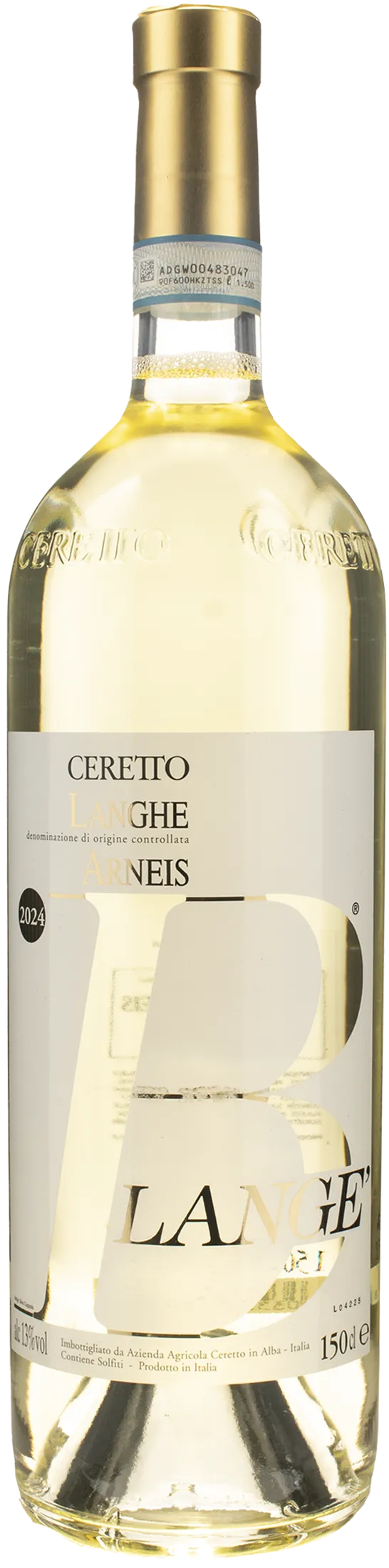
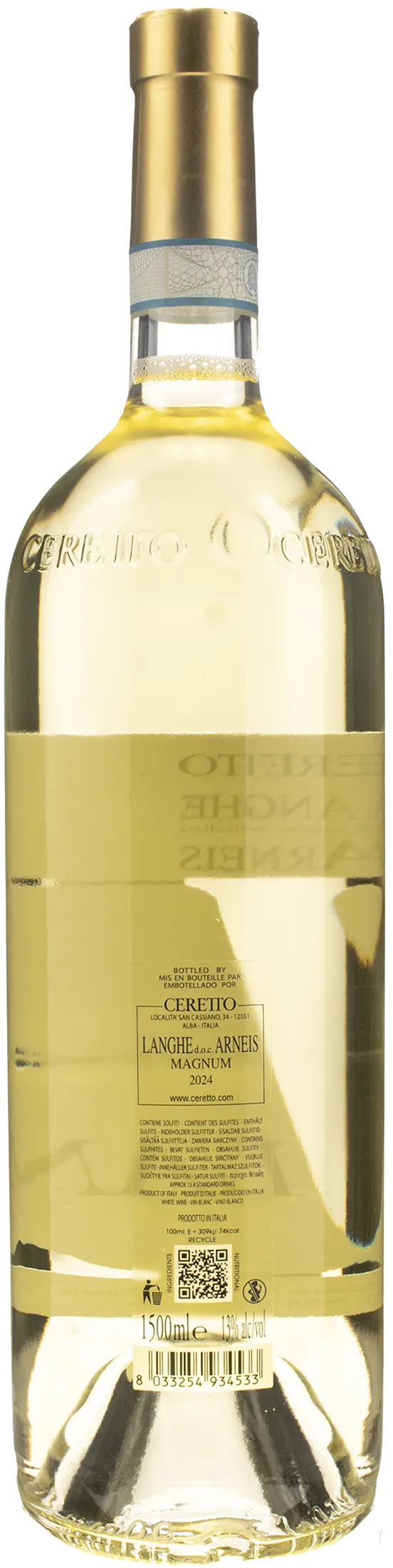
Langhe Arneis Blange 2024
| Denomination | DOC Langhe Arneis |
|---|---|
| Size | 1,50 l |
| Alcohol content | 13.0% by volume |
| Area | Piedmont (Italy) |
| Grape varieties | 100% Arneis |
Description
Still white wine from Piedmont, 13% ABV, 100% Arneis. Produced by Ceretto, a historic winery that has been producing excellent wines since 1937. 1.50L magnum, 2024 vintage. An Arneis made from grapes grown in the Langhe, in vineyards located between 210 and 290 meters above sea level. 40% cryomacerated, with varying times and temperatures based on the grape's condition. This is then processed using new cold-pressed techniques in stainless steel tanks. It evokes aromas of lemon apple, citron peel, almond, and yeast. The palate is imbued with lively, citrusy freshness and a beautiful, harmonious finish.
Tasting notes
Perfume

Color
Taste
Serve at:
10 - 12 °C
Longevity:
05 - 10 years
- Start up year: 1937
- Oenologist: Alessandro Ceretto
- Bottles produced: 950.000
- Hectares: 180
And so we are looking to the future: our family is a group with a shared vision, we make decisions together, guided by respect for expertise: we give those who have something to contribute - to the company, and to the territory - the tools to achieve that vision.
Everything is culture: from award-winning gastronomy at Piazza Duomo to traditional Piedmontese cuisine at La Piola, and our art projects. The Chapel by Sol Lewitt and David Tremlett, in a Barolo Brunate vineyard at La Morra, places art in an agricultural landscape, elevating and celebrating it: there is an educational element, not direction from above but contamination from below. Read more


| Name | Ceretto Langhe Arneis Blange Magnum 2024 |
|---|---|
| Type | White still |
| Denomination | Langhe DOC |
| Vintage | 2024 |
| Size | 1,50 l |
| Alcohol content | 13.0% by volume |
| Grape varieties | 100% Arneis |
| Country | Italy |
| Region | Piedmont |
| Vendor | Ceretto |
| Origin | Alba, Vezza d'Alba, Castellinaldo and Castagnito (Cuneo). |
| Climate | Altitude: 210 - 290 m. a.s.l. |
| Soil composition | 51% clay, 18% sand and 31% silt. |
| Plants per hectare | 4,300. |
| Wine making | Cryomaceration for 40%, with different times and temperatures depending on the evaluation of the state of the grapes. Everything is then followed using new techniques in cold processing in steel tanks. The temperature is controlled through a central computerised system, which guarantees a homogenous development of the wine as it evolves, closely intervening in the biometabolism of the yeasts themselves. |
| PH | 8.0 |
| Allergens | Contains sulphites |