


Tignanello (Antinori)
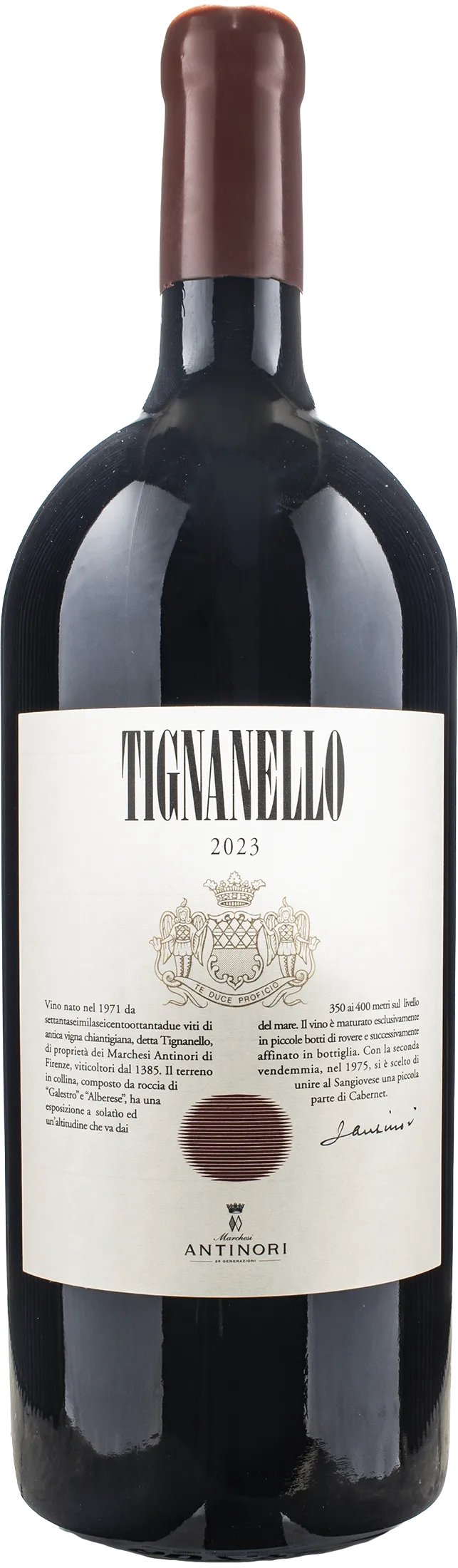
Tignanello 2023
| Denomination | IGT Toscana |
|---|---|
| Size | 3 l |
| Alcohol content | 14.5% by volume |
| Area | Tuscany (Italy) |
| Grape varieties | 85% Sangiovese, 10% Cabernet Sauvignon, 5% Cabernet Franc |
| Aging | After alcoholic fermentation, the wines undergo malolactic fermentation in new oak barriques; ageing in barriques for about 12 months (just over 13 months in wood in separate batches before blending) and then further maturation in bottle for about 12 months before release. |
- Name and vintage: Toscana IGT 2023, still red wine representative of Marchesi Antinori
- Grape blend: 85% Sangiovese, 10% Cabernet Sauvignon, 5% Cabernet Franc
- Vinification: fermentation at 27-31°C, malolactic fermentation and ageing in new barriques
- Sensory profile: cherry, violet and balsamic notes; sweet tannins and a persistent finish
- Format and awards: Double Magnum 3 L; 97 points Wine Advocate, 96 points James Suckling
Description
What kind of wine it is
Tignanello, produced by Marchesi Antinori, is a renowned Tuscan red. It is created from a blend of Sangiovese, Cabernet Sauvignon and Cabernet Franc, and is famous for being the first modern blend from the region conceived without the use of white grapes. The glass, with its intense ruby red colour, releases elegant aromas of cherry, violet and balsamic notes. On the palate, it offers a dense and dynamic structure, supported by sweet tannins and a vibrant freshness, finishing with a long persistent finish.
Where it comes from
The grapes come exclusively from the Tignanello vineyard, located in the heart of Chianti Classico. Situated between 350 and 400 metres above sea level with a south-west exposure, the vines benefit from a microclimate characterised by warm days and cool nights. The calcareous soils, rich in alberese, galestro and marine marl, impart a distinctive concentration to the grapes. This unique terroir gives the wine an elegant texture and a marked ageing potential.
How it is produced
After careful manual selection, alcoholic fermentation takes place in truncated conical tanks at a controlled temperature to preserve the integrity of the aromas. Macerations are managed through daily tastings to ensure balanced extraction. The subsequent malolactic fermentation occurs in new oak barrels, enhancing the wine's complexity. Ageing continues in French and Hungarian barrels in separate lots for over thirteen months; the different parcels are finally combined in the definitive blend for a crucial rest in the bottle.
History and Curiosities
Tignanello by Marchesi Antinori is a pioneering wine that has profoundly influenced the history of Tuscan oenology. Born from the vineyard of the same name and produced only in the best vintages, it was among the first reds to exclude white grapes, introducing the blend with Cabernet and the use of barriques for ageing Sangiovese. Its iconic label displays the family crest, the stylised sun, and the signature of Niccolò Antinori: a visual prelude to an excellence celebrated by the extraordinary scores of Wine Advocate and Gambero Rosso.
Tasting notes

Perfume

Color

Taste
Serve at:
18 - 20 °C
Longevity:
Over 25 years
Decanting time:
1 hour
- Hectares: 127
The company's vineyards include two treasures: the Tignanello vineyard and the Solaia vineyard, which extend over the same hillside on soils derived from Pliocene marine marl with limestone and schist and enjoy warm days and cool nights during the growing season. These two vineyards produce Solaia and Tignanello wines, two wines capable of initiating what is known as the renaissance of Italian wine. Read more


| Name | Marchesi Antinori Tignanello Doppio Magnum 2023 |
|---|---|
| Type | Red still |
| Denomination | Toscana IGT |
| Vintage | 2023 |
| Size | 3 l |
| Alcohol content | 14.5% by volume |
| Grape varieties | 85% Sangiovese, 10% Cabernet Sauvignon, 5% Cabernet Franc |
| Country | Italy |
| Region | Tuscany |
| Vendor | Tignanello (Antinori) |
| Story | History and Curiosities Tignanello by Marchesi Antinori is a pioneering wine that has profoundly influenced the history of Tuscan oenology. Born from the vineyard of the same name and produced only in the best vintages, it was among the first reds to exclude white grapes, introducing the blend with Cabernet and the use of barriques for ageing Sangiovese. Its iconic label displays the family crest, the stylised sun, and the signature of Niccolò Antinori: a visual prelude to an excellence celebrated by the extraordinary scores of Wine Advocate and Gambero Rosso. |
| Origin | Tenuta Tignanello, Toscana (Chianti Classico) |
| Soil composition | Of calcareous origin with tuffaceous elements |
| Yield per hectare | Less than 8000 kg |
| Fermentation temperature | Approximately 27 °C, without exceeding 31 °C |
| Production technique | Alcoholic fermentation at a controlled temperature with délestage and pumping over; malolactic fermentation in new oak barriques; ageing in barriques and subsequent resting in the bottle. |
| Wine making | Fermentation carried out at around 27°C without exceeding 31°C, with délestage and frequent but less intense pump-overs; after alcoholic fermentation, malolactic fermentation takes place in new oak barriques; ageing in barriques for about 12 months (over 13 months in wood in separate batches before blending) and subsequent bottle ageing for about 12 months. |
| Aging | After alcoholic fermentation, the wines undergo malolactic fermentation in new oak barriques; ageing in barriques for about 12 months (just over 13 months in wood in separate batches before blending) and then further maturation in bottle for about 12 months before release. |
| Allergens | Contains sulphites |