


Tignanello (Antinori)
Tignanello 0.375L 2023
| Denomination | IGT Toscana |
|---|---|
| Size | 0,375 l |
| Alcohol content | 14.5% by volume |
| Area | Tuscany (Italy) |
| Grape varieties | Cabernet Franc, Cabernet Sauvignon, Sangiovese |
| Aging | Aged in French oak barrels and a very small proportion of Hungarian oak, mostly new, for just over 13 months; followed by a further 12 months of bottle ageing before release. |
- Vintage and format: 2023, half bottle of 0.375 L, Toscana IGT, 14% vol
- Grape variety: Sangiovese with Cabernet Sauvignon and Cabernet Franc, in harmonious balance
- Vinification: in steel with controlled maceration and malolactic fermentation in barrique
- Ageing: 13 months in French and Hungarian oak, then 12 months in bottle
- Flavour profile: cherry and morello cherry, balsamic notes; soft tannins, very persistent finish
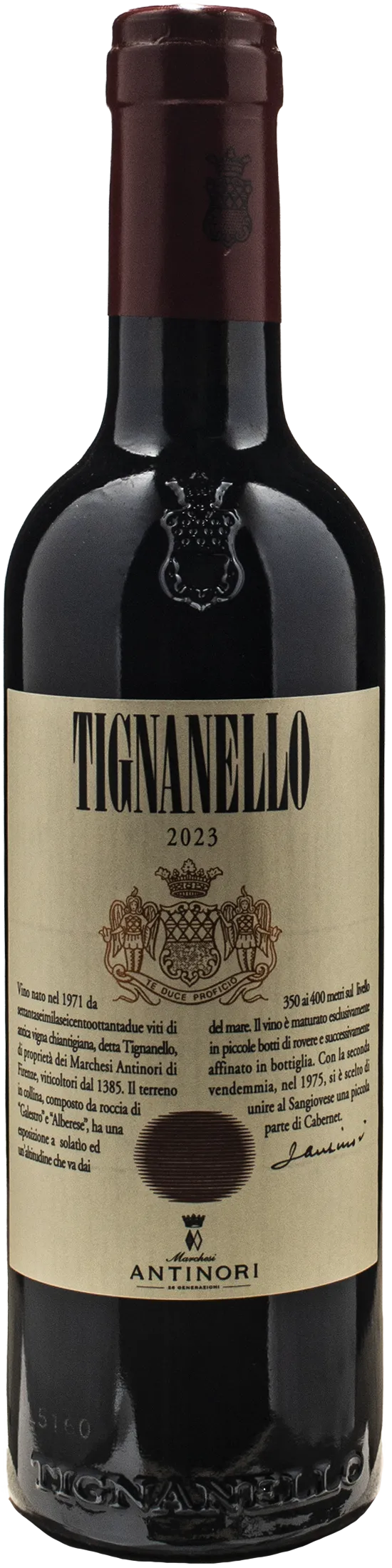
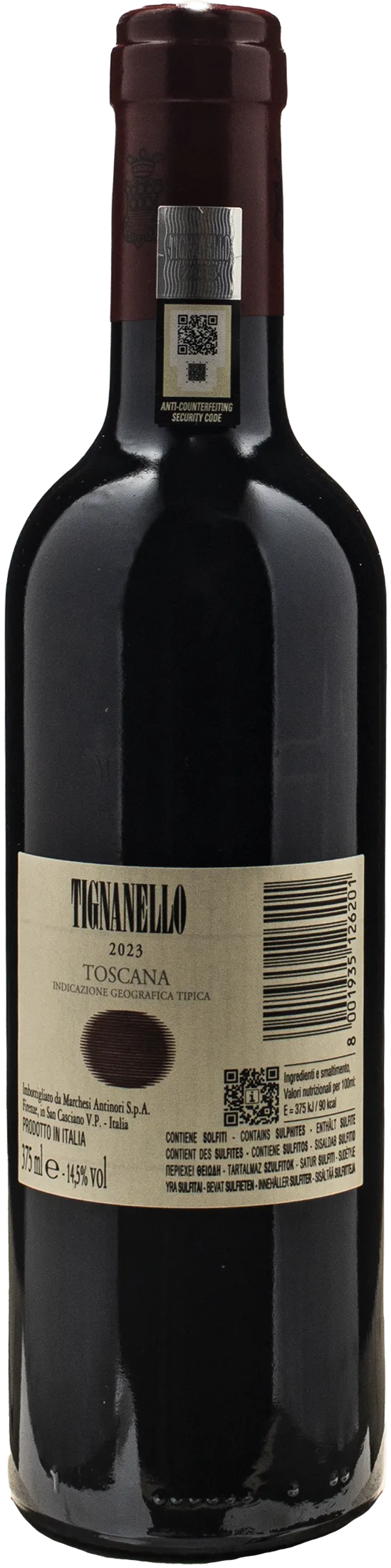
Description
What kind of wine it is
Tignanello is a red wine produced in Tuscany by the Antinori winery. This blend harmonises Sangiovese, Cabernet Sauvignon and Cabernet Franc into an elegant and enveloping profile. In the glass, it displays an intense ruby red colour with purple highlights, revealing a rich and layered aromatic profile. On the nose, clear notes of cherry, ripe morello cherry and pomegranate seeds emerge, accompanied by hints of violet and fresh balsamic sensations, finishing with elegant touches of vanilla and candyfloss. On the palate, it is dynamic and well balanced, with sweet and flavourful tannins that provide freshness and a prolonged gustatory persistence.
Where it comes from
It originates from the eponymous vineyard of the Tignanello Estate, in the heart of Chianti Classico. The rows stretch between the valleys of the Greve and Pesa rivers at an altitude between 350 and 400 metres, benefiting from a favourable south-west exposure. The hilly climate, characterised by warm days and cool nights, encourages consistent ripening and preserves aromatic integrity. The complex soils rest on Pliocene marine marls rich in limestone and schist, further enriched by tuffaceous elements and the typical alberese and galestro rocks, giving the wine a natural balance between fresh drive and structural density.
How it is produced
The grapes are carefully selected and harvested, with each batch vinified separately. Fermentation in truncated conical steel tanks involves targeted maceration to extract colour and manage the elegance of the tannic texture, determining the ideal moment for racking through daily tastings. The wine then undergoes malolactic fermentation in wood to enhance its complexity. Ageing continues in French oak barrels, mostly new, with a small proportion of Hungarian oak, for about thirteen months. A final rest in bottle for about a year refines its structure before release.
History and Curiosities
The Tignanello from the Marchesi Antinori family has revolutionised Chianti Classico: it is among the first Sangiovese wines aged in barrique blended with Cabernet. Produced only in the best vintages, it boasts an iconic label designed in 1974, featuring the motto “Te Duce Proficio” and the signature of Niccolò Antinori. A legend of Toscana IGT, the 2023 vintage received 96 points from James Suckling and 97 from Wine Advocate.
Tasting notes

Perfume

Color

Taste
Serve at:
16 - 18 °C
Longevity:
10 - 15 years
Decanting time:
1 hour
- Hectares: 127
The company's vineyards include two treasures: the Tignanello vineyard and the Solaia vineyard, which extend over the same hillside on soils derived from Pliocene marine marl with limestone and schist and enjoy warm days and cool nights during the growing season. These two vineyards produce Solaia and Tignanello wines, two wines capable of initiating what is known as the renaissance of Italian wine. Read more


| Name | Marchesi Antinori Tignanello 0.375L 2023 |
|---|---|
| Type | Red still |
| Denomination | Toscana IGT |
| Vintage | 2023 |
| Size | 0,375 l |
| Alcohol content | 14.5% by volume |
| Grape varieties | Cabernet Franc, Cabernet Sauvignon, Sangiovese |
| Country | Italy |
| Region | Tuscany |
| Vendor | Tignanello (Antinori) |
| Story | History and Curiosities The Tignanello from the Marchesi Antinori family has revolutionised Chianti Classico: it is among the first Sangiovese wines aged in barrique blended with Cabernet. Produced only in the best vintages, it boasts an iconic label designed in 1974, featuring the motto "Te Duce Proficio" and the signature of Niccolò Antinori. A legend of Toscana IGT, the 2023 vintage received 96 points from James Suckling and 97 from Wine Advocate. |
| Origin | Tenuta Tignanello, in the heart of Chianti Classico, between the Greve and Pesa valleys (Tuscany, Italy) |
| Soil composition | Pliocene marine marl soils with limestone and schist; calcareous soil with tuffaceous elements; rocky calcareous soil with alberese and galestro |
| Harvest | Between mid-September and early October |
| Production technique | Fermentation in truncated conical tanks with controlled maceration; malolactic fermentation in barriques; ageing in French oak barriques (a small part Hungarian) |
| Wine making | Fermentation in truncated conical tanks with controlled maceration to preserve the aromas, extract the colour and manage the sweetness and elegance of the tannins; racking after daily tastings; malolactic fermentation in barriques after separation of the skins. |
| Aging | Aged in French oak barrels and a very small proportion of Hungarian oak, mostly new, for just over 13 months; followed by a further 12 months of bottle ageing before release. |
| Allergens | Contains sulphites |