


Gulfi
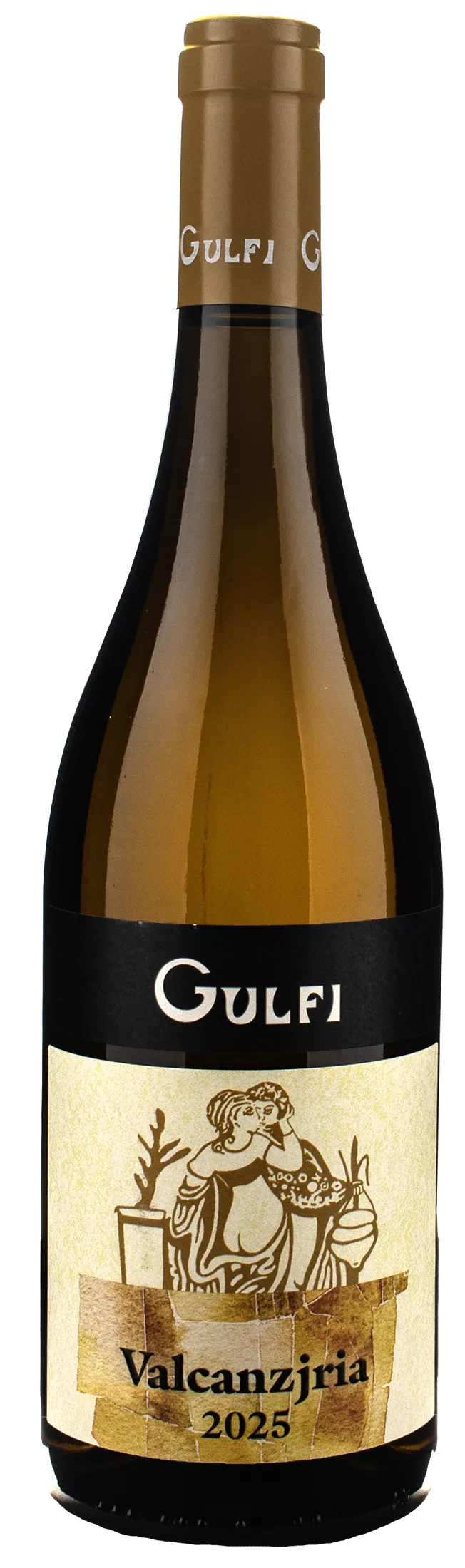
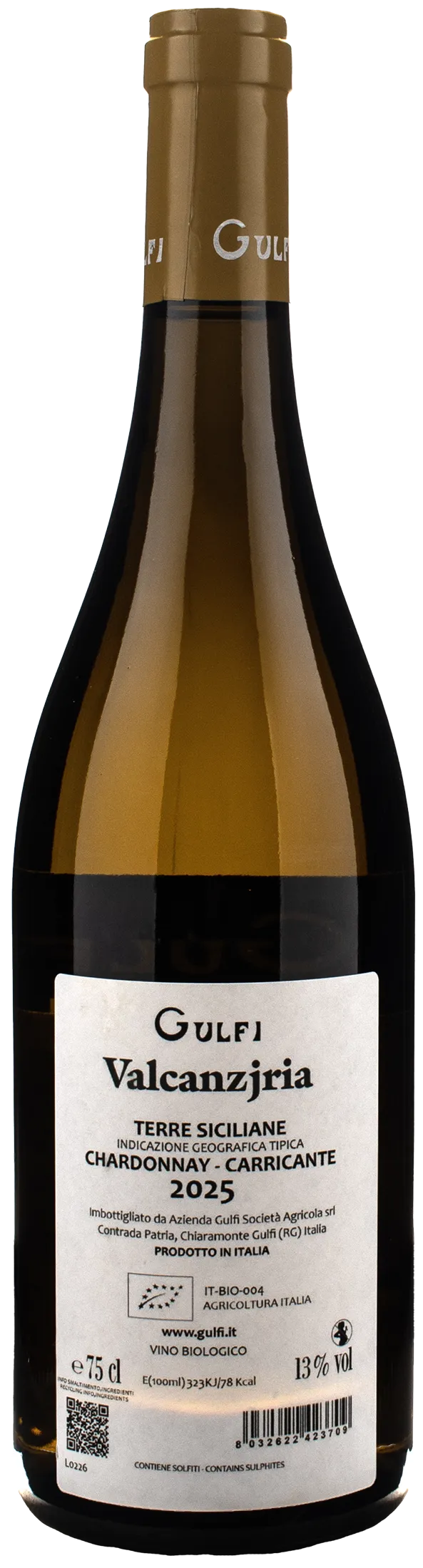
Chardonnay Carricante Valcanzjria 2025
| Denomination | IGT Terre Siciliane |
|---|---|
| Size | 0,75 l |
| Alcohol content | 13.0% by volume |
| Area | Sicily (Italy) |
| Grape varieties | 60% Chardonnay, 40% Carricante |
| Aging | Maturation in steel on its own lees and, from the spring following the harvest, for several months in bottle. |
- Blend: Still white IGT Terre Siciliane, 60% Chardonnay and 40% Carricante
- Vinification: Spontaneous fermentation in steel with indigenous yeasts; unfiltered wine
- Ageing: Maturation on the lees in steel and for several months in the bottle
- Sensory profile: Aromas of apple and exotic fruit; persistent finish of anise and almond
- Origin: Monti Iblei, organic wine 13.5% vol; serve at 8–14 °C
Description
What kind of wine it is
Valcanzjria is an organic white wine from Terre Siciliane produced by Gulfi, created from a balanced blend of Chardonnay and Carricante. On the nose, it is intense and broad, offering clear aromas of apple and exotic fruit. On the palate, it reveals a dry, medium-bodied and harmonious sip, well supported by a pleasant minerality and savouriness. The drink is fresh and smooth, finishing with a persistent finale featuring elegant hints of anise and almond.
Where it comes from
The vines take root on the Iblei Mountains, in the Chiaramonte Gulfi area. The rows are situated at around four hundred metres above sea level, immersed in a temperate Mediterranean climate that ensures optimal grape development. The presence of limestone and clay soils plays a decisive role in defining the wine's gustatory tension. Gulfi operates according to the principles of organic farming, caring for the land with an approach aimed at enhancing its pure and authentic rural nature.
How it is produced
The production process begins with a separate harvest of the grapes, in order to respect the different ripening times of the varieties. In the winery, a spontaneous fermentation with indigenous yeasts takes place in temperature-controlled stainless steel tanks. The decision not to filter the must allows the original organoleptic properties to be preserved. The process continues with careful ageing on the lees in stainless steel, followed by a period of rest in the bottle to allow the wine to reach its full structural expression.
History and Curiosities
Born in 1996 on the evocative Iblei Mountains from an idea by Vito Catania, Valcanzjria is a true tribute to Sicilian viticulture. This refined white wine combines the aromatic richness of Chardonnay with the vibrant minerality of the native Carricante. Under the guidance of oenologist Salvo Foti, the wine is created through spontaneous fermentation in steel with indigenous yeasts, preserving its full expressiveness thanks to the decision not to filter it. An organic masterpiece that expresses the pure essence of the Sicilian terroir.
Tasting notes
Perfume

Color
Taste
Serve at:
12 - 14 °C
Longevity:
03 - 05 years
- Start up year: 1996
- Oenologist: Salvo Foti
- Bottles produced: 220.000
- Hectares: 40


| Name | Gulfi Chardonnay Carricante Valcanzjria 2025 |
|---|---|
| Type | White organic still |
| Denomination | Terre Siciliane IGT |
| Vintage | 2025 |
| Size | 0,75 l |
| Alcohol content | 13.0% by volume |
| Grape varieties | 60% Chardonnay, 40% Carricante |
| Country | Italy |
| Region | Sicily |
| Vendor | Gulfi |
| Story | History and CuriositiesBorn in 1996 on the evocative Iblei Mountains from an idea by Vito Catania, Valcanzjria is a true tribute to Sicilian viticulture. This refined white wine combines the aromatic richness of Chardonnay with the vibrant minerality of the native Carricante. Under the guidance of oenologist Salvo Foti, the wine is created through spontaneous fermentation in steel with indigenous yeasts, preserving its full expressiveness thanks to the decision not to filter it. An organic masterpiece that expresses the pure essence of the Sicilian terroir. |
| Origin | Chiaramonte Gulfi (Ragusa), Monti Iblei, Sicily, Italy |
| Climate | Temperate Mediterranean |
| Soil composition | Calcareous and moderately clayey soil |
| Plants per hectare | 8000 |
| Yield per hectare | 80 q/ha |
| Harvest | Chardonnay at the end of August; Carricante in mid-September |
| Production technique | Spontaneous fermentation with indigenous yeasts in stainless steel tanks at controlled temperature; unfiltered wine; ageing in steel on its own lees and for several months in the bottle |
| Wine making | Grapes harvested separately (Chardonnay at the end of August, Carricante in mid-September); spontaneous fermentation with indigenous yeasts in stainless steel tanks at controlled temperature; wine is unfiltered; maturation in stainless steel on its own lees and, from the spring following the harvest, for several months in bottle. |
| Aging | Maturation in steel on its own lees and, from the spring following the harvest, for several months in bottle. |
| Allergens | Contains sulphites |