


Bava
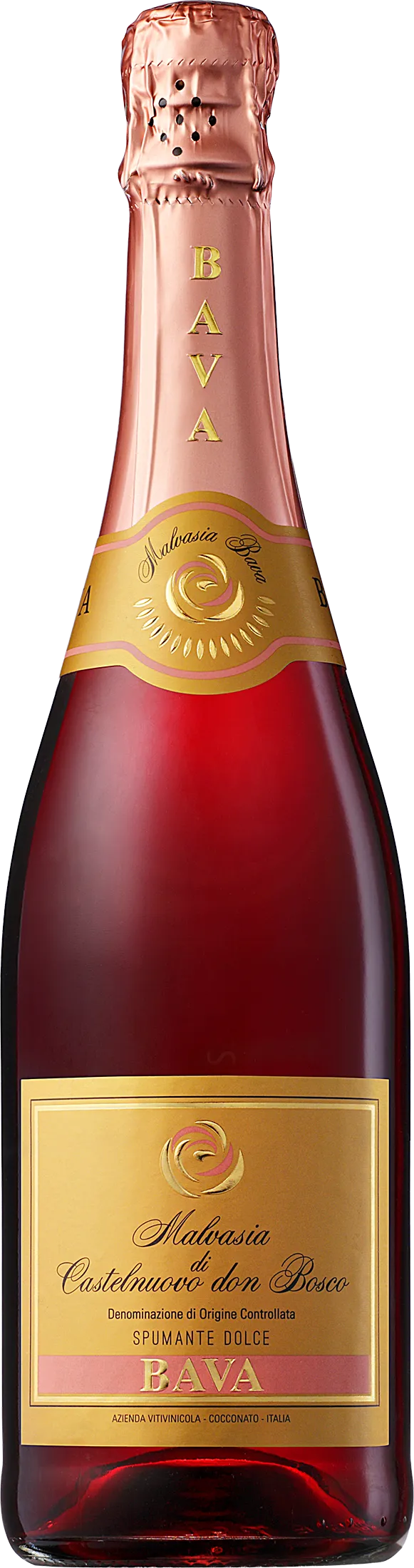
Spumante Dolce Malvasia di Castelnuovo Don Bosco
| Denomination | DOC Malvasia di Castelnuovo Don Bosco Spumante |
|---|---|
| Size | 0,75 l |
| Alcohol content | 7.0% by volume |
| Area | Piedmont (Italy) |
| Grape varieties | Malvasia di Schierano, Malvasia Nera Lunga |
| Aging | The naturally decanted must is kept at a low temperature until fermentation in steel vats; it does not require bottle ageing. |
- DOC Designation: Malvasia di Castelnuovo Don Bosco DOC, sweet sparkling rosé
- Aromatic grapes: blend of Malvasia di Schierano and Malvasia Nera Lunga
- Production method: cold maceration for 2 days and Charmat method in steel
- Aroma and taste: rose and strawberry, creamy mousse, delicately tannic finish
- Serving and pairings: 6-8 °C, ideal with starters and for long drinks and cocktails
Description
What kind of wine it is
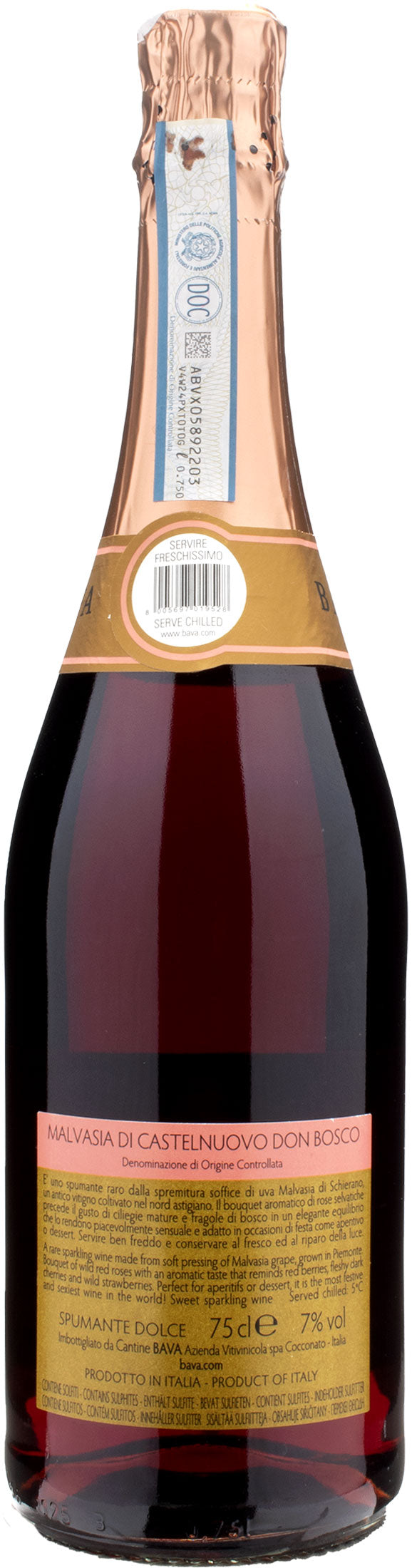
Bava Spumante Dolce Malvasia di Castelnuovo Don Bosco is a Piedmontese rosé wine, an authentic expression of the Malvasia di Castelnuovo Don Bosco region. This sweet sparkling wine is made from a blend of Malvasia di Schierano and Malvasia Nera Lunga grapes, which provide an intense and immediate aromatic profile. The palate is characterised by a brilliant cherry-pink hue, enhanced by a creamy and persistent mousse. On the nose, it releases clear notes of rose and strawberry, leading to a pleasantly sweet taste, balanced by a delicate tannic structure on the finish. It is a perfect wine to accompany starters or as a base for refined cocktails, best served at an optimal temperature between 6 and 8 degrees Celsius.
Where it comes from
The Bava vineyards stretch across the hills of the Upper Astigiano, an area of Piedmont particularly suited to the cultivation of aromatic varieties. The vines grow at an altitude above 150 metres, benefiting from a microclimate that encourages consistent ripening and well-defined aromatic profiles. The Guyot training system is combined with the unique composition of the soil, characterised by white calcareous earth with outcrops of gypsum. This geological formation ensures balance and enhances the varietal distinctiveness of the grapes.
How it is produced
Vinification begins with a cold maceration of two days on the skins, a crucial step to extract the rosé colour and the typical aromatic notes of the grape variety. After pressing, the free-run must settles naturally and is kept at low temperatures. Fermentation takes place in steel tanks, often months after the harvest and shortly before bottling. The sparkling process is carried out using the Charmat Method, ideal for preserving the fruit's fragrance and achieving a fine perlage. This process gives the wine its immediate freshness.
History and Curiosities
Founded in 1911, the Bava winery has been producing the iconic Malvasia di Castelnuovo Don Bosco DOC for over sixty years, using fine grapes from Northern Asti. Since the 1970s, this label has been a leading figure in Italy in the success of sweet aromatic rosé sparkling wines, boasting 92 points awarded by Luca Maroni. A fascinating aspect of the production method is the fermentation in steel, which begins months after the harvest and only shortly before bottling; this technique preserves the creamy and balanced mousse, making bottle ageing unnecessary.
Awards
-
 92
92/100
One of the most prestigious wine guides in Italy.
Tasting notes

Perlage

Perfume

Color

Taste
Serve at:
06 - 08 °C
Longevity:
03 - 05 years
- Start up year: 1911
- Oenologist: Giulio Bava
- Bottles produced: 390.000
- Hectares: 50
More than 115 years and six generations have passed since that first harvest. Over time, the finest Bava Barberas have earned recognition in many countries thanks to the consistently high quality of the estate’s production.
Today the winery is led by Piero Bava, grandson of the founder and widely regarded as one of the "Patriarchs of Barbera." Piero carries on the family tradition together with his sons Roberto, Giulio and Paolo, and his grandchildren Francesca and Giorgio: three generations working side by side to offer, across 55 markets worldwide, wines that speak of Piedmont, authenticity and deep respect for the land.
Dozens of menus created by Roberto Bava for the legendary Bava Dinners — gastronomic events held across all five continents — now hang on the winery walls, bearing witness to the creativity and long, vibrant history of the Bava family. Read more


| Name | Bava Spumante Dolce Malvasia di Castelnuovo Don Bosco |
|---|---|
| Type | Rosé charmat method sparkling wine sweet |
| Denomination | Malvasia di Castelnuovo don Bosco DOC |
| Size | 0,75 l |
| Alcohol content | 7.0% by volume |
| Grape varieties | Malvasia di Schierano, Malvasia Nera Lunga |
| Country | Italy |
| Region | Piedmont |
| Vendor | Bava |
| Story | History and Curiosities Founded in 1911, the Bava winery has been producing the iconic Malvasia di Castelnuovo Don Bosco DOC for over sixty years, using fine grapes from Northern Asti. Since the 1970s, this label has been a leading figure in Italy in the success of sweet aromatic rosé sparkling wines, boasting 92 points awarded by Luca Maroni. A fascinating aspect of the production method is the fermentation in steel, which begins months after the harvest and only shortly before bottling; this technique preserves the creamy and balanced mousse, making bottle ageing unnecessary. |
| Origin | Colline dell'Alto Astigiano |
| Soil composition | White calcareous soil with gypsum outcrops |
| Cultivation system | Guyot |
| Fermentation | A few months after the harvest, just before bottling |
| Production technique | Charmat Method |
| Wine making | We have developed a vinification process that involves cold maceration of the crushed grapes for two days before placing them in the presses to extract the juice: the free-run must will carry with it its strong aroma and a beautiful colour. |
| Aging | The naturally decanted must is kept at a low temperature until fermentation in steel vats; it does not require bottle ageing. |
| Allergens | Contains sulphites |