


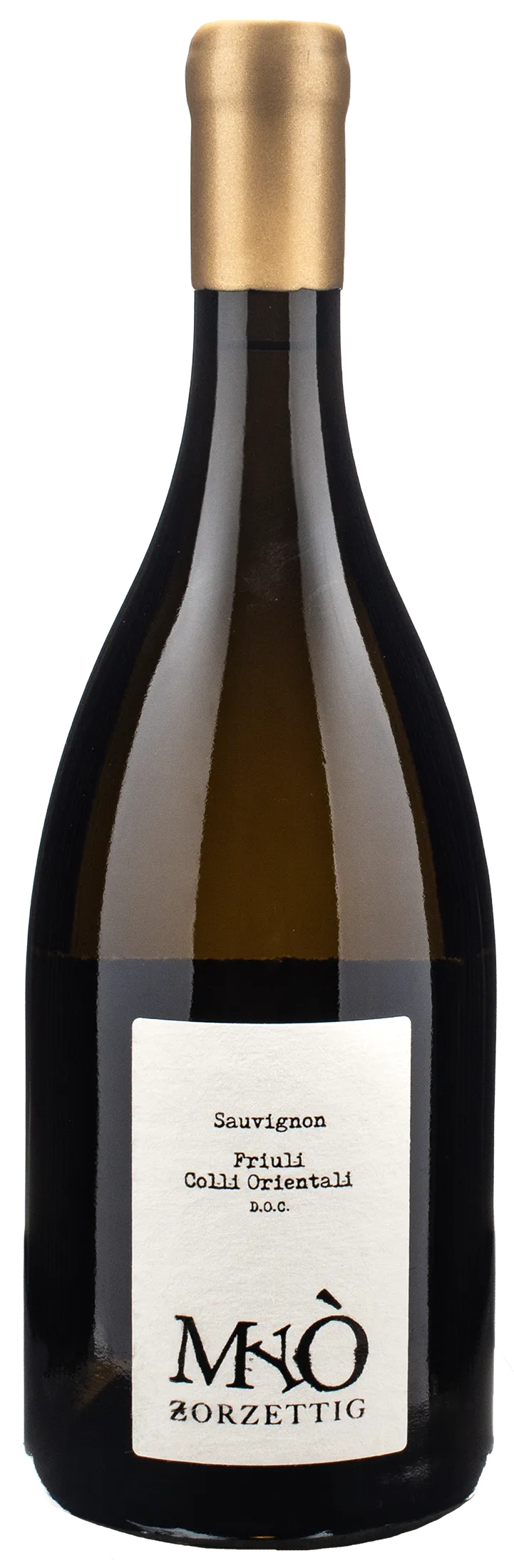
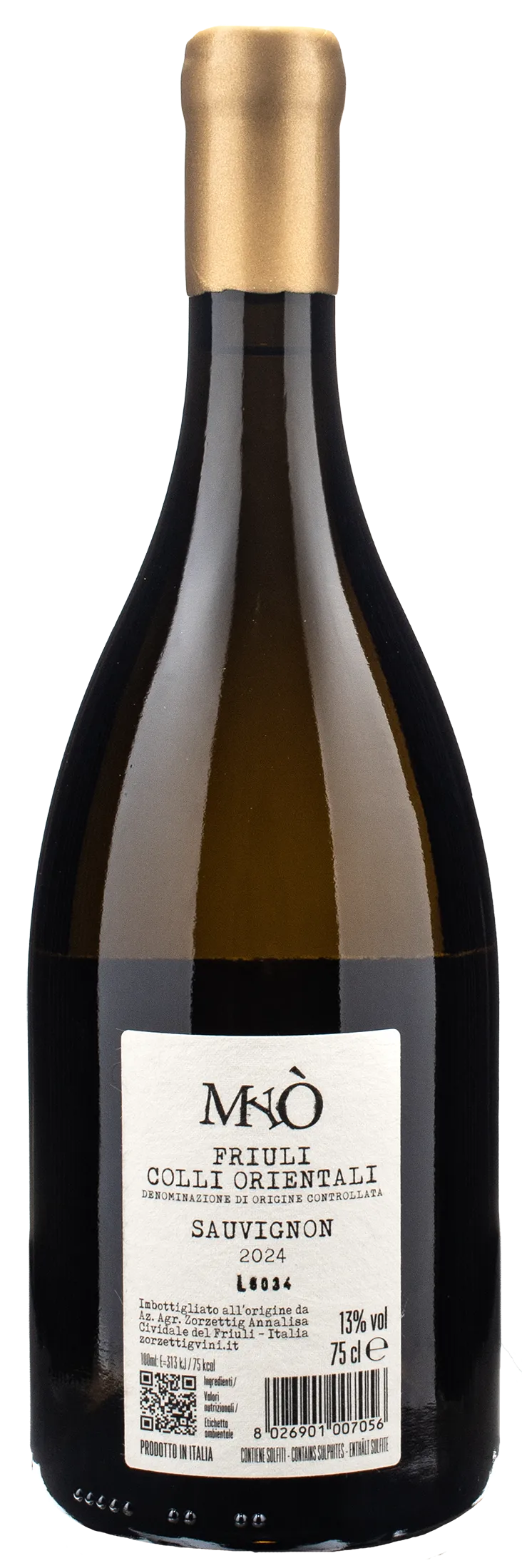
Myo (Zorzettig)
Sauvignon 2024
| Denomination | DOC Colli Orientali del Friuli Sauvignon |
|---|---|
| Size | 0,75 l |
| Alcohol content | 13.0% by volume |
| Area | Friuli-Venezia Giulia (Italy) |
| Grape varieties | 100% Sauvignon |
| Aging | Ageing on the lees for 6 months with weekly bâtonnage (approximately 90% in stainless steel tanks and up to 10% in barriques) and subsequent ageing for 6 months in the bottle. |
- Origin: Bianco Sauvignon DOC from Colli Orientali del Friuli, 2024 vintage
- Bouquet: Notes of tropical fruit, lime, pink grapefruit, tomato leaf and elderflower
- Palate: Fresh, structured and enveloping, with a vibrant gustatory tension
- Winemaking: Cold maceration, 6 months on the lees and 6 months in the bottle
- Pairings: Perfect with lean fish and cheeses; 95 points from James Suckling
Description
What type of wine it is
Zorzettig's Myò Sauvignon is a still white wine that expresses the essence of Friuli-Venezia Giulia, born in the prime territories of the Colli Orientali del Friuli. It is distinguished by a fresh and structured profile, offering a vibrant palate and excellent persistence. The bouquet offers clear varietal aromas, with standout notes of lime, pink grapefruit, tomato leaf and elderflower. Aged on its lees, it is ideal with fish dishes and cheeses, balancing the creaminess of the food with its marked gustatory tension.
Where it comes from
The Sauvignon grapes are grown in the vineyards of Spessa and Ipplis, located at an altitude of approximately two hundred and fifty metres. Optimal exposure promotes balanced ripening and precise aromatic definition. The soul of the territory is reflected in the clayey soils rich in ponca, a stratification of marl and sandstone that lends energy to the palate. The winery adopts sustainable viticulture, aimed at protecting biodiversity and safeguarding Friulian natural resources, maintaining low yields with the 'doppio capovolto' (double arched cane) training system.
How it is produced
Production begins with a manual harvest to select the best bunches. Cold maceration for twelve hours precedes fermentation in stainless steel tanks, preserving the clarity of the fruit. The wine rests on its lees for six months with periodic bâtonnage, between stainless steel and, to a small extent, small barrels, to enrich the structure without losing freshness. A final six months of bottle ageing perfects the balance in the glass.
History and trivia
Zorzettig's Myò Sauvignon is born in the heart of the Colli Orientali del Friuli DOC, on soils composed of the typical ponca that gives the wine an exceptional gustatory tension. Its refined label pays tribute to the Oystercatcher, a symbol of the winery's deep commitment to sustainable viticulture and the protection of local biodiversity. Awarded 95 points by James Suckling and 94 by Luca Maroni, it offers a sumptuous aromatic elegance to the palate.
Awards
-
2024
 95
95/100
James Suckling is an influential American wine critic and journalist who worked at Wine Spectator for 30 years. He left the magazine in 2010 to start his own website and guidebook (JamesSuckling.com). He specialises in Italian and Bordeaux wines.
Tasting notes
Perfume

Color
Taste
Serve at:
12 - 14 °C
Longevity:
03 - 05 years
- Oenologist: Saverio Di Giacomo
This represents a new approach to viticulture, yielding wines that look to a sustainable future. From the great whites to the traditional Friulian reds, each wine embodies quality, selection, loving care and commitment. Commitment to a winegrowing area and its People. Our People. Read more


| Name | Zorzettig Myò Sauvignon 2024 |
|---|---|
| Type | White still |
| Denomination | Colli Orientali del Friuli DOC |
| Vintage | 2024 |
| Size | 0,75 l |
| Alcohol content | 13.0% by volume |
| Grape varieties | 100% Sauvignon |
| Country | Italy |
| Region | Friuli-Venezia Giulia |
| Vendor | Myo (Zorzettig) |
| Story | History and trivia Zorzettig's Myò Sauvignon is born in the heart of the Colli Orientali del Friuli DOC, on soils composed of the typical ponca that gives the wine an exceptional gustatory tension. Its refined label pays tribute to the Oystercatcher, a symbol of the winery's deep commitment to sustainable viticulture and the protection of local biodiversity. Awarded 95 points by James Suckling and 94 by Luca Maroni, it offers a sumptuous aromatic elegance to the palate. |
| Origin | Vineyards of Spessa and Ipplis in Premariacco (Udine), Eastern Hills of Friuli, Friuli-Venezia Giulia |
| Soil composition | Clayey; ponca (characteristic stratification of marl and sandstone of Eocene origin) |
| Cultivation system | Double upside-down |
| Plants per hectare | Three thousand seven hundred |
| Yield per hectare | 50 quintals per hectare |
| Harvest | Mid-September (manual harvest) |
| Production technique | Cold maceration (12 hours) followed by fermentation in stainless steel tanks; ageing on the lees for 6 months with weekly bâtonnage (approximately 90% in stainless steel and up to 10% in barriques) and subsequent ageing for 6 months in the bottle. |
| Wine making | 12-hour cold maceration, followed by fermentation in stainless steel tanks; ageing on the lees for 6 months with weekly bâtonnage (approximately 90% in steel and up to 10% in barriques) and a subsequent 6 months of bottle ageing. |
| Aging | Ageing on the lees for 6 months with weekly bâtonnage (approximately 90% in stainless steel tanks and up to 10% in barriques) and subsequent ageing for 6 months in the bottle. |
| Total acidity | 5.43 gr/L |
| Residual sugar | 1.1 gr/L |
| Dry extract | 19.1 gr/L |
| Allergens | Contains sulphites |