


Vignaioli Specogna
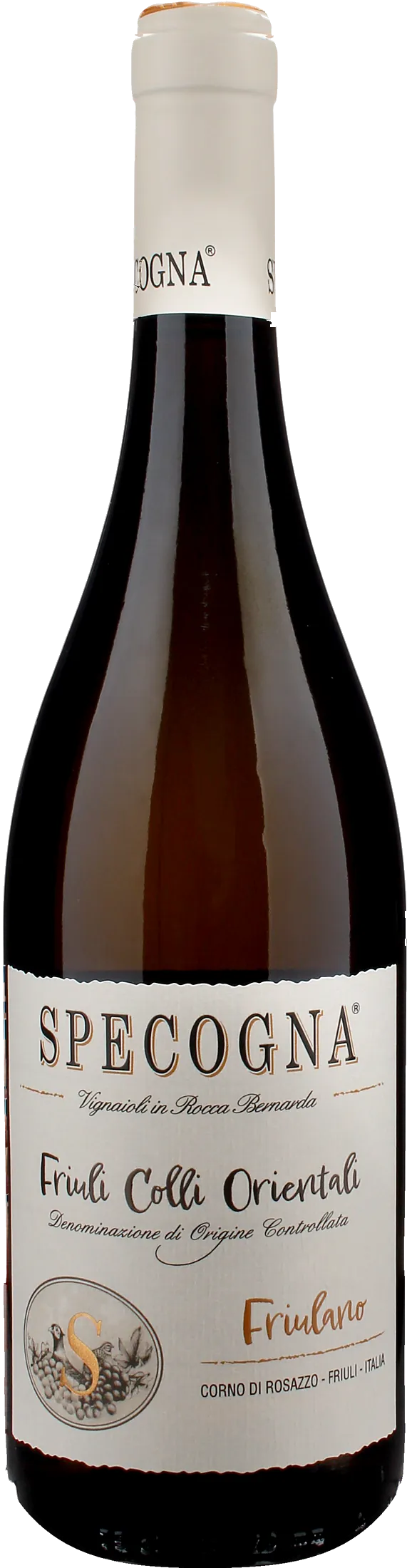
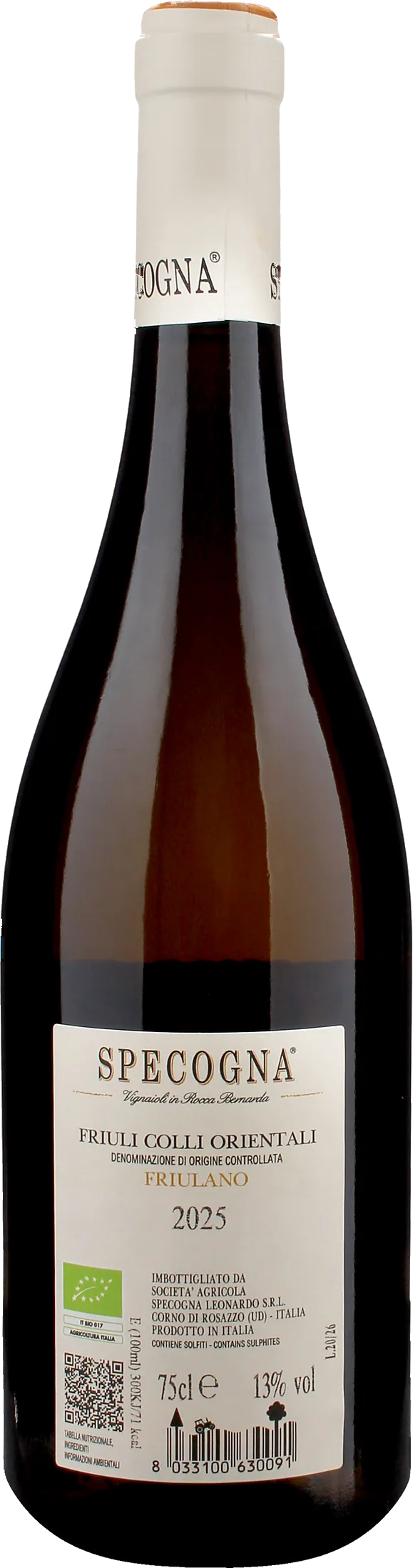
Friulano 2025
| Denomination | DOC Colli Orientali del Friuli Friulano |
|---|---|
| Size | 0,75 l |
| Alcohol content | 13.0% by volume |
| Area | Friuli-Venezia Giulia (Italy) |
| Grape varieties | 100% Friulano/Sauvignon Vert |
| Aging | Afterwards, the wine matures in stainless steel tanks until the following spring, when it is bottled. |
- Origin and type: Organic white wine DOC Colli Orientali del Friuli from Friulano grapes
- Vinification: Overnight maceration on the skins, fermentation and ageing in steel
- Aromas: citrus fruits, white peach, tropical fruit, white pepper; finishes on almond notes
- Taste: structure and power, marked freshness, persistent finish with typical almond
- Service and pairings: 10°C in a medium-sized wine glass; suitable for first courses and fish
Description
What type of wine it is
Specogna Friulano by Specogna is a still organic white wine produced exclusively from Friulano grapes. This expression from the Colli Orientali del Friuli Denominazione di Origine Controllata, vinified in stainless steel tanks with skin maceration, offers a powerful structure balanced by a lively freshness on the palate. The aromatic profile reveals a harmonious texture of exotic fruit, white-fleshed peach and spices, finishing each sip with a long and characteristic almond aftertaste.
Where it comes from
The vineyards grow in Rocca Bernarda, in the picturesque hilly landscape of Friuli-Venezia Giulia. The rows are cultivated at an altitude of one hundred and ninety metres with a favourable north-east exposure and take root in soils composed of marl and sandstone. This particular geological matrix encourages the balanced development of the plant, giving the wine a clear aromatic definition and an acidic tension that enhances its fruity nuances.
How it is produced
Following destemming and soft pressing, the must remains in contact with the skins overnight. This brief skin maceration allows for the precise extraction of the broad aromatic profile of the Friulano grapes. Fermentation and subsequent ageing take place in stainless steel tanks, a choice that preserves the clarity of the fruit. The vines, trained using the 'cappuccina' system, maintain a controlled yield to ensure the high quality of the raw material.
Tasting notes
Perfume
Color
Taste
Serve at:
10 - 12 °C
Longevity:
03 - 05 years
- Start up year: 1963
- Oenologist: Cristian e Michele Specogna
- Bottles produced: 120.000
- Hectares: 25
These lands have always been devoted to oenology and here the plant of the vine has found the best conditions since Roman times, thanks to the fact that in this oriental strip of land of our region the climate and the soil have features that are unique and exceptional for winemaking. That was the origin of it…
It all started with a 360-degree company that covered many aspects of the production for private consumption: dairy, cereal and wine production. Later, when Graziano and his wife Anna Maria started working in the company, the management techniques of the vineyards and of the winemaking were improved, making the farm more specifically focused on the winemaking sector.
Nowadays, the activity of the company is galvanised by the presence of the third generation of Specogna winemakers Cristian and Michele that long ago have taken the lead of the company. With great passion and commitment they are granting an important company development improving the works in the vineyards and cellars and an expansion of the sales into the most important international markets. Today our company has an overall surface of 25 hectares, 22 of which are vineyards cultivated in organic agricolture. We produce more or less 100,000 bottles per year, 50% of which are sold on the national market and 50% in more than 30 countries in the world. Read more


| Name | Specogna Friulano 2025 |
|---|---|
| Type | White organic still |
| Denomination | Colli Orientali del Friuli DOC |
| Vintage | 2025 |
| Size | 0,75 l |
| Alcohol content | 13.0% by volume |
| Grape varieties | 100% Friulano/Sauvignon Vert |
| Country | Italy |
| Region | Friuli-Venezia Giulia |
| Vendor | Vignaioli Specogna |
| Origin | Bernarda Castle |
| Climate | Altitude 190 m a.s.l.; North-East exposure; hilly. |
| Soil composition | Marl and sandstone |
| Cultivation system | Capuchin |
| Plants per hectare | 3,500-5,000 |
| Yield per hectare | 2 kg of grapes per plant. |
| Production technique | Maceration on the skins |
| Wine making | After the grape harvest, destemming and a soft pressing of the bunches are carried out. This is followed by a night of maceration on the skins, then racking and fermentation in stainless steel tanks. |
| Aging | Afterwards, the wine matures in stainless steel tanks until the following spring, when it is bottled. |
| Allergens | Contains sulphites |