


Mastroberardino
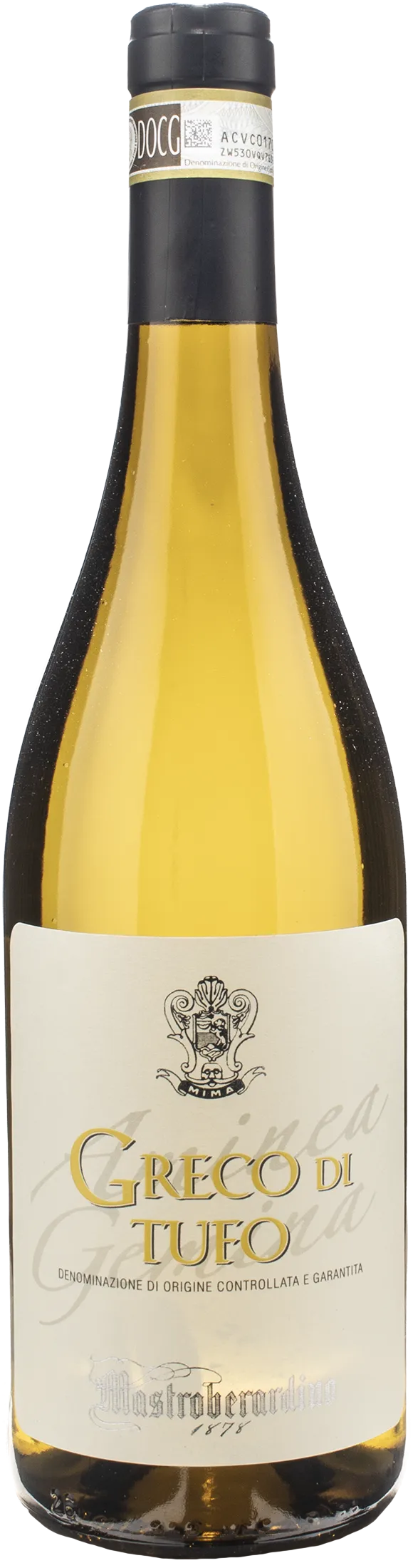
Greco di Tufo 2025
| Denomination | DOCG Greco di Tufo Bianco |
|---|---|
| Size | 0,75 l |
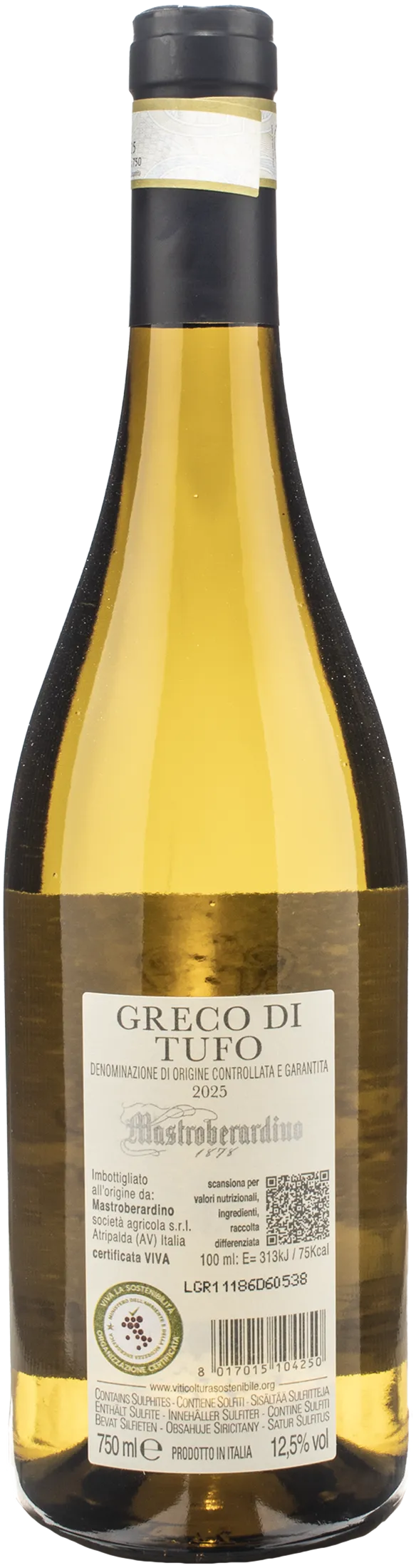
| Alcohol content | 12.5% by volume |
| Area | Campania (Italy) |
| Grape varieties | Greco |
| Aging | Matured for several months in the bottle. |
- Name: Greco di Tufo DOCG from Campania, 2025 harvest, 12.5% vol
- Grape variety and terroir: 100% Greco grapes grown on clay-limestone soils of Irpinia
- Aromas: notes of citrus, peach, pineapple, apricot and lime, with an intense and complex bouquet
- Taste: fresh and mineral flavour, refined structure and long persistence with a cedar finish
- Vinification and pairings: in steel at 16–18 °C; ideal with shellfish and white meats
Description
What kind of wine is it
Greco di Tufo Mastroberardino is a still white wine from Campania, an authentic expression of Irpinia with a controlled and guaranteed designation of origin, made from Greco grapes and vinified in steel. It stands out for its structured and elegant sensory profile, with a complex bouquet featuring notes of citrus, peach, pineapple, apricot and lime. On the palate, it is fresh and mineral, characterised by excellent persistence that leads to an intense finish with clear hints of citron. Thanks to these characteristics, it is ideal for pairing with shellfish soups, fragrant risottos and white meats.
Where does it come from
This white wine originates in the Greco di Tufo area, in Campania, among the hills of Irpinia. The vineyards are situated at an average altitude of 450 metres above sea level, with a south-east exposure that ensures optimal ripening of the grapes. The vine roots delve into clay-limestone soils, responsible for the pronounced minerality of the taste. The Greco grape variety has a deep historical connection with this land: introduced by the Pelasgians in the first century BC, it was known to the Romans as Aminea Gemina for the bifid shape of the bunch and boasts an extraordinary propensity for ageing.
How is it produced
Vineyard management involves training the vines on trellises, with a strict manual harvest of the bunches during the second ten days of October. In the winery, the process respects the raw material through classic white vinification, enhanced by a brief maceration. Fermentation takes place in stainless steel tanks at a controlled temperature. Before being ready for tasting, the wine rests in the bottle for several months, a crucial step to fix its aromatic qualities and gustatory tension.
History and Curiosities
Introduced to Irpinia in the 1st century BC by the Pelasgians, the prestigious grape variety at the heart of Mastroberardino Greco di Tufo 2025 was named “Aminea Gemina” by the Romans due to the distinctive shape of its two-lobed cluster. This white grape variety represents a sublime oenological excellence, standing out for its exceptional ageing potential which allows it to evolve magnificently even beyond twenty years. A true sip of history.
Tasting notes

Perfume

Color

Taste
Serve at:
10 - 12 °C
Longevity:
03 - 05 years
- Start up year: 1878
- Oenologist: Massimo Di Renzo
- Bottles produced: 1.700.000
- Hectares: 260
Ten generations have since then run the family business, amidst alternating fortunes, as always happens in the histories of long-standing family businesses. Read more


| Name | Mastroberardino Greco di Tufo 2025 |
|---|---|
| Type | White green still |
| Denomination | Greco di Tufo DOCG |
| Vintage | 2025 |
| Size | 0,75 l |
| Alcohol content | 12.5% by volume |
| Grape varieties | Greco |
| Country | Italy |
| Region | Campania |
| Vendor | Mastroberardino |
| Story | History and Curiosities Introduced to Irpinia in the 1st century BC by the Pelasgians, the prestigious grape variety at the heart of Mastroberardino Greco di Tufo 2025 was named "Aminea Gemina" by the Romans due to the distinctive shape of its two-lobed cluster. This white grape variety represents a sublime oenological excellence, standing out for its exceptional ageing potential which allows it to evolve magnificently even beyond twenty years. A true sip of history. |
| Origin | Irpinia (provincia di Avellino), Campania, Italia |
| Climate | South-east exposure and an average altitude of 450 m above sea level. |
| Soil composition | Predominantly clay-limestone soil |
| Cultivation system | Espalier |
| Plants per hectare | 3000 |
| Yield per hectare | 80 q. |
| Harvest | Second ten days of October |
| Fermentation temperature | 16 - 18 °C |
| Production technique | Classic white wine vinification in stainless steel tanks at a controlled temperature (16–18 °C) with short maceration; bottle ageing for a few months |
| Wine making | Classic white vinification in stainless steel tanks at controlled temperatures (16–18 °C), with a brief maceration; bottle ageing for several months before release to the market. |
| Aging | Matured for several months in the bottle. |
| Allergens | Contains sulphites |