


Santa Cristina (Antinori)
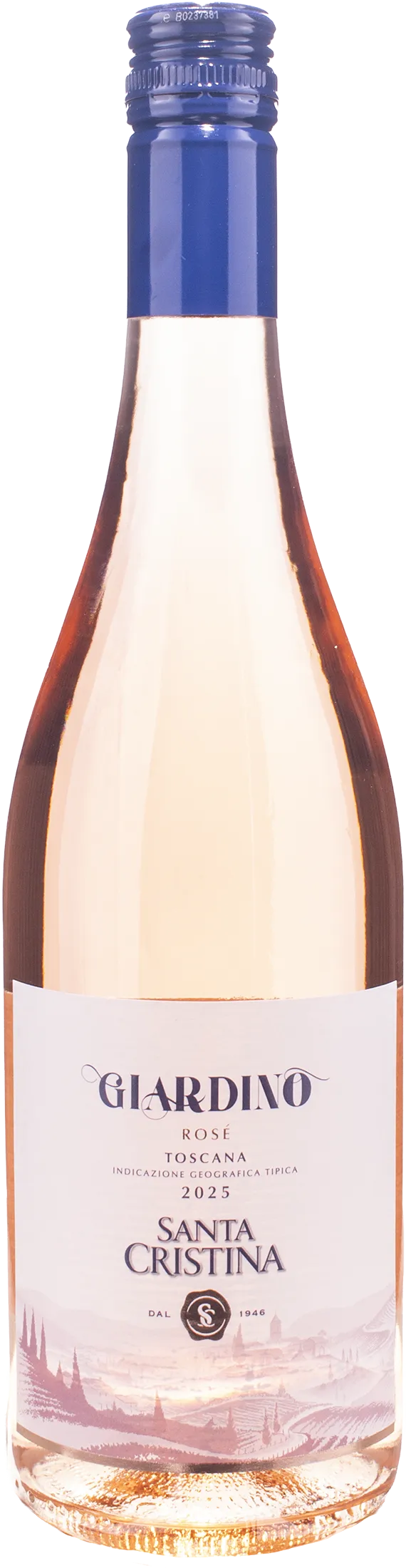
Giardino Rosè 2025
| Denomination | IGT Toscana |
|---|---|
| Size | 0,75 l |
| Alcohol content | 11.0% by volume |
| Area | Tuscany (Italy) |
| Grape varieties | 100% Sangiovese |
| Aging | After 48 hours, it was transferred to stainless steel tanks where alcoholic fermentation took place at a temperature not exceeding 15°C. The resulting wine was then stored in stainless steel tanks at a temperature of 10°C to preserve its aromatic component. |
- Format and alcohol content: 0.75 l bottle, 11% vol; still dry rosé Toscana IGT vintage 2025
- Grapes: Sangiovese, Merlot, Cabernet and Syrah, produced by Santa Cristina (Antinori)
- Fruity and floral aromas: notes of pomegranate, pink grapefruit, wild strawberries, green apple and rose
- Vinification in steel: gentle pressing, brief maceration and fermentation at ≤15 °C
- Taste and pairings: fresh and smooth, savoury; ideal with starters, fried dishes and shellfish
Description
What kind of wine it is
Santa Cristina Giardino Rosé, produced by Santa Cristina, is a still dry rosé wine from Tuscany. Made from a blend of Sangiovese, Cabernet, Merlot and Syrah grapes, it falls under the Toscana denomination and is characterised by a fresh and balanced style. The winemaking process involves a brief maceration on the skins and fermentation in stainless steel at low temperatures to preserve its aromas. On the nose, it offers notes of pink grapefruit, pomegranate and rose, accompanied by a soft palate with a savoury and clean finish, ideal for cold starters, fried dishes and shellfish.
How it is produced
The production process is meticulously designed to preserve the freshness and integrity of the aromas. After careful destemming and crushing, part of the grapes undergoes an extremely gentle pressing to obtain a must with a delicate colour. The remaining portion is left to macerate for a few hours in contact with the skins, encouraging the extraction of varietal aromas. The must is then cooled to facilitate natural clarification before starting fermentation at a low temperature. The entire process concludes with storage in stainless steel tanks at a controlled temperature, an essential choice to keep the aromatic component lively and vibrant.
History and Curiosities
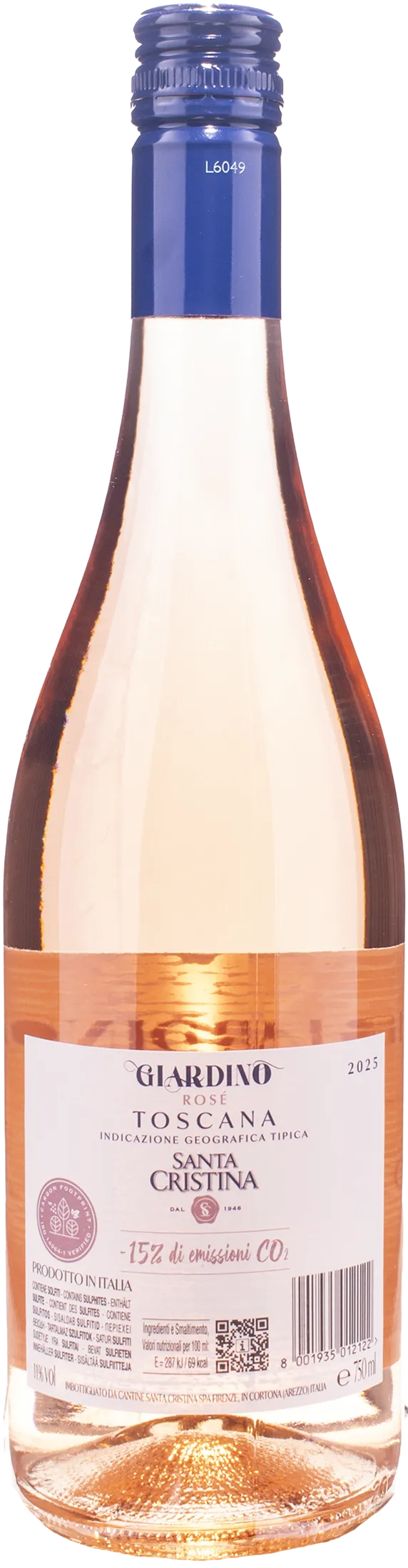
Founded in 1946, Santa Cristina is a symbol of quality thanks to the expertise of Marchesi Antinori. This elegant wine combines great tradition with a marked ecological awareness, highlighting on its label the 15% reduction in CO2 emissions. A refined and sustainable glass that pays tribute to the authentic beauty of the Tuscan landscape.
Tasting notes

Perfume

Color

Taste
Serve at:
10 - 12 °C
Longevity:
03 - 05 years

- Start up year: 2006
- Oenologist: Filippo Bezzi, Fabrizio Balzi
The care and attention always given to the vineyards and in the cellar have been the stimulus for constant innovation and to deal with native and international varietals, giving rise to a family of different products but distinguished by the same style, the result of an unbreakable bond between the vineyard, terroir, and human labor.
The products of the family Santa Cristina were born from this simple philosophy, thanks to an ongoing dialogue with the earth. Since 1946 continues this dedication, to keep still pristine quality of Santa Cristina. Read more


| Name | Santa Cristina Giardino Rosè 2025 |
|---|---|
| Type | Rosé still |
| Denomination | Toscana IGT |
| Vintage | 2025 |
| Size | 0,75 l |
| Alcohol content | 11.0% by volume |
| Grape varieties | 100% Sangiovese |
| Country | Italy |
| Region | Tuscany |
| Vendor | Santa Cristina (Antinori) |
| Story | History and Curiosities Founded in 1946, Santa Cristina is a symbol of quality thanks to the expertise of Marchesi Antinori. This elegant wine combines great tradition with a marked ecological awareness, highlighting on its label the 15% reduction in CO2 emissions. A refined and sustainable glass that pays tribute to the authentic beauty of the Tuscan landscape. |
| Origin | Tuscany |
| Fermentation temperature | Not exceeding 15 °C |
| Production technique | Destemming and crushing, gentle pressing and brief maceration on the skins in stainless steel tanks; fermentation in stainless steel at low temperature |
| Wine making | Part of the grapes was destemmed, crushed, and immediately very gently pressed to obtain a lightly coloured must; another part, after destemming and crushing, was left to macerate for a few hours in stainless steel tanks to extract aromas from the skins. The must was cooled to 10°C to encourage natural clarification; after 48 hours it was transferred to stainless steel tanks where alcoholic fermentation took place at a temperature not exceeding 15°C. The wine was then stored in stainless steel at 10°C to preserve its aromatic component. |
| Aging | After 48 hours, it was transferred to stainless steel tanks where alcoholic fermentation took place at a temperature not exceeding 15°C. The resulting wine was then stored in stainless steel tanks at a temperature of 10°C to preserve its aromatic component. |
| Allergens | Contains sulphites |