


Ca dei Frati
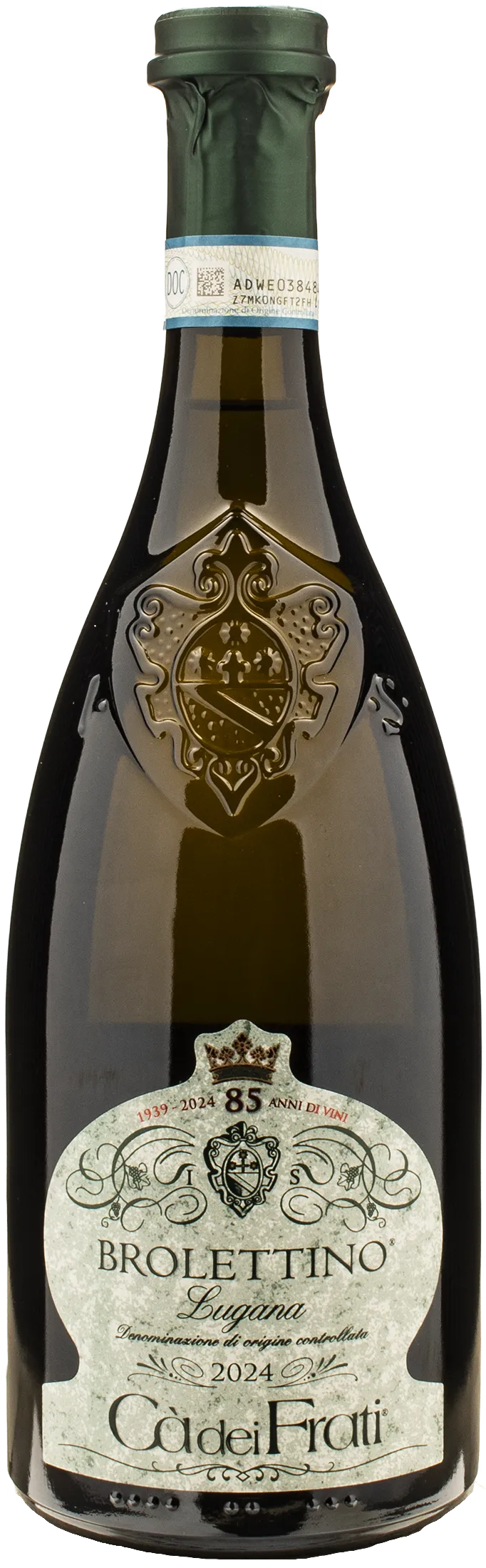
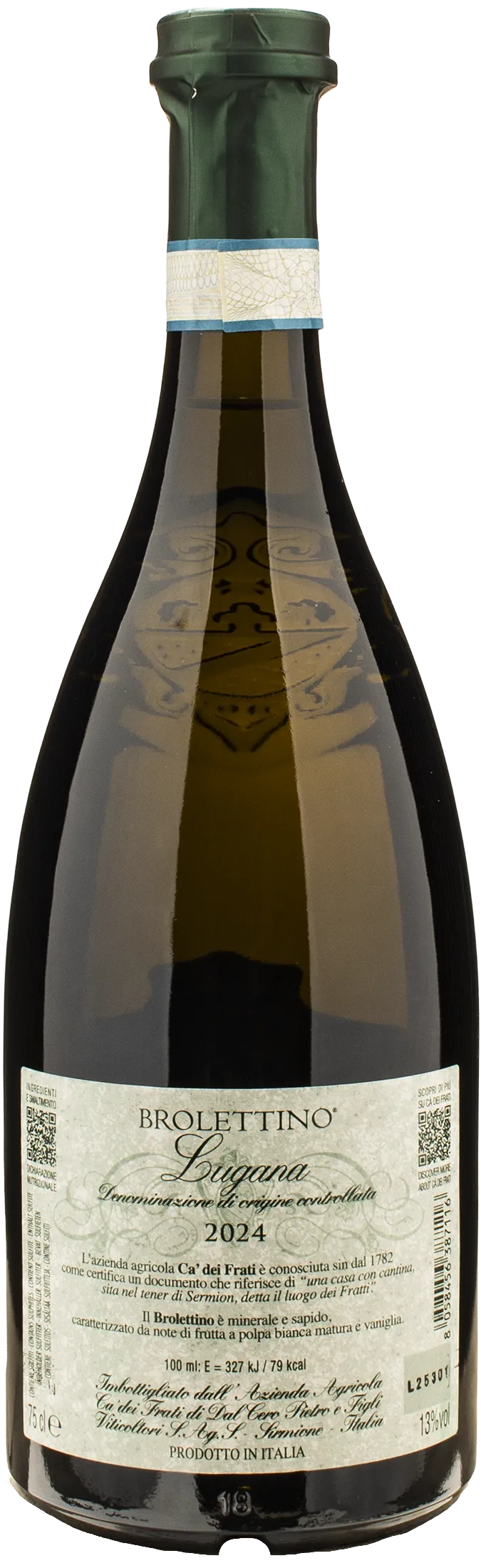
Lugana Brolettino 2024
| Denomination | DOC Lugana |
|---|---|
| Size | 0,75 l |
| Alcohol content | 13.0% by volume |
| Area | Lombardy (Italy) |
| Grape varieties | 100% Turbiana |
| Aging | In barrique for 10 months, followed by 3 months in bottle. |
- Origin and variety: 100% Turbiana from the I Frati and Ronchedone vineyards on Lake Garda
- Ageing: steel and barrique with malolactic fermentation; 10 months in wood and 3 in bottle
- Aromatic profile: notes of peach, yellow apple, white flowers, citrus, balsamic hints and vanilla
- Taste: dry, structured and creamy; balanced acidity, pronounced savouriness and a long, clean finish
- Longevity and serving: perfect young or aged; serve at 8-10°C, until 2029
Description
What kind of wine it is
Cà dei Frati Brolettino is a dry white wine that expresses the profound soul of Lugana. It is made from Turbiana grapes, an indigenous variety also known as Trebbiano di Lugana, with parcels vinified separately to enhance the different degrees of ripeness. On the palate, it offers a full body and slightly creamy texture, supported by a well-balanced acidic tension that lifts the sip. A pronounced savouriness accompanies the flavour towards a long and clean finish, ensuring the wine has remarkable ageing potential.
Where it comes from
It originates on the southern shore of Lake Garda, from historic vineyards located between Sirmione and Desenzano. The vines grow on calcareous-clay soils of a mineral nature, benefiting from an ideal microclimate tempered by lake breezes. This constant ventilation encourages the ripening of the grapes and results in a sip endowed with freshness and pronounced savouriness, precisely reflecting the identity of the Lugana territory.
How it is produced
The production process begins with a late autumn harvest, aimed at obtaining grapes capable of supporting a long evolution. After an initial fermentation in steel to preserve the varietal aromatics, the wine is transferred to wooden barrels, where it undergoes malolactic fermentation and matures for ten months. The result is an elegant bouquet intertwining peach, yellow apple and white flowers with citrus notes, balsamic nuances and fine hints of vanilla.
History and Curiosities
Produced by the historic winery Ca’ dei Frati, active in Sirmione since 1782, Brolettino is an authentic expression of the Garda terroir. The Dal Cero family meticulously oversees the entire vegetative cycle, from the evocative weeping of the vine in March to its rest in November. The Turbiana grapes, harvested during a precious late vintage, are vinified with care to enhance the richness of the clay-limestone soil. This captivating Lugana DOC encapsulates centuries of winemaking tradition, conveying a strong identity and extraordinary longevity in the glass.
Tasting notes
Perfume

Color
Taste
Serve at:
10 - 12 °C
Longevity:
03 - 05 years
- Start up year: 1939
- Oenologist: Igino Dal Cero
- Hectares: 120
It was in 1939 when Felice Dal Cero, son of Domenico, already a winemaker in Montecchia Crosara in Verona, moved in that house, Lugana of Sirmione, sensing immediately the wine-growing area.
After 30 years of work in the vineyard and winery in 1969, his son Peter participated in the creation of Doc started to bottle its first Lugana Casa dei Frati label.
Today, with his wife Santa Rosa cultural heritage has been passed on to children Igino, Gian Franco and Anna Maria who run the company with the same passion and determination.
Mutual respect, the union of the family, defined roles and the link to their territory on the shores of Lake Garda, represent the true strength of the Dal Cero family
Ca'dei Frati treasures of the past and looks to the future through a research and development of what was built in 70 years of wines. Read more


| Name | Ca dei Frati Lugana Brolettino 2024 |
|---|---|
| Type | White still |
| Denomination | Lugana DOC |
| Vintage | 2024 |
| Size | 0,75 l |
| Alcohol content | 13.0% by volume |
| Grape varieties | 100% Turbiana |
| Country | Italy |
| Region | Lombardy |
| Vendor | Ca dei Frati |
| Story | History and Curiosities Produced by the historic winery Ca’ dei Frati, active in Sirmione since 1782, Brolettino is an authentic expression of the Garda terroir. The Dal Cero family meticulously oversees the entire vegetative cycle, from the evocative weeping of the vine in March to its rest in November. The Turbiana grapes, harvested during a precious late vintage, are vinified with care to enhance the richness of the clay-limestone soil. This captivating Lugana DOC encapsulates centuries of winemaking tradition, conveying a strong identity and extraordinary longevity in the glass. |
| Origin | Vineyards 'I Frati' in Sirmione and 'Ronchedone' in Desenzano del Garda (Brescia) |
| Soil composition | Calcareous-clay |
| Cultivation system | Single and double Guyot |
| Yield per hectare | 9,000 kg/hectare |
| Harvest | Mid-to-late October (autumn) |
| Production technique | Initial vinification in steel, completion in barrique with malolactic fermentation in barrique; ageing 10 months in barrique followed by 3 months in bottle |
| Wine making | Initial vinification in stainless steel to preserve freshness, completed in barrique; malolactic fermentation carried out in barrique; aged for 10 months in barrique followed by 3 months in bottle. |
| Aging | In barrique for 10 months, followed by 3 months in bottle. |
| Total acidity | 6.6 gr/L |
| PH | 3.25 |
| Dry extract | 22.5 gr/L |
| Allergens | Contains sulphites |