


Cantine Leonardo da Vinci
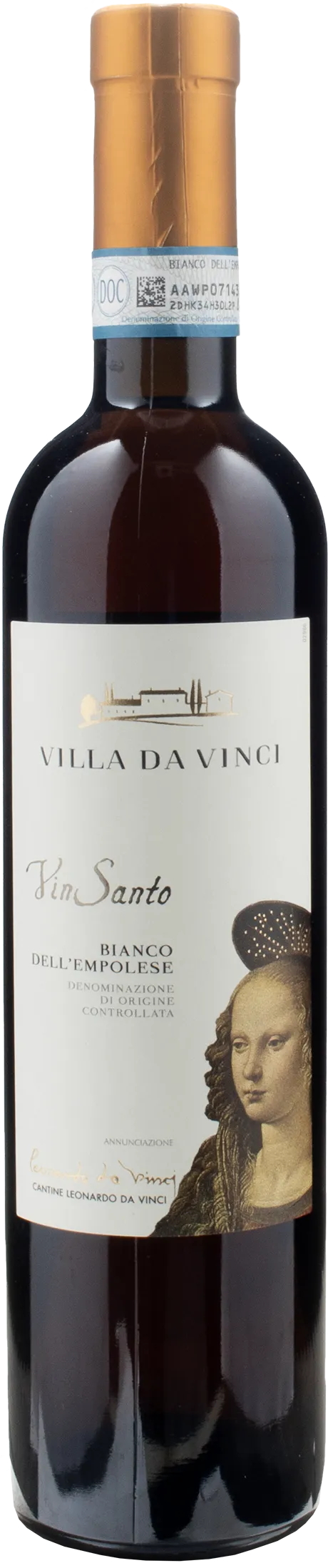
Vinsanto dell'Empolese 0.5L 2012
| Denomination | DOC Bianco dell' Empolese Vin Santo |
|---|---|
| Size | 0,50 l |
| Alcohol content | 16.5% by volume |
| Area | Tuscany (Italy) |
| Grape varieties | 100% Trebbiano Toscano |
| Aging | The must is decanted into small oak barrels, known as "caratelli", where it stays for four years, slowly fermenting, thanks to its high sugar content, and ageing. The caratelli are kept in the "vinsantaia", which undergoes extreme temperature changes between the Summer and Winter. |

Description
A sweet passito from the heart of Tuscany, a Vin Santo dell'Empolese DOC, 16.5% ABV, produced by Cantine Leonardo da Vinci, 2012 vintage. 100% Trebbiano Toscano. A wine born from the will of the owners of thirty farms who decided to join together to address the problems that arose following the disintegration of the sharecropping system. The Trebbiano bunches for our Vin Santo are hand-picked, placed in small containers, and dried on straw mats in well-ventilated, dry rooms until the February following the harvest. Aromas of dried fruit, figs, almonds, and honey. Intense amber color. Rich and velvety on the palate, it is sweet and well-balanced with a good acidity that does not make it cloying.
Tasting notes

Perfume

Color

Taste
Serve at:
10 - 12 °C
Longevity:
10 - 15 years

- Start up year: 1961
- Oenologist: Riccardo Pucci
- Bottles produced: 5.000.000
- Hectares: 750
The original headquarters, restructured and enlarged, are still the operative centre today. The winery is situated in the borough of Vinci, just 5 kilometres from the birthplace of the world famous artist and inventor Leonardo.
The co-operative takes its name from the great man, paying homage to the mind of the man who was universally recognised as a genius and to emphasise its deep-rooted bond with the territory, the same bond which Leonardo felt and whose surname is specifically associated with the village where he was born on 15 April 1452.
Today, Cantine Leonardo da Vinci is a pioneering co-operative, innovative and modern, which relies on the work and grape production of its 160 members. Read more


| Name | Da Vinci Vinsanto dell'Empolese 0.5L 2012 |
|---|---|
| Type | White dessert wine dessert wine |
| Denomination | Bianco dell'Empolese DOC |
| Vintage | 2012 |
| Size | 0,50 l |
| Alcohol content | 16.5% by volume |
| Grape varieties | 100% Trebbiano Toscano |
| Country | Italy |
| Region | Tuscany |
| Vendor | Cantine Leonardo da Vinci |
| Origin | A small area of hills in Vinci |
| Soil composition | Shell-rich Pliocene alluvial deposits. |
| Cultivation system | Primarily Guyot, but also spurred cordon, and for the oldest vineyards, Tuscan bow. |
| Harvest | The bunches of grapes are picked by hand, placed in small containers, and left to dry on straw mats in well-ventilated, dry rooms until the February after the harvest. |
| Wine making | The bunches of grapes are picked by hand, placed in small containers, and left to dry on straw mats in well-ventilated, dry rooms until the February after the harvest. The dried grapes are squeezed and vinified in the traditional way. |
| Aging | The must is decanted into small oak barrels, known as "caratelli", where it stays for four years, slowly fermenting, thanks to its high sugar content, and ageing. The caratelli are kept in the "vinsantaia", which undergoes extreme temperature changes between the Summer and Winter. |
| Allergens | Contains sulphites |