

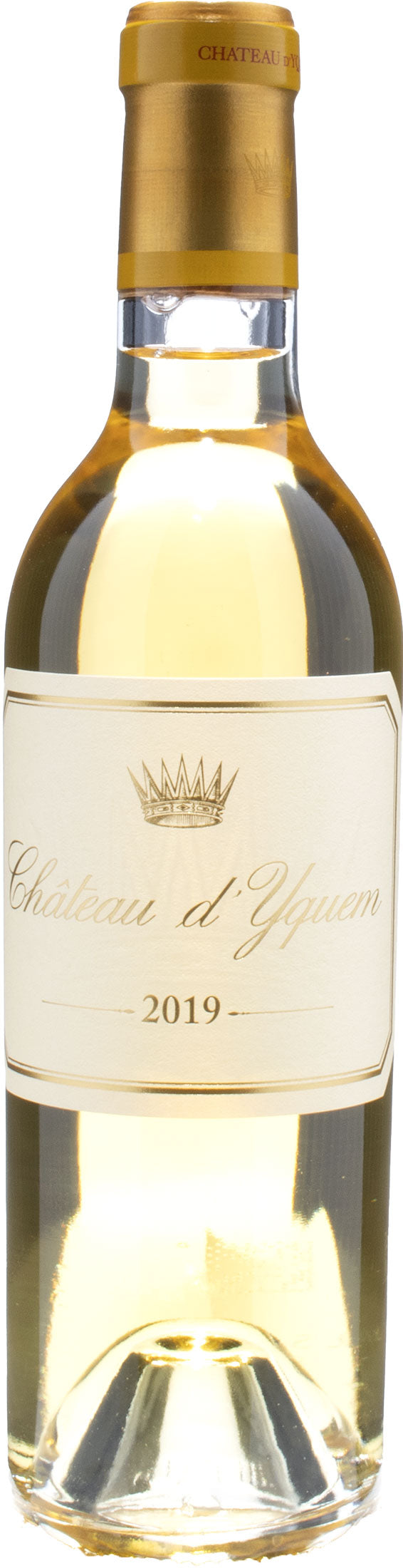
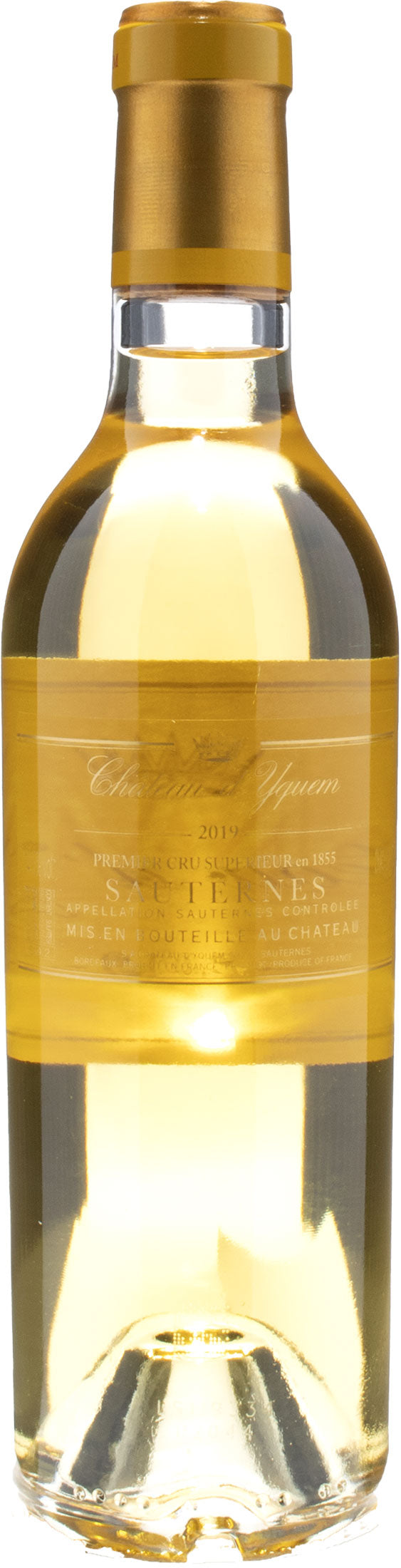
Chateau d'Yquem
Sauternes 0.375L 2019
| Denomination | AOC Sauternes Premier Grand Cru Classè |
|---|---|
| Size | 0,375 l |
| Alcohol content | 14.5% by volume |
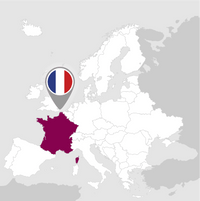
| Area | Bordeaux (France) |
| Grape varieties | 80% Semillon, 20% Sauvignon |
| Aging | After fermentation, the wine is ready for a period of ageing in new barriques. Every 3 months, the wine is separated from the lees at the bottom of the barrel. The wine finishes maturing in the barrels and is bottled in the fourth spring after the harvest. |
| Year | 2019 |
| Product name | Sauternes 0.375L 2019 |
| Perfume | The bouquet is incredibly fine, with hints of dried fruit (dried apricot, plum, baked fruit and jam), spices (cinnamon, saffron and liquorice), as well as flowers (lime blossom, etc.) |
| Taste | The first impression of Chateau d'Yquem on the palate is always very silky, and often sumptuous. It completely envelops the palate. This wine has a strong but never intrusive character, with great elegance. It always maintains a balance between sugars and acidity (sweetness and freshness). A touch of bitterness can also contribute to the overall harmony. |
| History | The unique and inimitable Premier Grand Cru Classé Sauternes since 1855. |
| Production method | As soon as they are harvested, the grapes are quickly transported to the cellar, where they are pressed several times. This is essential to fully extract the substances contained in the berries. |
| Region | Bordeaux |
| Country | France |
| Other years | 2021 , 2022 |
Description
A sweet, semi-aromatic white passito wine with a noble rot complex, produced by Château d'Yquem, a Premier Grand Cru Classé Sauternes since 1855, in the Bordeaux region of France. 2019 vintage, 0.375 L bottle, 14.5% ABV. A legendary wine, made from grapes affected by noble rot, with extraordinary longevity. The bouquet is incredibly refined, with hints of dried fruit (dried apricot, plum, stewed fruit, and jam), spices (cinnamon, saffron, and licorice), and even flowers (lime blossom, etc.). The initial impression on the palate is always silky, often sumptuous. It completely envelops the palate. This wine has a strong, yet never overbearing, character, and great elegance. It always maintains a balance between sugars and acidity (sweetness and freshness). A touch of bitterness can also contribute to the overall harmony.
Awards
-
2019
 94
94/100
Decanter is a wine and lifestyle magazine, published monthly in around 90 countries. The magazine includes industry news, classic guides and advice on wine and spirits.
-
2019
 96
96/100
James Suckling is an influential American wine critic and journalist who worked at Wine Spectator for 30 years. He left the magazine in 2010 to start his own website and guidebook (JamesSuckling.com). He specialises in Italian and Bordeaux wines.
-
2019
 93
93/100
The prestigious international wine guide from the renowned Robert Parker, the world's most experienced and trusted wine taster.
-
2019
 97
97/100
Wine spectator is the most influential wine guide on the internet.
Details
Perfume
Taste
Serve at:
10 - 12 °C.
Longevity:
Over 25 years
Pairings
- Start up year: 1593
- Oenologist: Sandrine Garbay, Lurton, Dubourdieu
- Hectares: 103
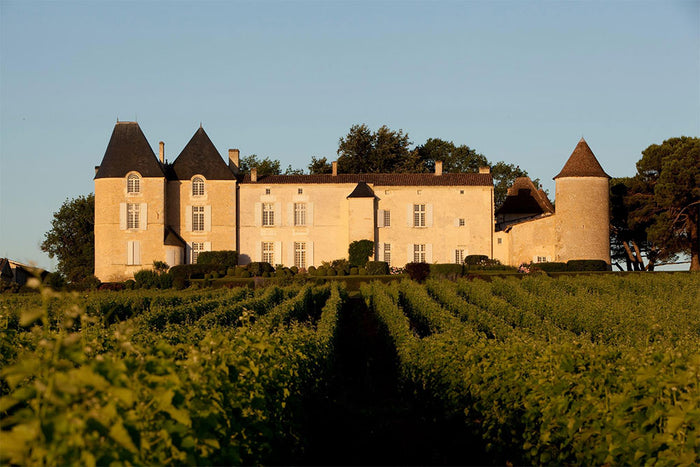
Yquem's success stems largely from the site's susceptibility to attack by "noble rot".
Wines from Château d'Yquem are characterised by their complexity, concentration and sweetness. A relatively high acidity helps to balance the wine's sweetness. Another characteristic for which Château d'Yquem wines are known is their longevity. With proper care, a bottle will keep for a century or more. During this time, the fruity overtones will gradually fade and integrate with more complex secondary and tertiary flavours. Read more
| Name | Chateau d'Yquem Sauternes 0.375L 2019 |
|---|---|
| Type | White dessert wine from grapes with noble rot dessert wine semi-aromatic |
| Denomination | Sauternes AOC |
| Vintage | 2019 |
| Size | 0,375 l |
| Alcohol content | 14.5% by volume |
| Grape varieties | 80% Semillon, 20% Sauvignon |
| Country | France |
| Region | Bordeaux |
| Vendor | Chateau d'Yquem |
| Story | The unique and inimitable Premier Grand Cru Classé Sauternes since 1855. |
| Origin | Sauternes |
| Climate | The region has a temperate oceanic climate due to its proximity to the Atlantic. |
| Soil composition | Layers of clay, sand and gravel are stacked on top of each other like plates of different thickness and size. |
| Yield per hectare | 9 hl/hectare |
| Harvest | The grapes have been harvested in the same way at Chateau d'Yquem for centuries. At harvest time, 140 people divided into four groups take part in the harvest. They comb the interior of the vineyard in search of the botrytised grapes that have reached maximum ripeness and concentration. ing is done in several waves. |
| Production technique | As soon as they are harvested, the grapes are quickly transported to the cellar, where they are pressed several times. This is essential to fully extract the substances contained in the berries. |
| Wine making | Alcoholic fermentation takes place naturally and lasts about 3-4 weeks at the end of which the wine will have a residual sugar content of about 125 g/l. |
| Aging | After fermentation, the wine is ready for a period of ageing in new barriques. Every 3 months, the wine is separated from the lees at the bottom of the barrel. The wine finishes maturing in the barrels and is bottled in the fourth spring after the harvest. |
| Allergens | Contains sulphites |