


Cantine Tornatore
Etna Rosso 2024
| Denomination | DOC Etna Rosso |
|---|---|
| Size | 0,75 l |
| Alcohol content | 13.5% by volume |
| Area | Sicily (Italy) |
| Grape varieties | 95% Nerello Mascalese, 5% Nerello Cappuccio |
| Aging | Ageing for approximately 6 months in large wooden barrels, followed by approximately 3 months of rest in the bottle. |
- Local grape varieties: A blend of Nerello Mascalese and Nerello Cappuccio
- Area of origin: Castiglione di Sicilia, Contrada Piano dei Daini, volcanic soil
- Aromas: Notes of red fruits, Marasca cherry, morello cherry, Mediterranean herbs and white pepper
- Taste: Savoury and fresh flavour, harmonious tannins, fruity and lasting finish
- Maturation: Fermentation in concrete, 6 months in large barrels and rest in the bottle
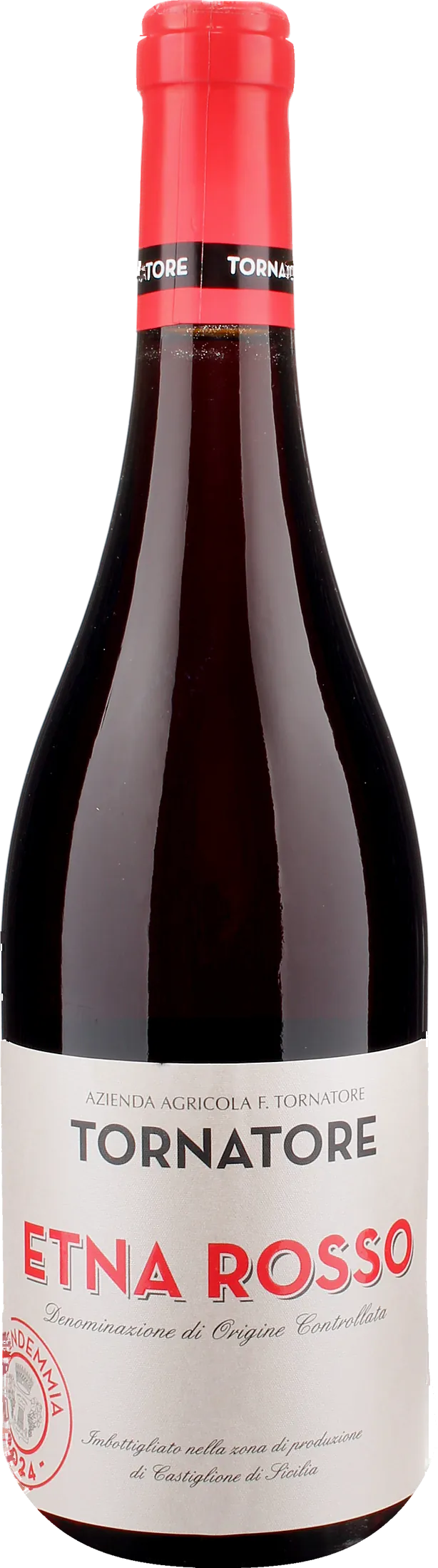
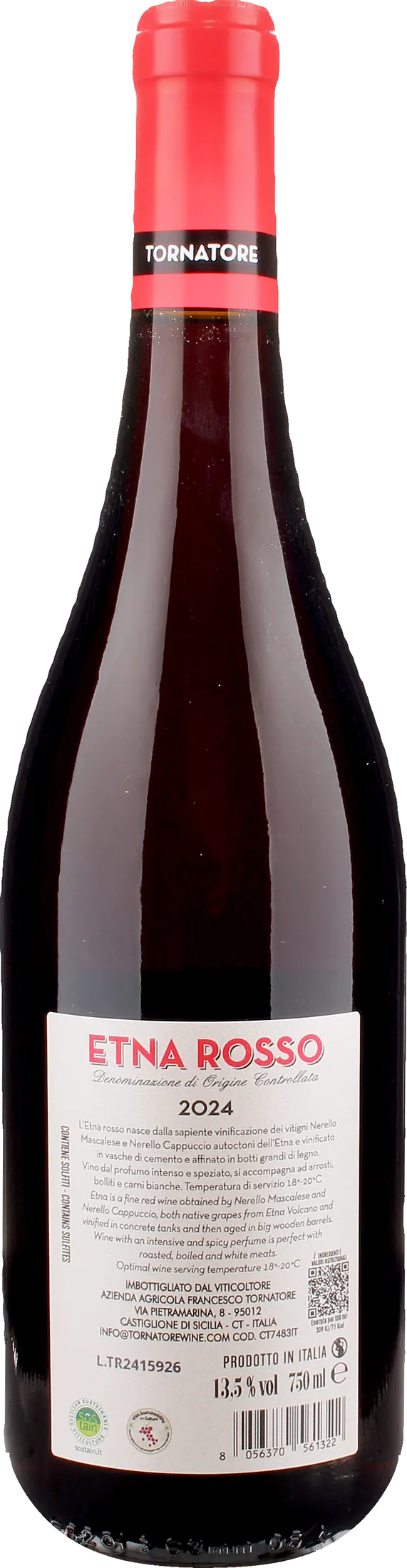
Description
What type of wine is it
Tornatore Etna Rosso is a still red wine that conveys the authentic territorial expression of Etna. This harmonious blend of Nerello Mascalese and Nerello Cappuccio grapes reveals itself in the glass with a light ruby red colour and violet reflections. On the nose, it offers clear aromas of Morello cherry, black cherry and small red fruits, enriched by nuances of Mediterranean herbs and white pepper. On the palate, it is fresh and savoury, characterised by well-integrated tannins and a fruity finish of distinct persistence.
Where it comes from
The grapes are grown in Castiglione di Sicilia, in the Contrada Piano dei Daini, on the northern slope of Etna. The roots reach deep into volcanic soil, an essential element that gives each sip a lively savouriness and aromatic precision with spicy accents. Tornatore, linked to these lands since 1865, values the historical 'contrade' as precious units of reference. The vineyards are cultivated using spurred cordon and vertical trellis systems, respecting the balance of nature.
How it is produced
Hand-harvesting takes place at the end of October, ensuring a careful selection of the bunches. After de-stemming and partial crushing, the must undergoes fermentation and maceration in concrete tanks for approximately ten to fifteen days. This is followed by a brief period on the skins, racking and the use of a traditional vertical press. Ageing lasts six months in large wooden barrels, followed by a period of resting in the bottle to achieve a harmonious structural balance.
History and curiosities
Originating from Castiglione di Sicilia, on the northern slope of the volcano, this prestigious wine is produced in the largest vineyard of the denomination. Since 1865, the Tornatore family has been cultivating historic districts, showcasing a unique volcanic terroir and its noble indigenous grape varieties. This profound artisanal dedication gives life to an exceptional red, celebrated by international critics. Thanks to prestigious accolades such as Gambero Rosso’s 'Tre Bicchieri' and 94 points from James Suckling, the label embodies the age-old and inimitable soul of Etna DOC.
Tasting notes

Perfume

Color

Taste
Serve at:
16 - 18 °C
Longevity:
05 - 10 years
Decanting time:
1 hour

- Start up year: 1865
- Oenologist: Angelo Di Grazia
- Bottles produced: 350.000
- Hectares: 72


| Name | Tornatore Etna Rosso 2024 |
|---|---|
| Type | Red green still |
| Denomination | Etna DOC |
| Vintage | 2024 |
| Size | 0,75 l |
| Alcohol content | 13.5% by volume |
| Grape varieties | 95% Nerello Mascalese, 5% Nerello Cappuccio |
| Country | Italy |
| Region | Sicily |
| Vendor | Cantine Tornatore |
| Story | History and curiosities Originating from Castiglione di Sicilia, on the northern slope of the volcano, this prestigious wine is produced in the largest vineyard of the denomination. Since 1865, the Tornatore family has been cultivating historic districts, showcasing a unique volcanic terroir and its noble indigenous grape varieties. This profound artisanal dedication gives life to an exceptional red, celebrated by international critics. Thanks to prestigious accolades such as Gambero Rosso’s 'Tre Bicchieri' and 94 points from James Suckling, the label embodies the age-old and inimitable soul of Etna DOC. |
| Origin | Castiglione di Sicilia (CT), Piano dei Daini district, northern slope of Mount Etna |
| Soil composition | Volcanic soil |
| Cultivation system | Spurred cordon and vertical trellising |
| Yield per hectare | 7,000 kg per hectare |
| Harvest | 2nd and 3rd decades of October |
| Fermentation temperature | 22 to 25 °C |
| Fermentation | About 10–15 days |
| Production technique | Manual harvesting and manual selection of the grapes; destemming and partial crushing; fermentation and maceration in concrete tanks; pressing with a traditional vertical press; ageing in large wooden casks and in the bottle. |
| Wine making | Manual harvesting and selection of the grapes; destemming, partial crushing and transfer to cement tanks for fermentation and maceration for approximately 10–15 days at 22–25 °C; following fermentation, further maceration for a few days, then racking and pressing with a traditional vertical press; ageing for approximately 6 months in large wooden barrels followed by a further 3 months in the bottle. |
| Aging | Ageing for approximately 6 months in large wooden barrels, followed by approximately 3 months of rest in the bottle. |
| Allergens | Contains sulphites |