
Under the law of Hong Kong, intoxicating liquor must not be sold or supplied to a minor in the course of business. | 根據香港法律,不得在業務過程中,向未成年人售賣或供應令人醺醉的酒類。


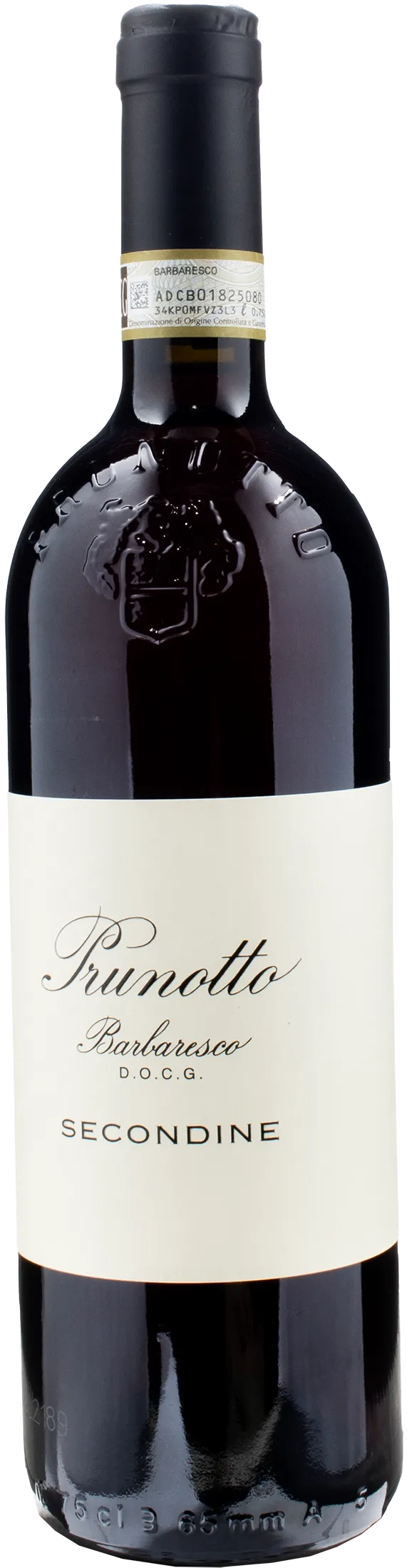
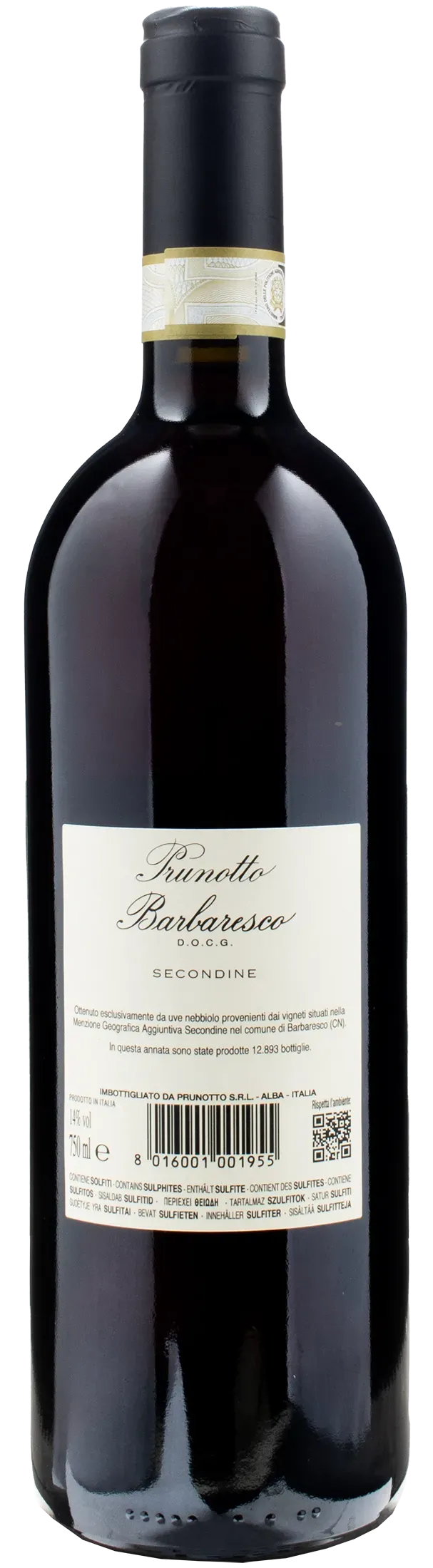
Prunotto
Barbaresco Secondine 2020
Other years:
2021| Denomination | DOCG Barbaresco |
|---|---|
| Size | 0,75 l |
| Alcohol content | 14.0% by volume |
| Area | Piedmont (Italy) |
| Grape varieties | 100% Nebbiolo |
| Aging | Aged for at least 12 months in oak barrels, with further maturation in the bottle for several months before release to the market. |
| Other years | 2021 |
- Name and vintage: Barbaresco DOCG 2020, still red wine from Piedmont produced by Prunotto
- Grapes and alcohol: 100% Nebbiolo, 14% vol, 0.75 l bottle with cork closure
- Vinification: maceration at 30°C, 12 months in oak and bottle ageing
- Aromatic profile: hints of raspberry and rose with notes of tobacco, white pepper and liquorice
- Pairings: ideal at 18-20°C with game, pork and mature cheeses
Description
What kind of wine it is
Prunotto Barbaresco Secondine is a wine of extraordinary elegance, a pure expression of the Nebbiolo grape variety. It displays a ruby red colour tending towards garnet, enhanced by subtle brick-coloured highlights. The bouquet is complex, opening with delicate hints of rose and violet that blend with notes of raspberry. The aromatic profile is enriched by fine nuances of tobacco, liquorice, cinnamon and cardamom, accompanied by a touch of white pepper. On the palate, it stands out for its excellent harmony, supported by a silky tannic texture that makes it smooth to drink, balancing structure with refined sweetness.
Where it comes from
This wine originates in the heart of the historic Barbaresco area, more precisely in the Secondine district in Piedmont. The vineyards are set in a picturesque hilly landscape near the Tanaro river, characterised by particularly suitable silty soils. A natural amphitheatre protects the vines, creating an ideal microclimate to enhance the finesse of the grapes. The importance of this subzone, already recognised at the end of the nineteenth century, has been confirmed over the years by the most authoritative wine maps. In this exceptional context, the Prunotto winery tends the rows with the aim of offering an authentic and rigorous interpretation of the territory.
How it is produced
Production begins with destemming and crushing of the grapes, followed by maceration on the skins for about ten days at a controlled temperature, in order to preserve the integrity of the aromas. Malolactic fermentation is completed before the onset of winter, stabilising the wine and softening its profile. This is followed by a maturation period of at least twelve months in oak barrels. The process concludes with a further period of bottle ageing before release, a fundamental step to allow the wine to reach perfect expressive balance.
History and Curiosities
Located in the heart of the Langhe, Secondine is a historic terroir characterised by silty soils and protected by a picturesque natural amphitheatre. Recognised as early as 1879, this cru is now enhanced by the vision of the Antinori family and the historic Prunotto winery. This extraordinary vocation gives rise to a majestic Barbaresco DOCG, a pure expression of Nebbiolo matured in oak. A label of exceptional elegance that captivates the palate with its harmony and velvety tannins, offering a complex, enveloping and memorable tasting experience.
Awards
-
2020
 93
93/100
Decanter is a wine and lifestyle magazine, published monthly in around 90 countries. The magazine includes industry news, classic guides and advice on wine and spirits.
-
2020
 2
2This guide is highly respected and offers the most comprehensive review of Italian wines. It has a long tradition and is based on blind tastings carried out by over 100 experts.
-
2020
 94
94/100
James Suckling is an influential American wine critic and journalist who worked at Wine Spectator for 30 years. He left the magazine in 2010 to start his own website and guidebook (JamesSuckling.com). He specialises in Italian and Bordeaux wines.
-
2020
 92
92/100
The prestigious international wine guide from the renowned Robert Parker, the world's most experienced and trusted wine taster.
-
2020
 3
3One of the most prestigious wine guides in Italy.
-
2020
 89
89/100
Vinous is the online guide from Antonio Galloni, one of the world's leading wine connoisseurs.
-
2020
 4
4Italian Sommelier Association (AIS) guide
Tasting notes

Perfume

Color

Taste
Serve at:
18 - 20 °C
Longevity:
10 - 15 years
Decanting time:
1 hour

- Start up year: 1904
- Oenologist: Gianluca Torrengo
- Bottles produced: 1.116.400
- Hectares: 70
The Antinori family, charmed by such rich natural beauty, unique vineyards and soils, decided to invest time and energy in this terroir confident that their efforts would make Prunotto what it is today, one of the most important winemaking estates in the Piedmont region. Read more


| Name | Prunotto Barbaresco Secondine 2020 |
|---|---|
| Type | Red still |
| Denomination | Barbaresco DOCG |
| Vintage | 2020 |
| Size | 0,75 l |
| Alcohol content | 14.0% by volume |
| Grape varieties | 100% Nebbiolo |
| Country | Italy |
| Region | Piedmont |
| Vendor | Prunotto |
| Story | History and Curiosities Located in the heart of the Langhe, Secondine is a historic terroir characterised by silty soils and protected by a picturesque natural amphitheatre. Recognised as early as 1879, this cru is now enhanced by the vision of the Antinori family and the historic Prunotto winery. This extraordinary vocation gives rise to a majestic Barbaresco DOCG, a pure expression of Nebbiolo matured in oak. A label of exceptional elegance that captivates the palate with its harmony and velvety tannins, offering a complex, enveloping and memorable tasting experience. |
| Origin | Secondine (Barbaresco), nel cuore delle Langhe (Piemonte), Italia |
| Soil composition | Silty soil |
| Fermentation temperature | Maximum temperature of 30 °C |
| Fermentation | Approximately 10 days |
| Production technique | Destemming and crushing of the grapes; maceration on the skins for about 10 days (max 30 °C); malolactic fermentation before winter; ageing for at least 12 months in oak barrels with further ageing in the bottle. |
| Wine making | Upon arrival at the winery, the grapes were destemmed and crushed. Maceration lasted for about 10 days at a maximum temperature of 30°C. Malolactic fermentation was completed before winter. |
| Aging | Aged for at least 12 months in oak barrels, with further maturation in the bottle for several months before release to the market. |
| Allergens | Contains sulphites |