


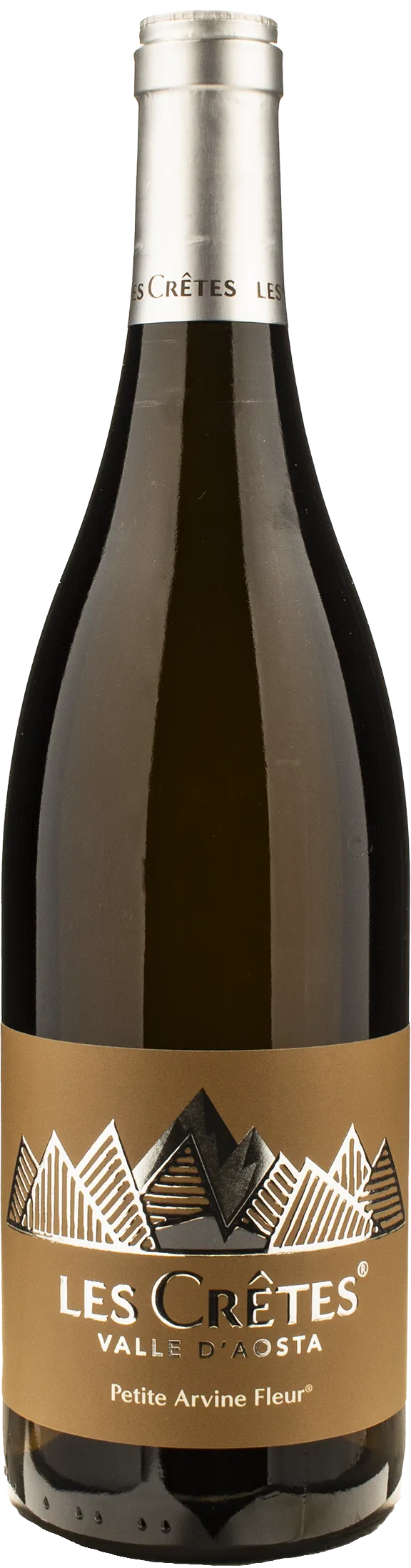
Les Cretes
Petite Arvine Fleur 2024
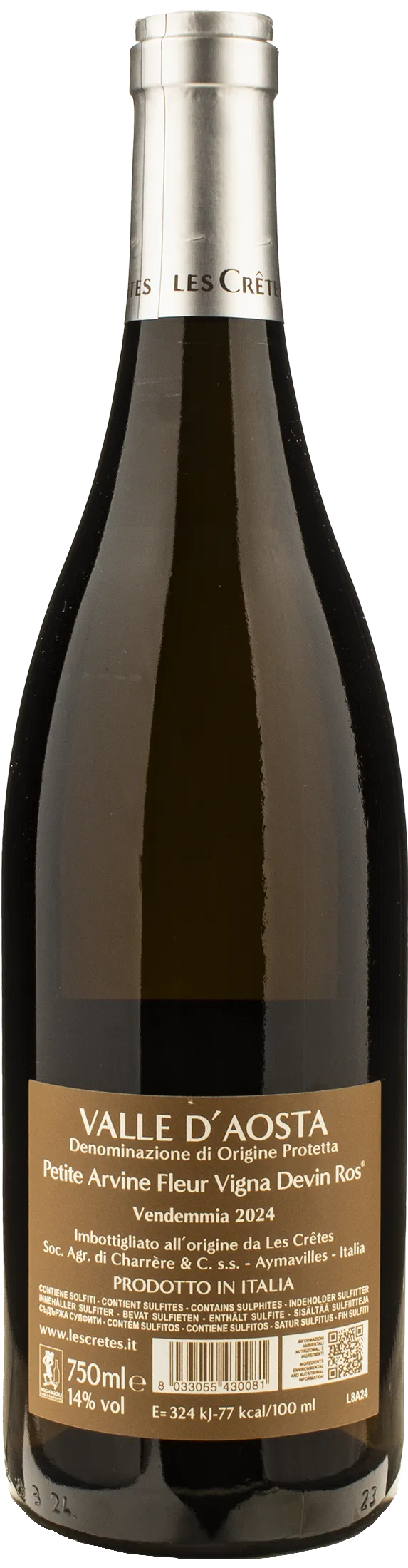
| Denomination | DOC Valle d'Aosta Petite Arvine |
|---|---|
| Size | 0,75 l |
| Alcohol content | 14.0% by volume |
| Area | Aosta Valley (Italy) |
| Grape varieties | 100% Petite Arvine |
| Aging | Ageing for 1-2 months on the lees ("sur lies") with continuous bâtonnage |
- Identity: Les Cretes Petite Arvine Fleur 2024, 0.75 L, 14% vol
- Origin: Valle d’Aosta DOC, grapes grown on steep slopes between 550 and 750 metres above sea level
- Vinification: Hand-picked; 12-day fermentation in steel at 18°C; matured on the lees for 1–2 months
- Aromas: Floral notes of jasmine and peony, followed by apple, plum, citrus and toasted bread
- Taste: Freshness and savouriness, pronounced minerality with a delicate hint of the sea and a persistent finish
Description
What kind of wine is it
Petite Arvine Fleur is a still white wine produced by Les Cretes, created to enhance the qualities of the Petite Arvine grape within the Valle d’Aosta denomination. The glass reveals a floral bouquet, enriched by elegant aromas of jasmine and peony intertwined with notes of apple, plum and citrus. On the palate, the sip stands out for its vivid minerality and a savoury streak that evokes a delicate marine undertone. The taste is full, fresh and textured, offering a harmonious finish, ideal for pairing with shellfish and white meats.
Where does it come from
The grapes grow on the steep slopes of Aymavilles and Montjovet, where the Charrère family has practised complex heroic viticulture for generations. The rows, organised in small plots, are situated between 550 and 750 metres above sea level. The environment is dominated by an endo-alpine climate, sheltered by the mountains and characterised by limited rainfall, constant breezes and strong sunlight. The roots sink into moraine soils that are loose and sandy, geological elements that are crucial in imparting the wine with its unmistakable savoury character and a clear aromatic profile.
How is it produced
Production begins at the end of September with a rigorous manual harvest. The grapes undergo gentle pressing and subsequent fermentation in steel for twelve days at a controlled temperature, a fundamental step to preserve the freshness of the aromas. Ageing involves resting on the lees for about two months, managed through continuous bâtonnage. This precise oenological technique gives the wine greater volume and a bright straw-yellow colour. The final taste masterfully combines a pleasant fleshy substance with a dynamic and balanced sip.
History and Curiosities
The name Petite Arvine comes from its small berries, a grape variety whose origin is disputed between the Aosta Valley and Switzerland. This fascinating white wine is born from the deep passion of the Charrère family, who for six generations have dedicated themselves to heroic and environmentally respectful viticulture. The grapes grow on small plots and steep, south-facing slopes within the historic “de vin ros” vineyards of Montjovet. Cultivated among the highest vineyards in Europe, Fleur masterfully blends ancient Alpine tradition with modern innovation.
Tasting notes
Perfume

Color
Taste
Serve at:
12 - 14 °C
Longevity:
05 - 10 years

- Start up year: 1989
- Oenologist: Raffaele Crotta, Eleonora Charrère
- Bottles produced: 250.000
- Hectares: 35


| Name | Les Cretes Petite Arvine Fleur 2024 |
|---|---|
| Type | White green still |
| Denomination | Valle d'Aosta DOC |
| Vintage | 2024 |
| Size | 0,75 l |
| Alcohol content | 14.0% by volume |
| Grape varieties | 100% Petite Arvine |
| Country | Italy |
| Region | Aosta Valley |
| Vendor | Les Cretes |
| Story | History and Curiosities The name Petite Arvine comes from its small berries, a grape variety whose origin is disputed between the Aosta Valley and Switzerland. This fascinating white wine is born from the deep passion of the Charrère family, who for six generations have dedicated themselves to heroic and environmentally respectful viticulture. The grapes grow on small plots and steep, south-facing slopes within the historic "de vin ros" vineyards of Montjovet. Cultivated among the highest vineyards in Europe, Fleur masterfully blends ancient Alpine tradition with modern innovation. |
| Origin | Aymavilles, Valle d'Aosta, Italia |
| Climate | Endoalpine climate protected by the Alps |
| Soil composition | Morainic, loose, sandy on a slope. |
| Cultivation system | Guyot |
| Plants per hectare | 7,500 plants per hectare |
| Yield per hectare | 10,000 kg/ha |
| Harvest | Late September |
| Fermentation temperature | 18 °C |
| Fermentation | 12 days |
| Production technique | Vendemmia manuale; pressatura soffice; fermentazione in acciaio inox a temperatura controllata; affinamento sui lieviti (sur lies) con bâtonnage continuo |
| Wine making | Manual harvest at the end of September; gentle pressing; 12-day fermentation in stainless steel at a controlled temperature of 18°C; ageing for 1–2 months on the lees with continuous bâtonnage. |
| Aging | Ageing for 1-2 months on the lees ("sur lies") with continuous bâtonnage |
| Allergens | Contains sulphites |