
Under the law of Hong Kong, intoxicating liquor must not be sold or supplied to a minor in the course of business. | 根據香港法律,不得在業務過程中,向未成年人售賣或供應令人醺醉的酒類。


Elisabetta Foradori
Sgarzon Teroldego 2024
| Denomination | IGT Vigneti delle Dolomiti |
|---|---|
| Size | 0,75 l |
| Alcohol content | 12.0% by volume |
| Area | Trentino Alto Adige (Italy) |
| Grape varieties | 100% Teroldego |
| Aging | Fermented and aged on the skins in tinaja (amphora) for eight months |
- Origin: Sgarzon Vineyard in Mezzolombardo, Campo Rotaliano (Vineyards of the Dolomites IGT)
- Vinification: Fermentation and ageing for 8 months in terracotta amphora, unfiltered
- Aromas: Notes of blackberry, blueberry, wild flowers and spices, with a pronounced mineral character
- Taste: Distinct freshness, enveloping and juicy structure; well-integrated tannins
- Pairings: Ideal with meats, cured meats and cheeses; rated 94 points by James Suckling
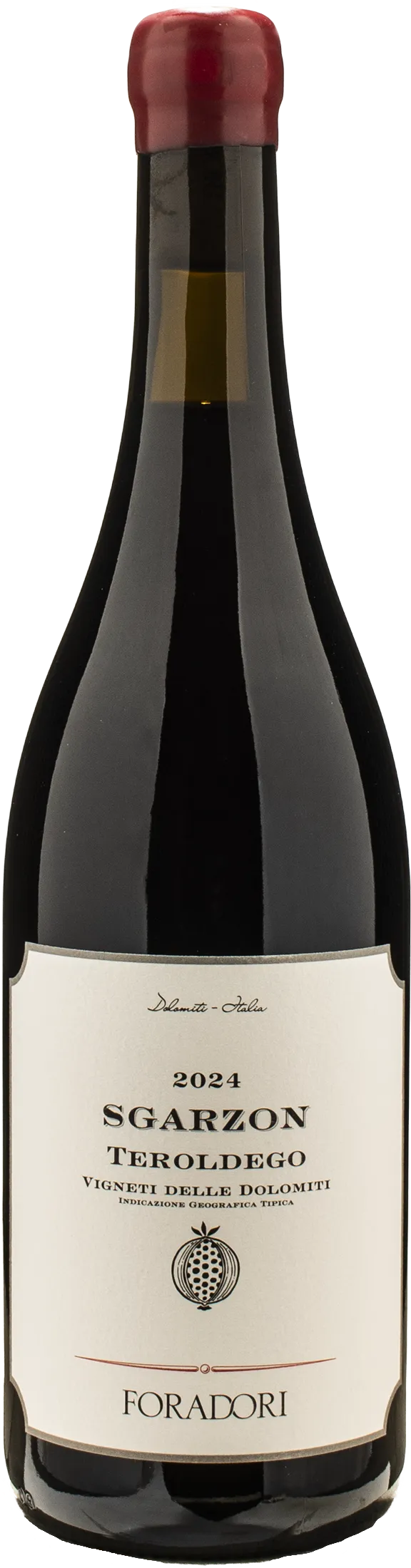
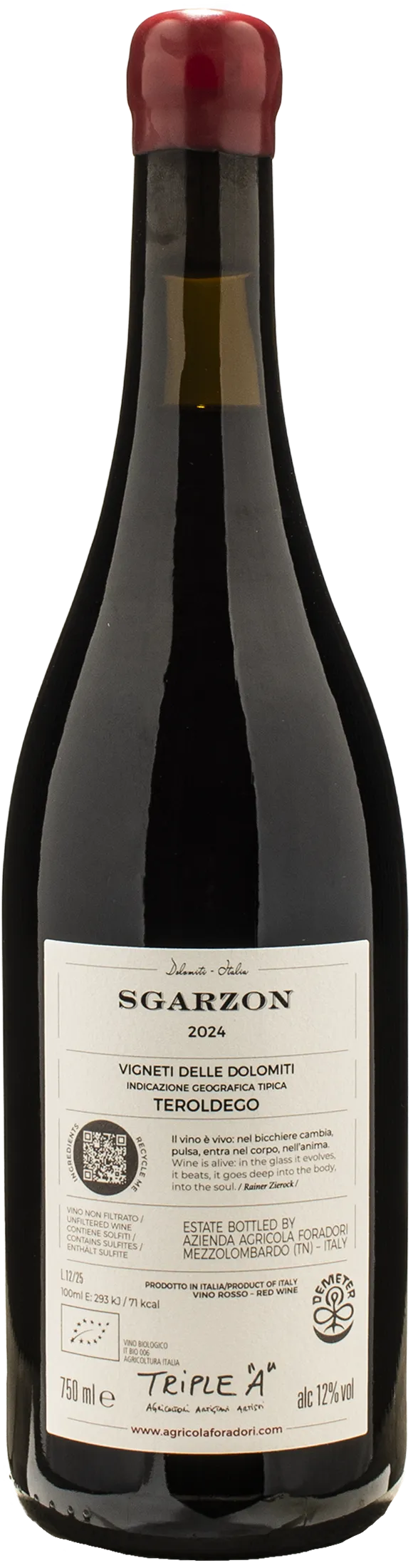
Description
What kind of wine it is
Sgarzon Teroldego is an organic red wine produced by Foradori in Trentino-Alto Adige, within the Vigneti delle Dolomiti area. On the nose, it reveals aromas of blackberries, blueberries, wild flowers and spices, resting on a clear mineral note. On the palate, it expresses great freshness and an enveloping body, supported by well-integrated tannins. The harmonious finish makes it ideal for pairing with hearty first courses, flavourful cured meats, mature cheeses and refined dishes based on red meats and game.
Where it comes from
The Teroldego grapes come from the Sgarzon vineyard, located in Mezzolombardo, in the heart of Campo Rotaliano. Here, the vines sink their roots into an alluvial soil predominantly sandy, a key element in giving the wine drive and verticality. The place name derives from the local term “sgarzo”, which refers to the vine shoot. The area enjoys a cooler microclimate compared to neighbouring zones, a characteristic that brings vitality to the Guyot-trained vines. These pedoclimatic conditions enhance the vibrancy of Teroldego, allowing Foradori to showcase its exceptional expressive variability.
How it is produced
Production follows a craft philosophy aimed at preserving the integrity of the grape variety. Fermentation and subsequent maceration on the skins last for eight months inside terracotta amphorae from Villarrobledo, known as tinajas. This prolonged contact with the skins enriches the wine’s structure and ensures impeccable tannin integration, encouraging a dynamic drinking experience. Foradori completes the process by bottling the wine without any filtration, a fundamental choice to maintain its aromatic profile and natural purity intact.
History and Curiosities
In the Campo Rotaliano, the term “sgarzo” refers to the vine shoot and gives its name to Sgarzon Teroldego, a wine born from vigorous vines rooted in the alluvial and sandy soils of Mezzolombardo. The vineyard’s cool microclimate imparts extraordinary freshness, preserved thanks to meticulous artisanal processing without filtration. Eight months of maturation in amphora (tinaja) in contact with the skins shape the character of this excellent IGT Vigneti delle Dolomiti, masterfully enhancing the fascinating variability of the grape variety.
Awards
-
2024
 94
94/100
James Suckling is an influential American wine critic and journalist who worked at Wine Spectator for 30 years. He left the magazine in 2010 to start his own website and guidebook (JamesSuckling.com). He specialises in Italian and Bordeaux wines.
Tasting notes

Perfume

Color

Taste
Serve at:
14 -16 °C
Longevity:
10 - 15 years
Decanting time:
1 hour

- Start up year: 1901
- Oenologist: Emilio Zierock Foradori
- Bottles produced: 180.000
- Hectares: 29
We harvest the grapes from vineyards covering 29 hectares – 70% of Teroldego, 15% of Manzoni Bianco, 5% of Nosiola and 10% of Pinot Grigio – to produce an average of 180.000 bottles per year: 50.000 of Foradori, 20.000 of Granato, 20.000 of Fontanasanta Manzoni Bianco, 10.000 of Fontanasanta Nosiola, 10.000 of Fuoripista Pinot Grigio, 10.000 for each vineyards of Sgarzon and Morei and 50.000 bottles of Lezèr. Read more


| Name | Foradori Sgarzon Teroldego 2024 |
|---|---|
| Type | Red organic still |
| Denomination | Vigneti delle Dolomiti IGT |
| Vintage | 2024 |
| Size | 0,75 l |
| Alcohol content | 12.0% by volume |
| Grape varieties | 100% Teroldego |
| Country | Italy |
| Region | Trentino Alto Adige |
| Vendor | Elisabetta Foradori |
| Story | History and Curiosities In the Campo Rotaliano, the term "sgarzo" refers to the vine shoot and gives its name to Sgarzon Teroldego, a wine born from vigorous vines rooted in the alluvial and sandy soils of Mezzolombardo. The vineyard’s cool microclimate imparts extraordinary freshness, preserved thanks to meticulous artisanal processing without filtration. Eight months of maturation in amphora (tinaja) in contact with the skins shape the character of this excellent IGT Vigneti delle Dolomiti, masterfully enhancing the fascinating variability of the grape variety. |
| Origin | Mezzolombardo (TN), Campo Rotaliano, Trentino-Alto Adige, Italia |
| Climate | Cooler microclimate |
| Soil composition | Terreno alluvionale con prevalenza di sabbia |
| Cultivation system | Single Guyot |
| Plants per hectare | 6,000 vines per hectare |
| Fermentation | Eight months |
| Production technique | Fermented and aged on the skins in tinaja (amphora) for eight months |
| Wine making | 8 months in amphora (tinaja from Villarrobledo, Spain) in contact with the skins. |
| Aging | Fermented and aged on the skins in tinaja (amphora) for eight months |
| Allergens | Contains sulphites |