
Under the law of Hong Kong, intoxicating liquor must not be sold or supplied to a minor in the course of business. | 根據香港法律,不得在業務過程中,向未成年人售賣或供應令人醺醉的酒類。


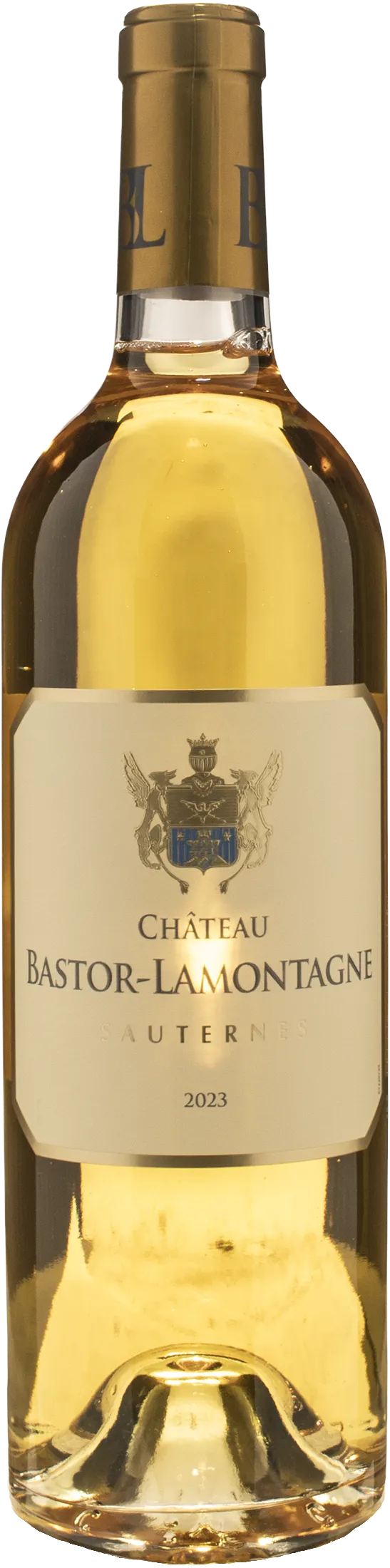
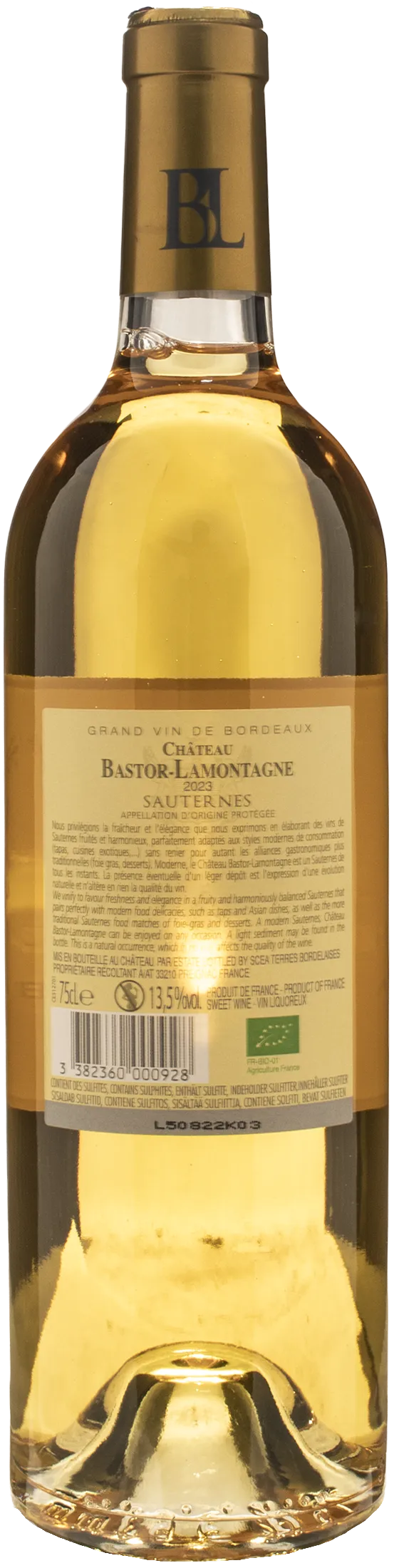
Chateau Bastor-Lamontagne
Sauternes 2023
| Denomination | AOC Sauternes |
|---|---|
| Size | 0,75 l |
| Alcohol content | 13.5% by volume |
| Area | Bordeaux (France) |
| Grape varieties | Sauvignon, Semillon |
| Aging | After fermentation, the wines were aged on the lees for several months. |
| Other years | 2012 , 2011 , 2014 |
- Wine and vintage: Sauternes AOC 2023 organic sweet white from the Bordeaux region
- Grape variety: Blend of Sémillon and Sauvignon from vineyards over 40 years old
- Aromatic profile: Floral aroma with notes of peach, pear and candied apricot on the palate
- Vinification: Pneumatic pressing, fermentation in barrel and stainless steel at 18-20 °C
- Serving and pairings: Serve at 10-12 °C with shellfish, mature cheeses and desserts
Description
What kind of wine it is
Chateau Bastor Lamontagne Sauternes is an organic sweet white wine that embodies the elegance of Bordeaux. Created from a blend of Sauvignon and Sémillon, it displays an intense golden hue and a floral profile. The palate reveals remarkable richness, accompanied by notes of peach, pear and candied apricot. This dessert wine is ideal for pairing with mature cheeses, fine pastries or a refined prawn risotto, offering an optimal experience when served between 10 and 12°C.
Where it comes from
This wine originates in Preignac, a renowned area of Bordeaux where Chateau Bastor-Lamontagne cultivates vineyards surrounded by greenery. The estate boasts three centuries of history and was once owned by the King of France. Today, it is among the rare Sauternes producers to hold organic certification, achieved in 2010. The grapes come from old vines over forty years of age, rooted in a gravelly-siliceous soil with a limestone base. These conditions give the wine great aromatic finesse and a strong sense of place.
How it is produced
Production begins with a rigorous manual harvest. The musts are gently extracted and subjected to low-temperature settling. Fermentation takes place partly in temperature-controlled steel tanks and in barrels, allowing the wine to develop a structured profile. Maturation concludes with a prolonged ageing on the lees for several months, a fundamental technique that consolidates the density on the palate and ensures lasting flavour, while preserving the authenticity of the raw material.
History and Curiosities
An ancient royal estate in Preignac with three centuries of history, Château Bastor-Lamontagne creates oenological masterpieces by combining tradition and sustainability. Once owned by the King of France, this prestigious Bordeaux winery is today one of only three Sauternes AOC estates to boast organic certification. The 2023 vintage, a sublime blend of Sauvignon and Sémillon awarded 95 points by Decanter, comes from old vines on gravelly-siliceous soils. An elegant sweet white wine that enchants with intense notes of white fruit and candied apricot.
Awards
-
2023
 95
95/100
Decanter is a wine and lifestyle magazine, published monthly in around 90 countries. The magazine includes industry news, classic guides and advice on wine and spirits.
-
2023
 94
94/100
James Suckling is an influential American wine critic and journalist who worked at Wine Spectator for 30 years. He left the magazine in 2010 to start his own website and guidebook (JamesSuckling.com). He specialises in Italian and Bordeaux wines.
Tasting notes
Perfume
Color
Taste
Serve at:
10 - 12 °C
Longevity:
10 - 15 years
- Hectares: 56
This ancient royal property with three centuries of history has converted its winemaking to organic ("biological") farming since 2010. Château Bastor-Lamontagne is one of the three properties of the sauternes appellation detaining an « Organic » certification. Read more


| Name | Chateau Bastor Lamontagne Sauternes 2023 |
|---|---|
| Type | White organic dessert wine dessert wine |
| Denomination | Sauternes AOC |
| Vintage | 2023 |
| Size | 0,75 l |
| Alcohol content | 13.5% by volume |
| Grape varieties | Sauvignon, Semillon |
| Country | France |
| Region | Bordeaux |
| Vendor | Chateau Bastor-Lamontagne |
| Story | History and Curiosities An ancient royal estate in Preignac with three centuries of history, Château Bastor-Lamontagne creates oenological masterpieces by combining tradition and sustainability. Once owned by the King of France, this prestigious Bordeaux winery is today one of only three Sauternes AOC estates to boast organic certification. The 2023 vintage, a sublime blend of Sauvignon and Sémillon awarded 95 points by Decanter, comes from old vines on gravelly-siliceous soils. An elegant sweet white wine that enchants with intense notes of white fruit and candied apricot. |
| Origin | Preignac (France) |
| Soil composition | Gravelly-siliceous on a calcareous base |
| Fermentation temperature | 18-20 °C |
| Production technique | Musts extracted with pneumatic press; light settling at low temperature; fermentation in barrels and stainless steel tanks at controlled temperature (18-20 °C); ageing on the lees for several months |
| Wine making | The musts were extracted using a pneumatic press and, after a light settling of the must at low temperature, fermented in barrels (50% of the harvest) or in stainless steel vats at a controlled temperature (18-20 °C). |
| Aging | After fermentation, the wines were aged on the lees for several months. |
| Allergens | Contains sulphites |