


Argentiera
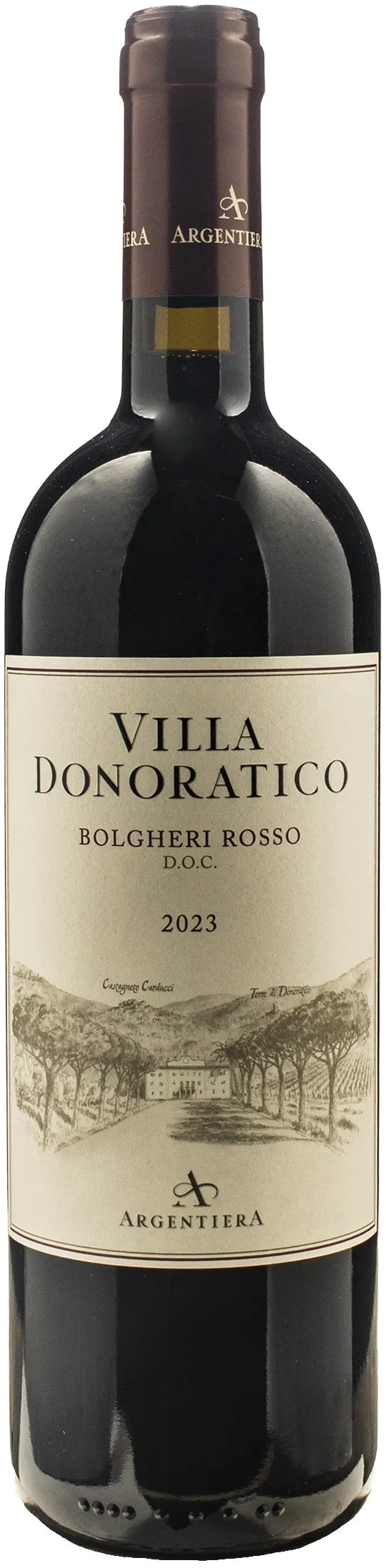
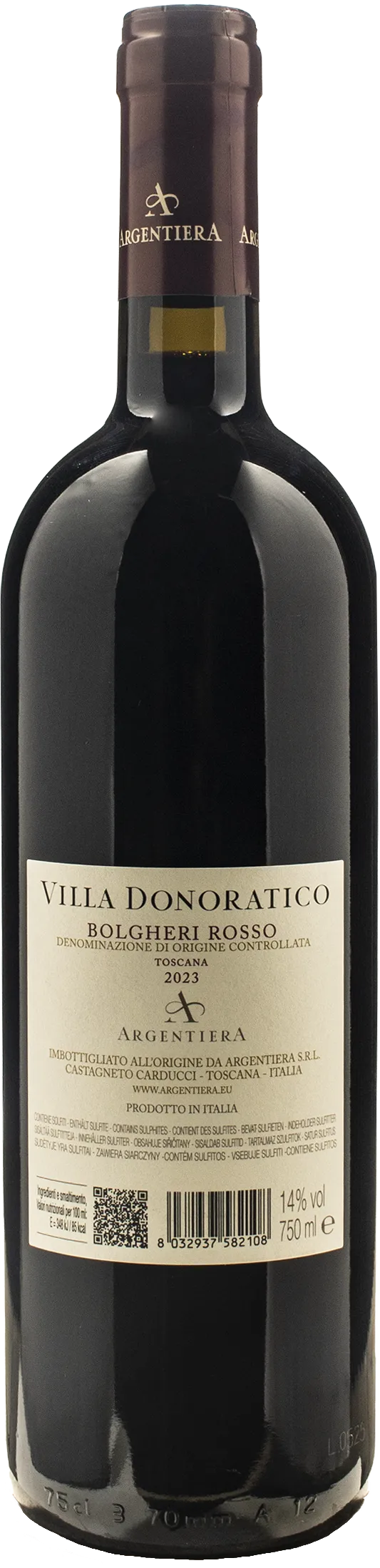
Bolgheri Rosso Villa Donoratico 2023
Other years:
2022| Denomination | DOC Bolgheri Rosso |
|---|---|
| Size | 0,75 l |
| Alcohol content | 14.0% by volume |
| Area | Tuscany (Italy) |
| Grape varieties | 45% Cabernet Sauvignon, 30% Merlot, 15% Cabernet Franc, 10% Petit Verdot |
| Aging | Aged for 12–14 months in 225-litre French oak barriques (Allier and Troncais), with completion of malolactic fermentation, followed by at least 9–10 months of bottle ageing. |
| Other years | 2022 |
- Name and vintage: Bolgheri Rosso DOC 2023 produced by Tenuta Argentiera in Tuscany
- Bordeaux blend: 45% Cabernet Sauvignon, 30% Merlot, 15% Cabernet Franc, 10% Petit Verdot
- Vinification: hand-picked; fermented in steel for 20–25 days at 28°C
- Ageing: 12–14 months in French oak barriques followed by 9–10 months in bottle
- Tasting notes: ruby colour, red fruits and balsamic notes; serve at 16–18°C after 1 hour
Description
What kind of wine it is
Villa Donoratico by Tenuta Argentiera is a red wine from the Bolgheri Rosso denomination produced in Tuscany. This blend combines Cabernet Sauvignon, Merlot, Cabernet Franc and Petit Verdot grapes. Fermented in steel and aged in oak barrels, it offers a full-bodied structure and silky tannins on the palate, with a persistent, fresh finish. It pairs ideally with game dishes, red meats and blue cheeses.
Where it comes from
This red originates in Alta Maremma, along the enchanting coastal strip of Tuscany. The vineyards of Tenuta Argentiera are situated in a privileged position, surrounded by a landscape of olive trees and centuries-old pines. The proximity to the sea ensures a constant sea breeze that promotes the regular ripening of the grapes. The vines sink their roots into continental soils at around 80 metres above sea level, giving the sip a distinctive gustatory tension that enhances the mineral freshness of the area.
How it is produced
Production begins with a meticulous manual harvest and careful selection of the bunches on a double sorting table. Each grape variety ferments and macerates separately in stainless steel tanks at a controlled temperature. Afterwards, the wine is transferred to French oak barrels for over a year, completing malolactic fermentation. A final ageing of several months allows the components to harmonise, defining the aromatic elegance that distinguishes the label before it is released to the market.
History and Curiosities
Founded in 1999 in the Upper Maremma, with an area of 500 hectares, Tenuta Argentiera is a symbolic estate of the Bolgheri DOC. As the company closest to the coast, its vineyards benefit from constant sea breezes among centuries-old pines and olive trees. In this magnificent setting, Villa Donoratico is born, an elegant red wine produced following organic practices at an altitude of 80 metres. The meticulous manual selection on a double sorting table ensures absolute excellence, confirmed by prestigious scores from critics, including 93 points from James Suckling and 92 from Robert Parker.
Awards
-
2023
 89
89/100
Decanter is a wine and lifestyle magazine, published monthly in around 90 countries. The magazine includes industry news, classic guides and advice on wine and spirits.
-
2023
 93
93/100
James Suckling is an influential American wine critic and journalist who worked at Wine Spectator for 30 years. He left the magazine in 2010 to start his own website and guidebook (JamesSuckling.com). He specialises in Italian and Bordeaux wines.
-
2023
 92
92/100
The prestigious international wine guide from the renowned Robert Parker, the world's most experienced and trusted wine taster.
-
2023
 3
3One of the most prestigious wine guides in Italy.
-
2023
 3
3Italian Sommelier Association (AIS) guide
Tasting notes

Perfume

Color

Taste
Serve at:
16 - 18 °C
Longevity:
10 - 15 years
Decanting time:
1 hour
- Start up year: 1999
- Oenologist: Nicolò Carrara
- Bottles produced: 480.000
- Hectares: 85
The name Argentiera derives from ancient silver mines, whose traces are preserved by the history ’s pen since the Etruscans. The Etruscan civilisation developed the peninsula’s first metallurgy, and their far-trading ships brought the art of metalworking to the remote corners of the flourishing archaic Greek settlements.
The estate extends over 153 hectares and embraces a one-of-a-kind biodiversity, a fundamentally important biological mosaic that allows the vineyards to flourish to their optimum extent, protected from insects, harmful animals, and climate-change stress. Read more


| Name | Argentiera Bolgheri Rosso Villa Donoratico 2023 |
|---|---|
| Type | Red still |
| Denomination | Bolgheri DOC |
| Vintage | 2023 |
| Size | 0,75 l |
| Alcohol content | 14.0% by volume |
| Grape varieties | 45% Cabernet Sauvignon, 30% Merlot, 15% Cabernet Franc, 10% Petit Verdot |
| Country | Italy |
| Region | Tuscany |
| Vendor | Argentiera |
| Story | History and Curiosities Founded in 1999 in the Upper Maremma, with an area of 500 hectares, Tenuta Argentiera is a symbolic estate of the Bolgheri DOC. As the company closest to the coast, its vineyards benefit from constant sea breezes among centuries-old pines and olive trees. In this magnificent setting, Villa Donoratico is born, an elegant red wine produced following organic practices at an altitude of 80 metres. The meticulous manual selection on a double sorting table ensures absolute excellence, confirmed by prestigious scores from critics, including 93 points from James Suckling and 92 from Robert Parker. |
| Origin | Bolgheri (Alta Maremma), Tuscany, Italy |
| Climate | Mediterranean |
| Soil composition | Continental soils |
| Harvest | Manual harvesting |
| Fermentation temperature | 28 °C |
| Fermentation | 20–25 days |
| Production technique | Manual harvesting with double sorting table; separate vinification for each grape variety with fermentation and maceration in stainless steel tanks (20–25 days at controlled temperature up to 28°C); ageing for 12–14 months in French oak barriques and further ageing in bottle (about 9–10 months) |
| Wine making | Manual harvesting with double sorting table; separate vinification for each grape variety; fermentation and maceration in stainless steel tanks for 20–25 days at a controlled temperature of up to 28°C; ageing for 12–14 months in French oak barriques with completion of malolactic fermentation; further ageing in bottle for approximately 9–10 months. |
| Aging | Aged for 12–14 months in 225-litre French oak barriques (Allier and Troncais), with completion of malolactic fermentation, followed by at least 9–10 months of bottle ageing. |
| Allergens | Contains sulphites |