


Adami
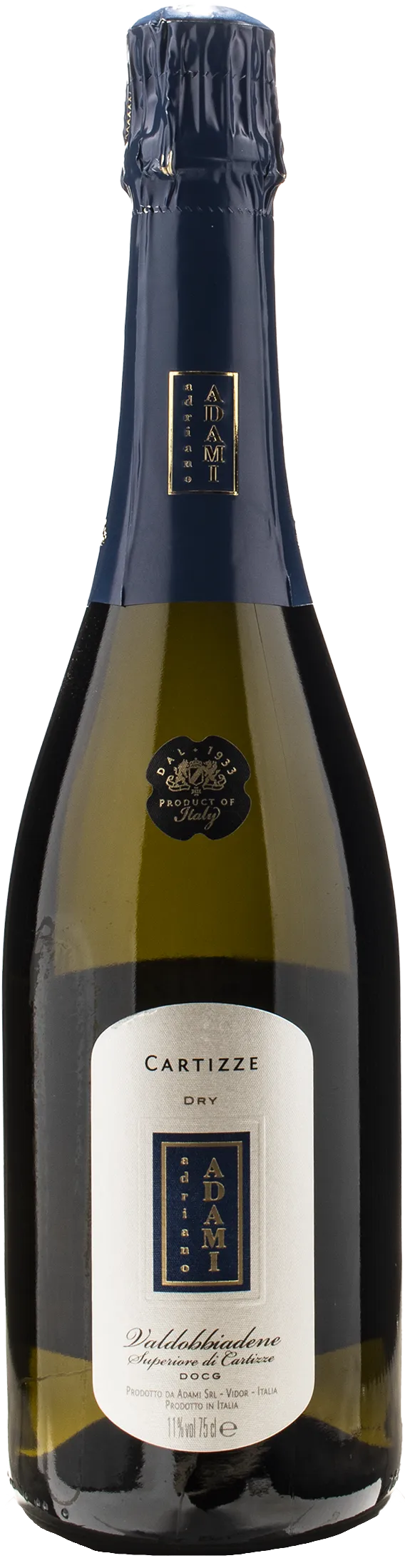
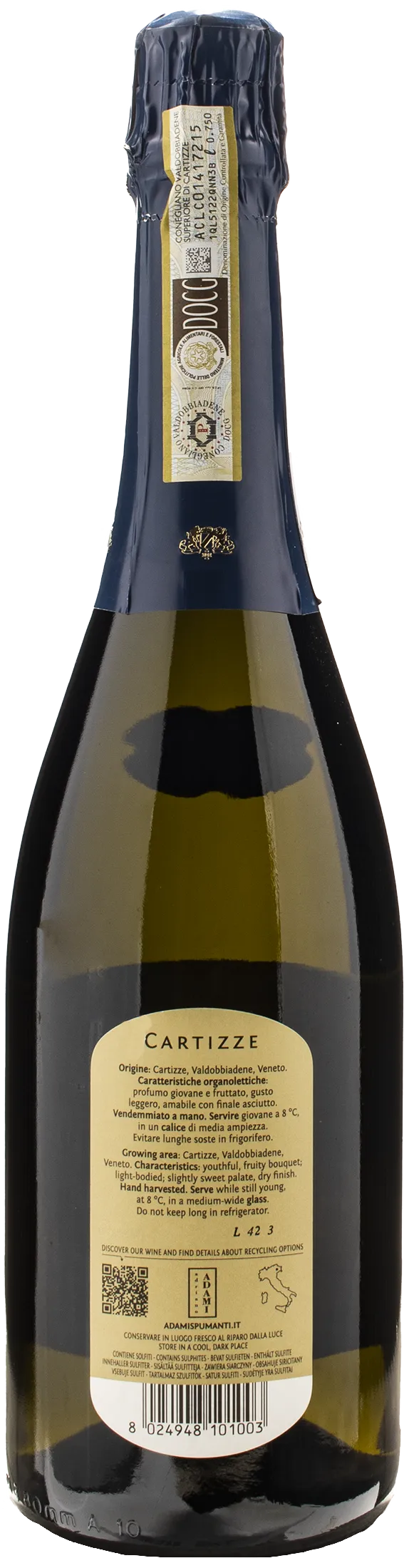
Valdobbiadene Prosecco Superiore di Cartizze Dry
| Denomination | DOCG Conegliano Valdobbiadene Superiore di Cartizze |
|---|---|
| Size | 0,75 l |
| Alcohol content | 11.0% by volume |
| Area | Veneto (Italy) |
| Grape varieties | 100% Glera |
| Aging | Maturation in stainless steel with a period on the fine lees for about 3 months, then secondary fermentation in a pressurised tank (Italian/Charmat method) and maturation in bottle. |
- Cru Cartizze DOCG: Glera sourced from San Pietro di Barbozza, on steep south-facing slopes
- Aromatic profile: notes of apple, pear, apricot and rose petals, with an intense bouquet
- Dry taste: fresh and smooth sensation, slightly off-dry, with a creamy and enveloping structure
- Fine perlage: creamy and persistent mousse, bright straw yellow colour
- Charmat method: late manual harvest, aged for 3 months on fine lees, 11% vol
Description
What kind of wine it is
Adami Cartizze Dry is a harmonious and enveloping sparkling wine, the highest expression of Conegliano Valdobbiadene Prosecco Superiore di Cartizze. Made mainly from Glera grapes, it sometimes includes the elegance of Chardonnay in its blend. It presents a bright straw yellow colour, enlivened by a creamy mousse and a fine, persistent perlage. On the nose, it reveals a very intense floral and fruity bouquet, with clear notes of apple, pear, apricot and rose petals. The palate is fresh, soft and defined by a Dry dosage that perfectly balances the wine's natural savouriness and smoothness.
Where it comes from
The grapes grow on the famous hills of Cartizze, in the hamlet of San Pietro di Barbozza in Valdobbiadene. The area is characterised by steeply sloping vineyards facing south, situated between two hundred and three hundred metres above sea level. The well-drained soils, composed of a calcareous-clay matrix, sandstone marls and morainic deposits, are crucial in giving the wine its pronounced structure and aromaticity. The name of this unique place recalls the “gardizze”, the ancient drying racks once used to concentrate the sweetness of the grape bunches. The temperate and breezy climate ensures optimal aromatic development.
How it is produced
The process begins with a manual late harvest carried out on steep slopes, carefully preserving the integrity of each berry. In the winery, a gentle pressing at controlled temperature follows, to preserve the original aromas of the fruit. The must ferments in stainless steel and rests on the fine lees for three months, enriching its flavour profile and complexity. The secondary fermentation takes place in a pressurised tank according to the Italian Method, through a slow cycle of about forty days. To ensure maximum clarity and elegance, the wine finally undergoes cold tartaric stabilisation and rigorous filtration before bottling.
History and Curiosities
Founded in 1933, the Adami company represents the excellence of Valdobbiadene Prosecco Superiore DOCG among the hills of San Pietro di Barbozza. The name of this renowned cru originates from the “gardizze”, the ancient racks used for drying, or from the “cartiza”, the leaf used to wrap the grape bunches and encourage the natural concentration of sugars. The manual late harvest from heroic viticulture on steep slopes preserves the grapes, giving the sparkling wine an elegant aromatic richness.
Awards
-
 94
94/100
Decanter is a wine and lifestyle magazine, published monthly in around 90 countries. The magazine includes industry news, classic guides and advice on wine and spirits.
-
 91
91/100
The prestigious international wine guide from the renowned Robert Parker, the world's most experienced and trusted wine taster.
-
 4
4Italian Sommelier Association (AIS) guide
Tasting notes

Perlage

Perfume

Color

Taste
Serve at:
06 - 08 °C
Longevity:
10 - 15 years
- Start up year: 1933
- Oenologist: Franco e Fabrizio Adami
- Bottles produced: 850.000
- Hectares: 50
Today, the fourth generation, in the persons of Fabrizio, Claudio and Cristina, are actively contributing, and brand exploration has now spread to four continents. The long arc of these years has seen an alternating succession of viticultural achievements and international accolades that have brought together winegrowing experts, wine lovers, and sector professionals, an opportunity-rich adventure in which excellence has always met challenges yet always emerged triumphant. The result has been a patrimony of a family, of a growing area, and of a community, a heritage that only 100 years of history can fashion. Read more


| Name | Adami Valdobbiadene Prosecco Superiore di Cartizze Dry |
|---|---|
| Type | White charmat method sparkling wine dry |
| Denomination | Conegliano Valdobbiadene Prosecco DOCG |
| Size | 0,75 l |
| Alcohol content | 11.0% by volume |
| Grape varieties | 100% Glera |
| Country | Italy |
| Region | Veneto |
| Vendor | Adami |
| Story | History and Curiosities Founded in 1933, the Adami company represents the excellence of Valdobbiadene Prosecco Superiore DOCG among the hills of San Pietro di Barbozza. The name of this renowned cru originates from the "gardizze", the ancient racks used for drying, or from the "cartiza", the leaf used to wrap the grape bunches and encourage the natural concentration of sugars. The manual late harvest from heroic viticulture on steep slopes preserves the grapes, giving the sparkling wine an elegant aromatic richness. |
| Origin | Cartizze Hills, hamlet of San Pietro di Barbozza, municipality of Valdobbiadene |
| Climate | Temperate with cold winters and warm but not stifling summers |
| Soil composition | Varied soil with moraines, sandstones and clays, calcareous, poor, dry and shallow especially at higher altitudes. |
| Cultivation system | Double inverted, cappuccina |
| Plants per hectare | 2500-3500 |
| Yield per hectare | Maximum 12,000 kg/ha |
| Harvest | Late harvest from 20 September to 10 October |
| Fermentation temperature | 17 9 °C |
| Fermentation | About 40 days |
| Production technique | Charmat method (Italian method, second fermentation in autoclave) |
| Wine making | Soft pressing with pneumatic presses, static decantation of the must, fermentation at a controlled temperature (17 9 °C) with selected yeasts. Ageing and resting on the fine lees in stainless steel for 3 months. Secondary fermentation in autoclave using the Italian (Charmat) method. Cold tartaric stabilisation (-4 °C) and microfiltration before bottling. |
| Aging | Maturation in stainless steel with a period on the fine lees for about 3 months, then secondary fermentation in a pressurised tank (Italian/Charmat method) and maturation in bottle. |
| Total acidity | 6.0 gr/L |
| PH | 3.2 |
| Residual sugar | 24.0 gr/L |
| Allergens | Contains sulphites |