


Trediberri
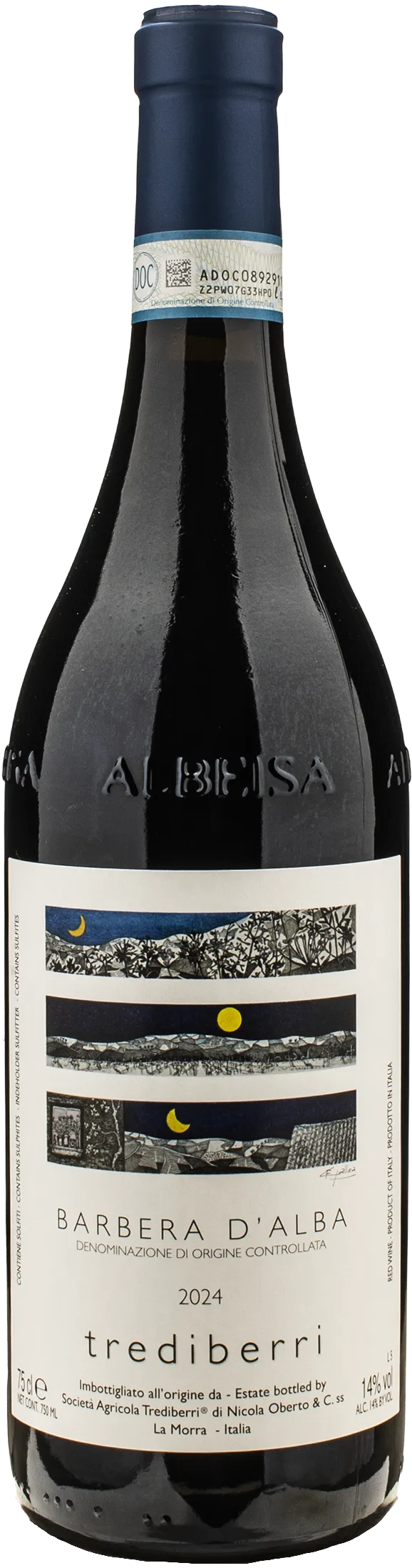
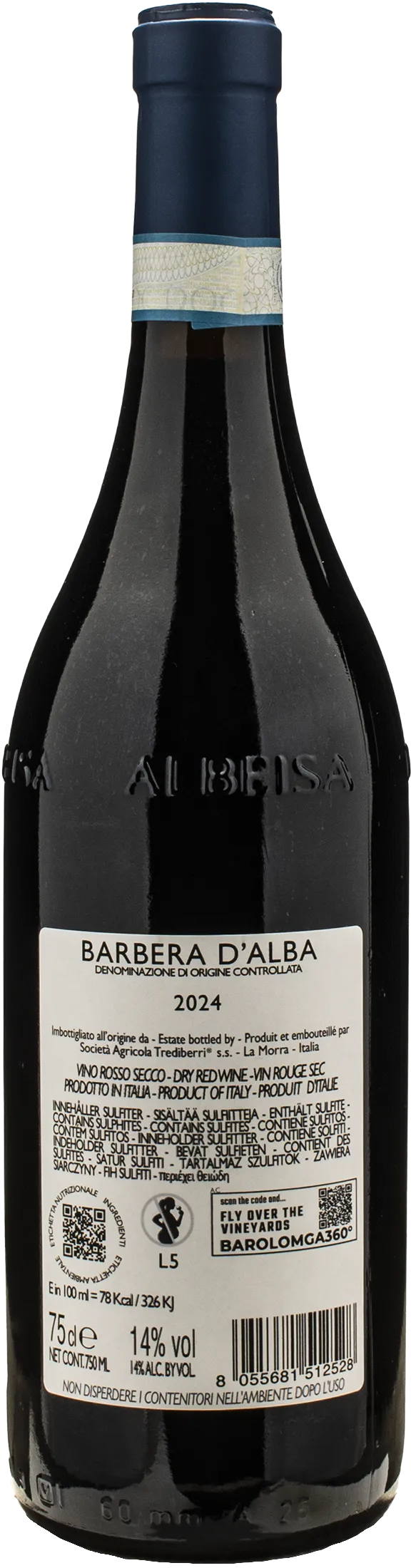
Barbera d'Alba 2024
| Denomination | DOC Barbera d'Alba |
|---|---|
| Size | 0,75 l |
| Alcohol content | 14.0% by volume |
| Area | Piedmont (Italy) |
| Grape varieties | 100% Barbera |
| Aging | After stabilisation, the wine continues to age for a few months in cement, steel or fibreglass, before being bottled, usually between April and May of the year following the harvest. |
Description
Still red wine from Piedmont, 2024 vintage, produced by Trediberri. A wine that embodies the Piedmontese winemaking tradition, ideal as an accompaniment to your meals. 0.75 l bottle.
Tasting notes

Taste
Serve at:
14 -16 °C
Longevity:
05 - 10 years
Decanting time:
1 hour
- Start up year: 2011
- Oenologist: Federico Oberto
- Bottles produced: 120.000
- Hectares: 10
Our first wine was released in 2011 and today we vinify wine from 10,5 ha (26 acres) of vineyards: in addition to the original 5 ha (12 acres) in the Berri Cru, we also own 2,8 ha (7 acres) in the Crus of Rocche dell’Annunziata and Torriglione – where we grow Barolo, Barbera and Sauvignon Blanc – and we are currently renting 3 ha (7,5 acres) of Dolcetto and Nebbiolo in Bastia Mondovì and Clavesana, within the southern area of Langhe Region, at the feet of the Alps. From 2012 until 2017 included, we had the privilege to cultivate another hectare of Nebbiolo for Barolo in the Capalot Cru, in La Morra. Unluckily, from 2018 that contract hasn’t been renewed. We are a young, artisanal family winery.
We have no ancestral coat of arms depicting rampant horses and fluttering ensigns. We have no history and that is fine by us: we like talking about the present, through our wines. Read more


| Name | Trediberri Barbera d'Alba 2024 |
|---|---|
| Type | Red still |
| Denomination | Barbera d'Alba DOC |
| Vintage | 2024 |
| Size | 0,75 l |
| Alcohol content | 14.0% by volume |
| Grape varieties | 100% Barbera |
| Country | Italy |
| Region | Piedmont |
| Vendor | Trediberri |
| Story | Barbera is the only grape variety on which we systematically carry out thinning every year, so as to limit production and yield per hectare. |
| Origin | Grapes coming partly from Roero and partly from the vineyards around Borgata Torriglione, near the winery |
| Wine making | Alcoholic fermentation takes place exclusively in cement and lasts about 12 5 days. This is followed by malolactic fermentation in cement or steel and cold stabilisation outside or in temperature-controlled steel tanks. |
| Aging | After stabilisation, the wine continues to age for a few months in cement, steel or fibreglass, before being bottled, usually between April and May of the year following the harvest. |
| Allergens | Contains sulphites |