


Masseria Altemura
Zinzula Rosato Salento 2025
| Denomination | IGT Salento |
|---|---|
| Size | 0,75 l |
| Alcohol content | 12.0% by volume |
| Area | Apulia (Italy) |
| Grape varieties | 100% Negro Amaro |
| Aging | It is fermented in stainless steel tanks and rests on the fine lees for approximately four months, followed by a short period of ageing in the bottle. |
- Grape variety and style: Dry Salento IGT Rosé made from 100% Negroamaro
- Winemaking: Direct pressing without maceration and fermentation in stainless steel
- Aromas: Notes of dog rose and black cherry with hints of pink peppercorn, ginger and turmeric
- Palate: Light body, freshness and savouriness with a persistent and mineral finish
- Serving and food pairings: Temperature 6–8 °C, ideal with raw seafood, delicate risottos and white meats

Description
What type of wine it is
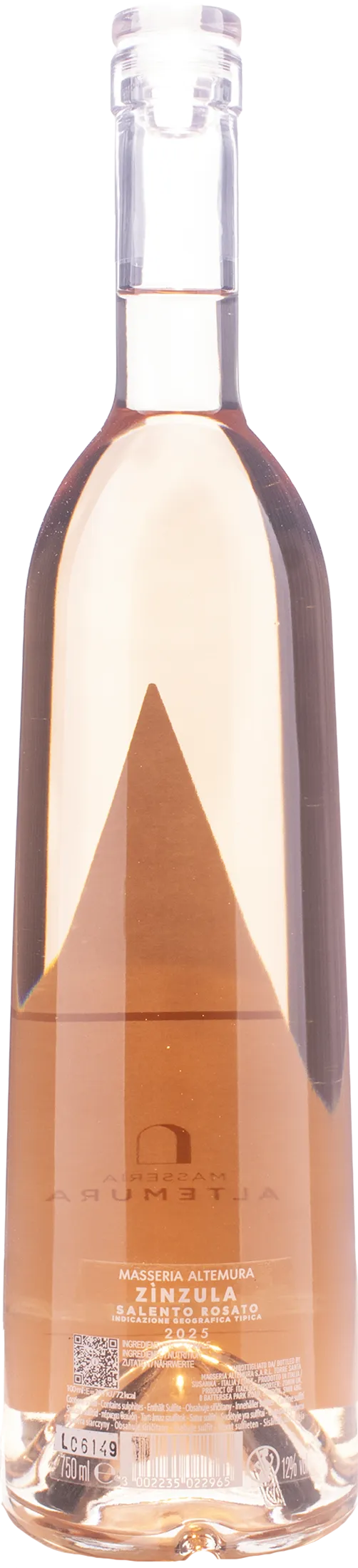
Zinzula Rosé from Masseria Altemura is a dry rosé wine with a Typical Geographical Indication made from Salento Negroamaro grapes, fermented in stainless steel. It presents a delicate powder pink appearance with slight coppery highlights. On the nose, it expresses a floral aromatic profile outlined by notes of dog rose and black cherry, enriched by intriguing hints of pink pepper, ginger, and turmeric. On the palate, it shows a slender and balanced body, guided by a vibrant freshness and sapidity. The long mineral finish concludes the tasting cleanly, making it the ideal pairing to accompany raw seafood, light risottos, white meats, and fresh cheeses.
Where it comes from
The vineyards of Masseria Altemura are located in Torre Santa Susanna, in the province of Brindisi. This area of Salento, included in the Primitivo di Manduria territory, is nestled between the Ionian and Adriatic Seas. The climate benefits from intense light and constant sea breezes, essential for the elegance of the sip. The soils feature a layer of fine red earth resting on a limestone rock bed. Rigorous canopy management protects the clusters from the sun, avoiding over-ripening and ensuring the maximum expression of the fruit's natural acidity.
How it is produced
The Negroamaro harvest takes place in mid-September at the first light of dawn, to preserve the integrity of the clusters. Vinification involves direct pressing without maceration: only the 'lacrima' (tear) of the must is collected, obtained by gravity in the press, thus limiting the extraction of tannins. Fermentation takes place in stainless steel tanks to preserve the delicate varietal aromas. The wine then rests on the fine lees for about four months, also in stainless steel, followed by a brief final ageing that defines its lively varietal freshness.
History and Curiosities
Masseria Altemura’s Zinzula Rosé pays tribute to the famous Zinzulusa Cave and the stunning Puglian coastline. Born in Salento on red earth and limestone, caressed by sea breezes, this Negroamaro wine encapsulates the soul of the Mediterranean. Harvesting at dawn and extracting the "lacrima" (tear) of the must without maceration enhance its vibrant freshness. Aged for four months on fine lees, it offers an elegant sip that reflects the unique bond between the historic 17th-century estate and the innovative bio-architecture winery.
Tasting notes

Perfume

Color

Taste
Serve at:
10 - 12 °C
Longevity:
03 - 05 years
- Start up year: 2000
- Oenologist: Antonio Cavallo
- Bottles produced: 600.000
- Hectares: 130
There thus began a long period of planning followed by one of actual refurbishment, involving the land and the buildings that now represent the heart of the estate’s headquarters. The total area of the property is over 270 hectares – of which 130 are vineyards and 40 consist of olive groves – thus ensuring substantial annual production. It is a single holding, restored with total respect for the environment and the original architecture. As in the time of the Counts Martini Carissimo, it now represents one of the flagship estates in Puglian agriculture.
The architectural intervention on the buildings respected the original plan; nothing was left to chance, starting with the materials employed: the limestone paving stones, the calcarenite, the tufa and the white stone from the surrounding area, used in ancient times for the construction of the main buildings, were utilized in making the new ones.
Particular care was reserved for the restoration of two constructions that are of historical importance for the area: the massive tower, which will be transformed into luxurious accommodation for guests of the estate, and a private chapel with frescoes that date from the 16th century.
On land where there once grew ancient bush-trained vines, tended and cared for according to the lore of age-old rural tradition - and where the bunches of grapes ripened day after day, caressed by the sun and by gentle breezes - new rows of the best indigenous grape varieties have been planted since the year 2000, in line with entirely environmentally sustainable guidelines.
Alongside the perfectly geometrically aligned vines there are 40 hectares of centuries-old olive trees which, with their roots burrowing deep into the red earth mixed with white blocks of calcareous origin and their silvery-green foliage bending in the wind, continue even today to bear fruit. Read more


| Name | Masseria Altemura Zinzula Rosato Salento 2025 |
|---|---|
| Type | Rosé still |
| Denomination | Salento IGT |
| Vintage | 2025 |
| Size | 0,75 l |
| Alcohol content | 12.0% by volume |
| Grape varieties | 100% Negro Amaro |
| Country | Italy |
| Region | Apulia |
| Vendor | Masseria Altemura |
| Story | History and Curiosities Masseria Altemura’s Zinzula Rosé pays tribute to the famous Zinzulusa Cave and the stunning Puglian coastline. Born in Salento on red earth and limestone, caressed by sea breezes, this Negroamaro wine encapsulates the soul of the Mediterranean. Harvesting at dawn and extracting the "lacrima" (tear) of the must without maceration enhance its vibrant freshness. Aged for four months on fine lees, it offers an elegant sip that reflects the unique bond between the historic 17th-century estate and the innovative bio-architecture winery. |
| Origin | Countryside of Torre Santa Susanna, province of Brindisi, Salento (Apulia, Italy) |
| Soil composition | Layer of fine red earth on a limestone bed |
| Harvest | Mid-September |
| Production technique | Direct pressing without maceration, fermentation in stainless steel tanks |
| Wine making | Zìnzula’s Negroamaro is harvested in mid-September at the first light of dawn. The so-called 'teardrop' or free-run juice is obtained by letting the grapes fall into the press, with no maceration whatsoever. Fermentation takes place in stainless steel tanks to preserve the freshest varietal notes and minimise tannins and bitter notes from the skins. Ageing on the fine lees for approximately four months, followed by a short period of bottle ageing. |
| Aging | It is fermented in stainless steel tanks and rests on the fine lees for approximately four months, followed by a short period of ageing in the bottle. |
| Allergens | Contains sulphites |