

Jermann
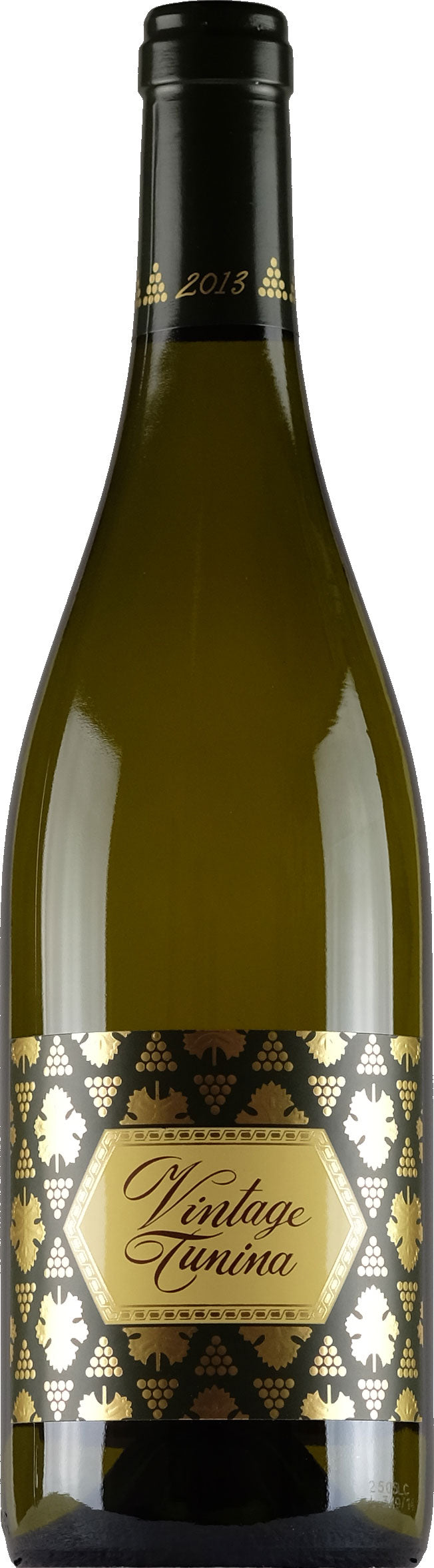
Vintage Tunina 2013
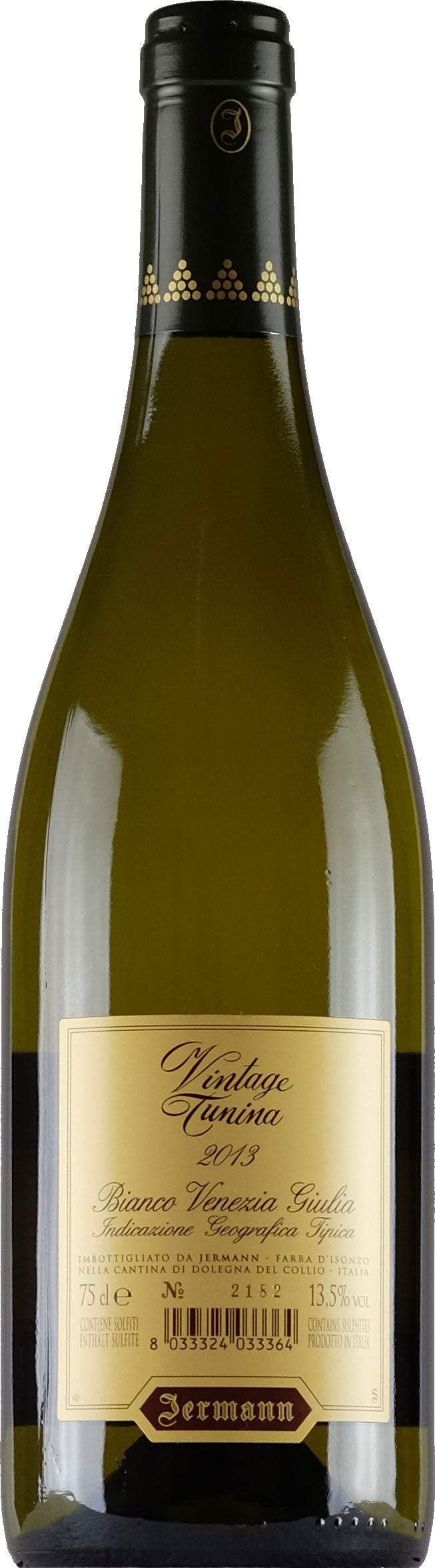
| Denomination | Venezia Giulia IGT |
|---|---|
| Size | 0,75 l |
| Alcohol content | 13.5% by volume |
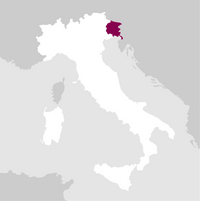
| Area | Friuli-Venezia Giulia (Italy) |
| Grape varieties | Chardonnay, Malvasia Istriana, Picolit, Ribolla Gialla, Sauvignon |
| Aging | A small part 10-15% from the 2006 vintage is fermented and matured in Slovenian wooden barrels. |
| Year | 2013 |
| Product name | Vintage Tunina 2013 |
| Color | Brilliant straw colour with golden highlights. |
| Perfume | The bouquet is intense, broad, of great elegance and persistence, with hints of honey and wild flowers. |
| Taste | It has a dry, soft, very harmonious flavour, with exceptional persistence due to its particularly full body. |
| History | The first trials of the blend date back to the 1973 vintage and the first vintage put on sale under that name and label was the 1975 vintage. The name Tunina refers to the former owner of the land on which the original vineyard is situated and is dedicated to Casanova's poorest lover, who was a housekeeper in Venice who was also called Tunina (Antonia). |
| Pairings | It goes well with pasta with truffles, with a great variety of seafood dishes, especially baked and salsa, but also get to be able to marry white meat. Wonderful memories of his encounter with a cushion of fresh salmon stuffed with parmesan cheese and artichokes. (Daniel Cernilli) |
| Region | Friuli-Venezia Giulia |
| Country | Italy |
| Other years | 2022 , 2019 , 2023 |
Description
Still white wine from Friuli-Venezia Giulia, 2013 vintage, produced by Jermann. Blend: Chardonnay, Malvasia Istriana, Picolit, Ribolla Gialla, Sauvignon. 0.75 l bottle. An iconic wine, born from the vision of Silvio Jermann, who revolutionized the family winery. The first trials of this blend date back to the 1973 harvest, and the first vintage released under this name and label was the 1975 harvest. The name Tunina refers to the former owner of the land on which the original vineyard is located and is dedicated to Casanova's poorest lover, a governess in Venice who, precisely, was also called Tunina (Antonia). The aroma is intense, ample, of great elegance and persistence, with hints of honey and wildflowers. It has a bright straw color with golden reflections. It has a dry, soft, very harmonious flavour, with exceptional persistence, due to its particularly full body.
Awards
-
2013
 5
5Italian Sommelier Foundation (FIS) guide This has been one of the most prestigious wine guides in Italy for over 10 years.
-
2013
 3
3This guide is highly respected and offers the most comprehensive review of Italian wines. It has a long tradition and is based on blind tastings carried out by over 100 experts.
Details
Perfume

Color

Taste
Serve at:
10 - 12 °C.
Longevity:
05 - 10 years
Pairings
- Start up year: 1881
- Oenologist: Luca Belluzzo
- Bottles produced: 1.500.000
- Hectares: 180
1930-1940: Angelo Jermann, who is 93 today, not only continues the family's grape-growing tradition but also keeps livestock and transforms Jermann into an all-around, successful farm.
1971-1973: Silvio Jermann, son to Angelo and Bruna and an enology graduate of both Conegliano and San Michele, revolutionizes the Jermann winery after a research sabbatical overseas, creating Vintage Tunina.
1975: Official release of Vintage Tunina, which fast achieves cult status and effectively launches Jermann's new course.
07/07/2007: Silvio inaugurates a second Jermann winery: Ruttars. Read more


| Name | Jermann Vintage Tunina 2013 |
|---|---|
| Type | White still |
| Denomination | Venezia Giulia IGT |
| Vintage | 2013 |
| Size | 0,75 l |
| Alcohol content | 13.5% by volume |
| Grape varieties | Chardonnay, Malvasia Istriana, Picolit, Ribolla Gialla, Sauvignon |
| Country | Italy |
| Region | Friuli-Venezia Giulia |
| Vendor | Jermann |
| Story | The first trials of the blend date back to the 1973 vintage and the first vintage put on sale under that name and label was the 1975 vintage. The name Tunina refers to the former owner of the land on which the original vineyard is situated and is dedicated to Casanova's poorest lover, who was a housekeeper in Venice who was also called Tunina (Antonia). |
| Soil composition | Predominantly marlstone and sandstone belonging to the Flysch formation of the Eocene epoch, characteristic of the Collio area with southwest, northeast exposure. |
| Cultivation system | The forms of cultivation used are guyot-cappuccina. |
| Plants per hectare | 6.000/7.000 |
| Yield per hectare | 40 - 60 quintals |
| Harvest | In this particular blend, a selection is made of the best grapes, which are harvested late, about two weeks after the normal harvest on an area of about 16 hectares of vineyard cultivated on Ronco del Fortino. |
| Aging | A small part 10 5% from the 2006 vintage is fermented and matured in Slovenian wooden barrels. |
| Total acidity | 5.4 gr/L |
| Allergens | Contains sulphites |