

Fontanafredda
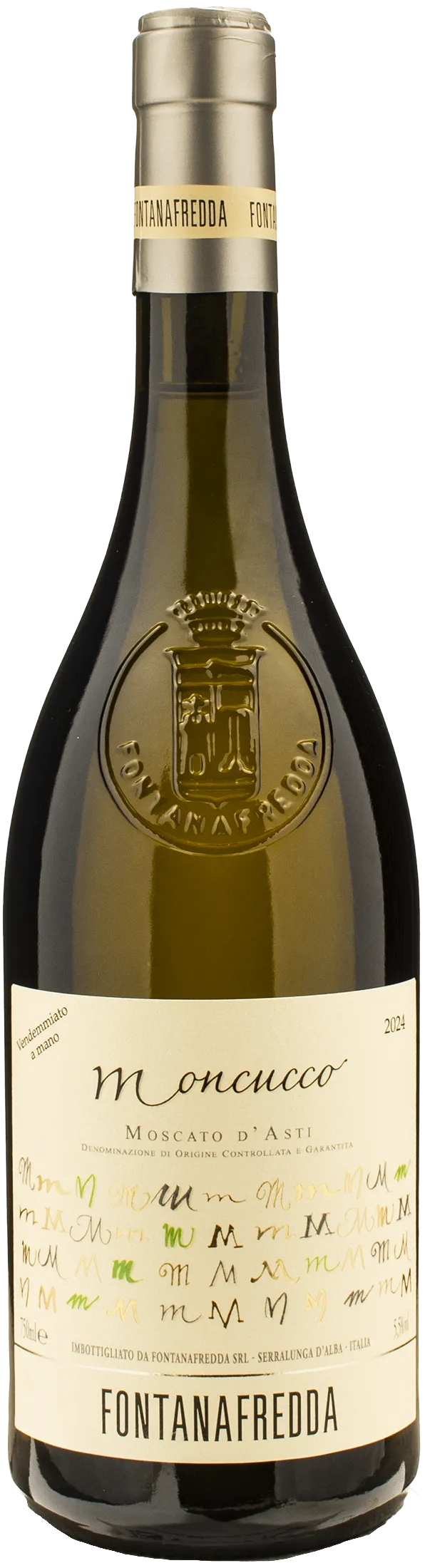
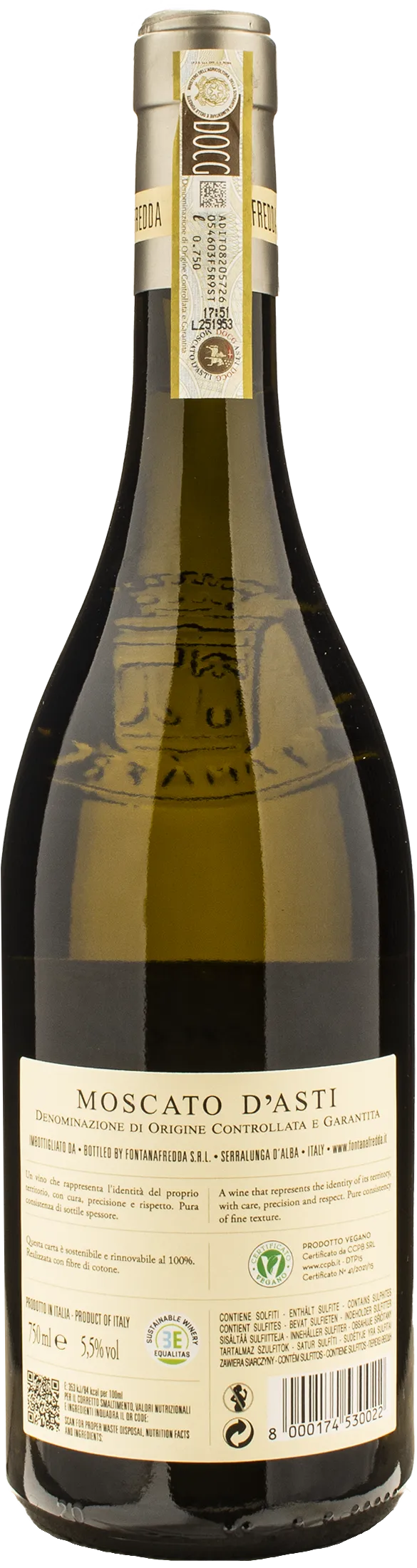
Moscato d'Asti Moncucco 2024
| Denomination | DOCG Moscato d'Asti |
|---|---|
| Size | 0,75 l |
| Alcohol content | 5.5% by volume |
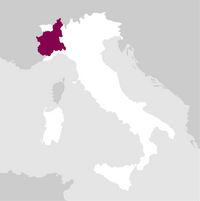
| Area | Piedmont (Italy) |
| Grape varieties | 100% Moscato Bianco/Moscato Reale |
| Aging | The wine obtained will remain on its fine lees for at least 10 months in order to obtain a wine that will stand the test of time. |
| Year | 2024 |
| Biologic | Sì |
| Product name | Moscato d'Asti Moncucco 2024 |
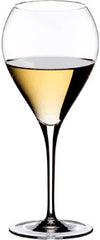
| Color | Beautiful straw yellow with golden reflections. |
| Perfume | Explosion of aromas that recall with great intensity the scent of the grapes from which the wine originates. In particular, hints of ripe pear, white peach, honey, robinia flowers, lime and orange, sage and lemon emerge. |
| Taste | In the mouth, density appears to be the predominant element and infuses a feeling of fullness that balances the acidic freshness and residual petillant from the fermentation. Of very long persistence, it brings to mind distinctly the light and warmth of the bunch of ripe Muscat just harvested. |
| History | Santo Stefano Belbo, a small village in the heart of the province of Cuneo, near Canelli, boasts a rich history intertwined with viticulture, as Pavese already mentioned, particularly the cultivation of Moscato Bianco grapes. Over the years, Santo Stefano Belbo has become synonymous with high quality Moscato d'Asti, testifying to the area's enduring dedication to the art of viticulture, especially for its cru, including the most prestigious Moncucco, a natural amphitheatre with steep slopes. Today, Santo Stefano Belbo continues to maintain its heritage, producing world-class Moscato wines that reflect its historical and cultural richness. Our Moscato Moncucco exemplifies this, as it comes with notes of peach, apricot, orange blossom and honeysuckle, offering a delicious sensory experience that captures the essence of the winemaking tradition of this area, more unique than rare thanks to its ageing potential that goes well beyond 20 years. |
| Pairings | It stands out for its elegance in accompanying a wide range of flavors: excellent with aged or blue cheeses, ideal with foie gras for a highly refined pairing. It is exalted alongside glazed meats or sweet-and-sour preparations, as well as with caramelized and fried vegetables, where it enhances its complexity. Of course, it also finds its perfect place at the end of a meal, harmoniously pairing with desserts, enhancing every nuance with balance and persistence. |
| Region | Piedmont |
| Country | Italy |
Description
A sweet aromatic white wine from Piedmont, produced by Fontanafredda, 2024 vintage. Moscato d'Asti DOCG, 5.5% ABV. A wine that captures the essence of Moscato, with an explosion of aromas reminiscent of the grapes from which it is made. In particular, aromas of ripe pear, white peach, honey, black locust blossom, lime and orange, sage, and lemon emerge. A beautiful straw yellow with golden highlights. On the palate, density dominates, infusing a sensation of fullness that balances the crisp acidity and the sparkling residue of fermentation. With a very long finish, it clearly evokes the light and warmth of a freshly harvested, ripe Moscato grape.
Details
Perfume

Color
Taste
Serve at:
08 - 10 °C.
Longevity:
03 - 05 years
Pairings
- Start up year: 1878
- Oenologist: Giorgio Lavagna
- Bottles produced: 7.000.000
- Hectares: 120
Like all beautiful things, Fontanafredda originates from a love story between the first King of Italy, Vittorio Emanuele II, and Rosa Vercellana.
Producers of Barolo and sumptuous wines of the Langhe, it was the scene of many firsts: they were the first Barolo to go overseas, the first to produce the first Classic Method in 1959, which was to be the forerunner of Alta Langa.
The founding principle of the winery is the concept of community.
Since 2018, Fontanafredda has been cultivating 120 organically certified hectares that are the setting for Italy's first Storytelling Village ('Villaggio Narrante'), which is still home to 12 families of workers who make the village an authentic village, alive and productive.
Fontanafredda is also hospitality, a meeting place where everyone is welcome thanks to its 4-star hospitality.
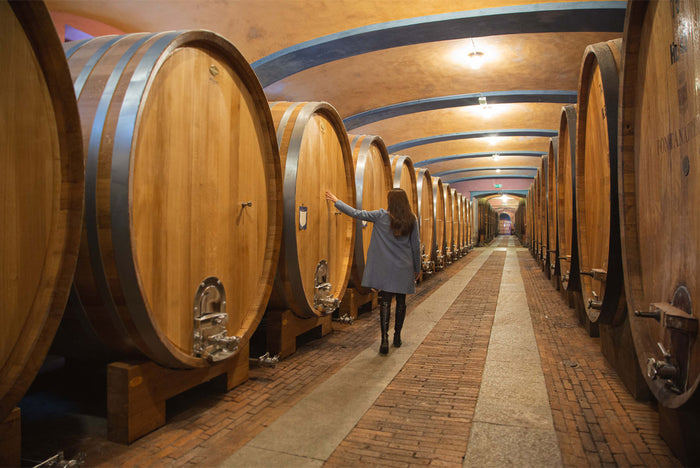
Today, the company preserves intact the testimonies of its noble past - the hunting lodge, the village, the extensive cellars, the vineyards - but continues to renew itself and experiment, perfecting what nature and history have handed down. For this reason, in the Langhe, where vines and wine bind generations to each other and shape the landscape, Fontanafredda is an essential reference point. The expression of a wine culture that comes from the earth, from the vineyard, and is refined through the work and creativity of people.
In 2021, the Alta Langa DOCG Contessa Rosa Rosé 2014 was named 'Best Sparkling Wine in the World' according to Tastingbook 2021.
In 2022 the BAROLO SERRALUNGA 2018 entered the TOP100 of WINE SPECTATOR in 78th place. Read more

| Name | Fontanafredda Moscato d'Asti Moncucco 2024 |
|---|---|
| Type | White green naturally sweet dessert wine aromatic |
| Denomination | Asti DOCG |
| Vintage | 2024 |
| Size | 0,75 l |
| Alcohol content | 5.5% by volume |
| Grape varieties | 100% Moscato Bianco/Moscato Reale |
| Country | Italy |
| Region | Piedmont |
| Vendor | Fontanafredda |
| Story | Santo Stefano Belbo, a small village in the heart of the province of Cuneo, near Canelli, boasts a rich history intertwined with viticulture, as Pavese already mentioned, particularly the cultivation of Moscato Bianco grapes. Over the years, Santo Stefano Belbo has become synonymous with high quality Moscato d'Asti, testifying to the area's enduring dedication to the art of viticulture, especially for its cru, including the most prestigious Moncucco, a natural amphitheatre with steep slopes. Today, Santo Stefano Belbo continues to maintain its heritage, producing world-class Moscato wines that reflect its historical and cultural richness. Our Moscato Moncucco exemplifies this, as it comes with notes of peach, apricot, orange blossom and honeysuckle, offering a delicious sensory experience that captures the essence of the winemaking tradition of this area, more unique than rare thanks to its ageing potential that goes well beyond 20 years. |
| Origin | S. Stefano Belbo |
| Climate | The climate is windy, with hot, humid and mostly clear summers and very cold and snowy winters. During the year, the temperature generally ranges from 0 °C to 28 °C and is rarely below -4 °C or above 32 °C. Santo Stefano Belbo's climate contributes to the production of wines that are aromatic, balanced and expressive of terroir. The combination of warm days, cool nights and well-drained soils allows the cultivation of high quality grapes. In particular, the Moncucco vineyards have hilly terrain that ensures excellent drainage, preventing water stagnation. Thanks to the wide day/night temperature range, the accumulation of terpenic aromas typical of the Moscato grape is favoured. The vineyards of Moncucco are hilly, in some cases with steep slopes, where, thanks to the use of Langa stone, terracing was historically created. Exposure is from south-west to east, with an altitude between 220 and 320 m above sea level. |
| Soil composition | The soil is medium-textured and shallow, with outcrops of marl and in some cases sand. |
| Cultivation system | Modified Guyot, with reduced planting distances. |
| Plants per hectare | 7500 |
| Harvest | The hand-picked grapes are partly pressed and partly destemmed. |
| Wine making | The destemmed grapes remain 12 hours in contact with their skins at a temperature of 5 degrees in order to carry out a cryomaceration that is useful for enhancing the aromas and increasing the sensation of pulp. A very gentle pressing allows only the free-run juice to be extracted from the grapes, which is left to decant cold, separating it from its skins. Finally, on reaching 18°, fermentation starts and is stopped when the alcohol content reaches 5.5 degrees. |
| Aging | The wine obtained will remain on its fine lees for at least 10 months in order to obtain a wine that will stand the test of time. |
| Allergens | Contains sulphites |