


Fontanafredda
Barolo Chinato 0.5L
| Denomination | DOCG Barolo |
|---|---|
| Size | 0,50 l |
| Alcohol content | 16.5% by volume |
| Area | Piedmont (Italy) |
| Grape varieties | 100% Nebbiolo |
| Aging | Infusion of cinchona, herbs and spices macerated in alcohol for about 90 days; then matured for 6 months in oak casks and further aged/rested in bottle for about 60 days. |
- Format and alcohol content: 0.5 litre bottle, 16.5% ABV; aromatised red wine
- Origin and grapes: 100% Nebbiolo from the Langhe (Alba and Serralunga d’Alba), Piedmont
- Botanical infusion: 90 days with cinchona bark, gentian, cinnamon, cardamom and cloves
- Oak ageing: 6 months to harmonise the aromas, followed by 60 days resting in the bottle
- Serving and pairings: serve at 16-18°C, ideal as an aperitif or digestif, excellent with chocolate

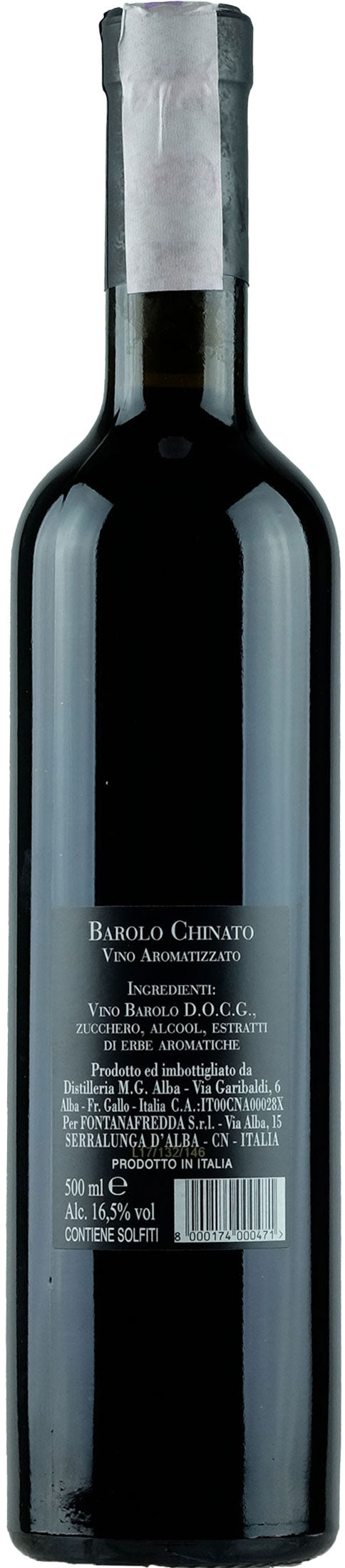
Description
What kind of wine it is
Barolo Chinato Fontanafredda is presented as an aromatised red wine with a Denomination of Controlled and Guaranteed Origin, made exclusively from Nebbiolo grapes grown in the Langhe region of Piedmont. This product expresses a distinctive bittersweet profile, with a rich and velvety texture, supported by a complex aromatic bouquet featuring calissaja cinchona, fresh citrus notes, and an intriguing blend of spices and herbs. This unique type combines a solid wine base with a carefully crafted infusion of botanicals, offering a structured taste with a persistent finish, ideal as a digestif or paired with chocolate desserts.
Where it comes from
The roots of this preparation lie in Piedmont, in the Barolo area, on the hills between Alba and Serralunga d’Alba. The vineyards, cultivated using the Guyot method, are situated at altitudes of around four hundred metres, benefiting from constant sun exposure. The soils, of Miocene-Elvezian and Tortonian origin, characterised by a strong presence of marl and limestone, give the grapes remarkable finesse and solidity. The moderate climate, marked by warm days and cool nights, creates the ideal conditions for developing the expressive acidity and typical tannic structure of the grapes.
How it is produced
The process begins with the harvesting of the grape bunches, which ferment in steel vats at a controlled temperature. The technique involves frequent pumping over and maceration on the skins to enhance the extraction of colour and aromatic compounds. Separately, an infusion is created in which calissaja cinchona, gentian, cinnamon, cardamom, cloves, and nutmeg are slowly macerated for about ninety days. This preparation matures for six months in oak barrels before being blended with the base wine and sugar. The recipe concludes with a measured final ageing that ensures perfect harmony of all the components.
History and Curiosities
The history of Barolo Chinato dates back to the nineteenth century, when an infusion of cinchona and herbs began to be added to the typical Piedmontese wine to make it more durable over time. In fact, the recipe also allowed for the creation of a flavoured drink with medicinal properties.
Tasting notes

Perfume

Color

Taste
Serve at:
18 - 20 °C
Longevity:
Over 25 years
Decanting time:
1 hour
- Start up year: 1878
- Oenologist: Giorgio Lavagna
- Bottles produced: 7.000.000
- Hectares: 120
Like all beautiful things, Fontanafredda originates from a love story between the first King of Italy, Vittorio Emanuele II, and Rosa Vercellana.
Producers of Barolo and sumptuous wines of the Langhe, it was the scene of many firsts: they were the first Barolo to go overseas, the first to produce the first Classic Method in 1959, which was to be the forerunner of Alta Langa.
The founding principle of the winery is the concept of community.
Since 2018, Fontanafredda has been cultivating 120 organically certified hectares that are the setting for Italy's first Storytelling Village ('Villaggio Narrante'), which is still home to 12 families of workers who make the village an authentic village, alive and productive.
Fontanafredda is also hospitality, a meeting place where everyone is welcome thanks to its 4-star hospitality.
Today, the company preserves intact the testimonies of its noble past - the hunting lodge, the village, the extensive cellars, the vineyards - but continues to renew itself and experiment, perfecting what nature and history have handed down. For this reason, in the Langhe, where vines and wine bind generations to each other and shape the landscape, Fontanafredda is an essential reference point. The expression of a wine culture that comes from the earth, from the vineyard, and is refined through the work and creativity of people.
In 2021, the Alta Langa DOCG Contessa Rosa Rosé 2014 was named 'Best Sparkling Wine in the World' according to Tastingbook 2021.
In 2022 the BAROLO SERRALUNGA 2018 entered the TOP100 of WINE SPECTATOR in 78th place. Read more


| Name | Fontanafredda Barolo Chinato 0.5L |
|---|---|
| Type | Red still |
| Denomination | Barolo DOCG |
| Size | 0,50 l |
| Alcohol content | 16.5% by volume |
| Grape varieties | 100% Nebbiolo |
| Country | Italy |
| Region | Piedmont |
| Vendor | Fontanafredda |
| Story | History and Curiosities The history of Barolo Chinato dates back to the nineteenth century, when an infusion of cinchona and herbs began to be added to the typical Piedmontese wine to make it more durable over time. In fact, the recipe also allowed for the creation of a flavoured drink with medicinal properties. |
| Origin | Alba, Piemonte, Italia |
| Climate | Moderate climate with warm days and cool nights |
| Soil composition | Soils of Miocene-Helvetian and Tortonian origin, rich in limestone and marl |
| Cultivation system | Guyot |
| Plants per hectare | 4,500 plants/ha |
| Harvest | 1st-2nd ten days of October |
| Fermentation temperature | 30-31 °C |
| Fermentation | Approximately 10 days |
| Production technique | Traditional fermentation in stainless steel vats at controlled temperature with maceration on the skins; flavouring by means of an infusion of cinchona, herbs and spices macerated in alcohol; ageing in oak casks and subsequent maturation in bottle |
| Wine making | Traditional fermentation in stainless steel vats with floating cap for 8 2 days at controlled temperature (30-31 °C) with frequent pumping over; brief maceration of the must on the skins to optimise polyphenol extraction and encourage the start of malolactic fermentation. Flavouring by adding an alcoholic infusion of cinchona calisaya and herbs and spices: over twenty herbs and cinchona are macerated in alcohol (about 90 days) and then blended with the wine with the addition of sugar and alcohol; aged for 6 months in oak casks and subsequently rested/matured in bottle for about 60 days. |
| Aging | Infusion of cinchona, herbs and spices macerated in alcohol for about 90 days; then matured for 6 months in oak casks and further aged/rested in bottle for about 60 days. |
| Total acidity | 5.4 gr/L |
| Residual sugar | 159.0 gr/L |
| Allergens | Contains sulphites |