


Allegrini
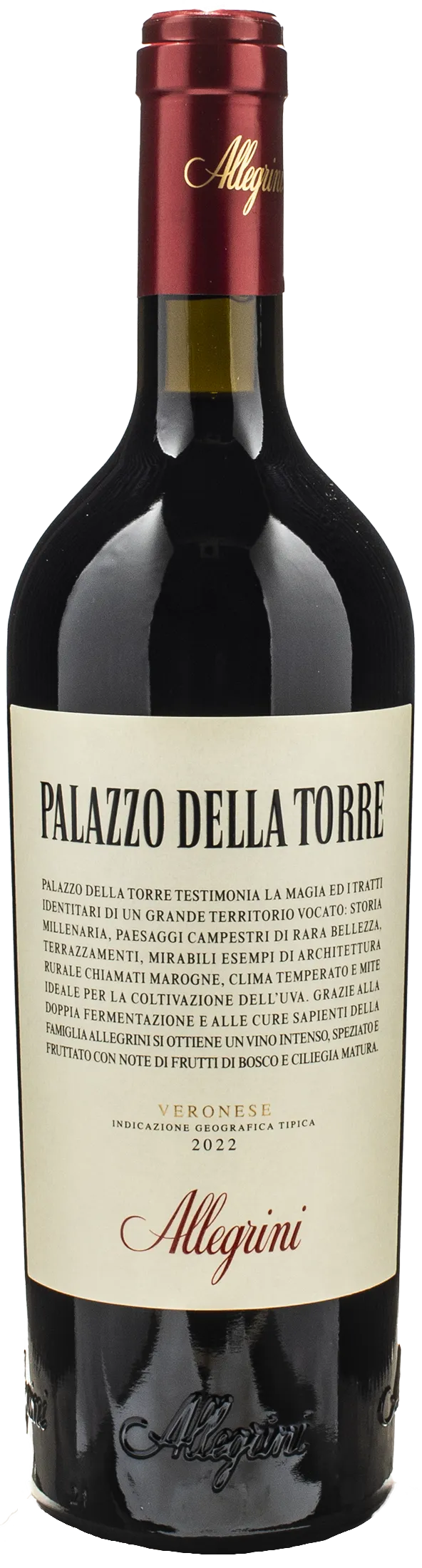
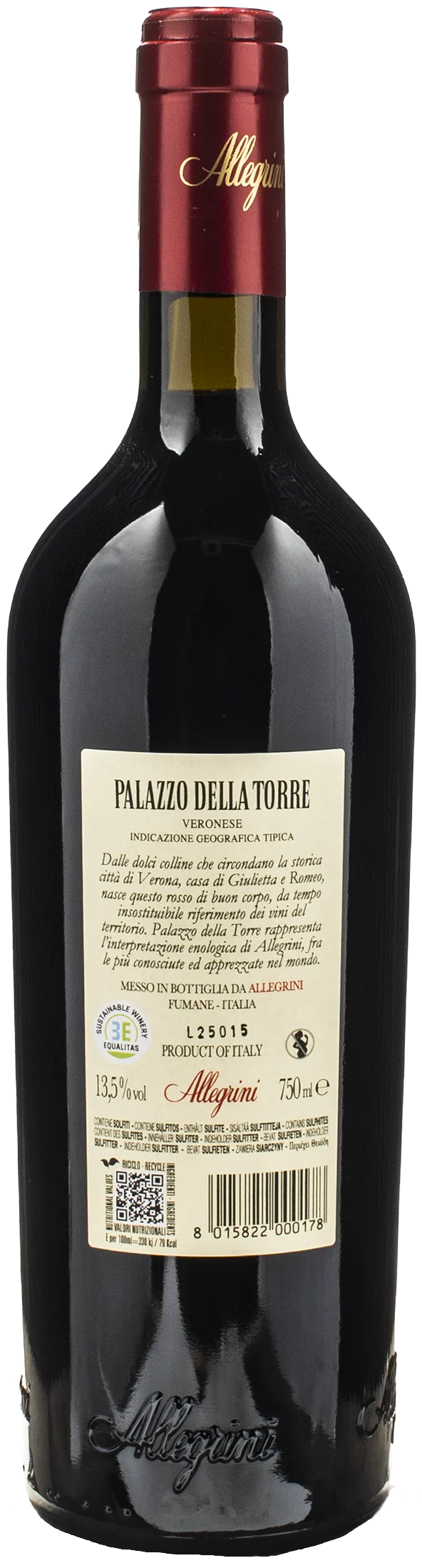
Palazzo della Torre 2022
| Denomination | IGT Veronese |
|---|---|
| Size | 0,75 l |
| Alcohol content | 13.5% by volume |
| Area | Veneto (Italy) |
| Grape varieties | 40% Corvina, 30% Corvinone, 25% Rondinella |
| Aging | Malolactic fermentation: naturally carried out in mid-April in barriques. Maturation in second-passage French oak barriques for 15 months, mass for 2 months and bottle ageing for 7 months. |
Description
Palazzo della Torre IGT is a still red wine characteristic of the Veneto region, particularly the Valpolicella area, between the province of Verona and Lake Garda, protected to the north by the Lessini Mountains. The origins of wine production in this area date back to ancient times, having always been a vineyard area, as can also be deduced from its name, which in Latin means "valley of many cellars." The crops are grown in predominantly hilly areas with a temperate climate, very favorable to the growth of vines. The grapes used to produce it are mostly the native Corvina, Rondinella, and Corvinone varieties. The soil is predominantly calcareous, especially at a depth of one meter, which favors a good acidity level in the grapes. To obtain the characteristic final result of this particular red wine, the refermentation technique is used, which requires two vinification processes: one carried out during the first harvest and involving the drying of the grapes, and a second one that occurs a month later and in which the grapes are immediately subjected to fermentation. Finally, the two products are blended for the second fermentation and placed in French oak barriques for 15 months, then bottled and aged for another 7 months. Thanks to this process, the Palazzo della Torre, like the historic Allegrini production, preserves and enhances its typical organoleptic characteristics of wines with hints of red fruits obtained from the addition of dried grapes.
Awards
-
2022
 92
92/100
James Suckling is an influential American wine critic and journalist who worked at Wine Spectator for 30 years. He left the magazine in 2010 to start his own website and guidebook (JamesSuckling.com). He specialises in Italian and Bordeaux wines.
Tasting notes

Perfume

Color

Taste
Serve at:
16 - 18 °C
Longevity:
05 - 10 years
Decanting time:
1 hour
- Start up year: 1854
- Oenologist: Paolo Mascanzoni e Lorenzo Fortini
- Bottles produced: 850.000
- Hectares: 150
Belonging to the family of the same name since the 16th century, the Allegrini winery is located in the Valpolicella Classica area: in particular, it is situated where vines such as corvina, molinara and rondinella give life to what are considered some of the best red wines of the Peninsula. xtraWine offers numerous bottles of Allegrini Allegrini wines that stand out for their refinement and elegance, very pleasant and capable of enveloping you with every sip, conquering even the most demanding palates. This is due to continuous improvements in production such as the introduction of the use of barriques alongside the traditional large barrels, and even a reduction in the ageing period so as not to alter too much the quality of the grapes used.
Not only Valpolicella, on xtraWine you can find Allegrini wines such as Amarone, Valpolicella and Recioto. Read more


| Name | Allegrini Palazzo della Torre 2022 |
|---|---|
| Type | Red green still |
| Denomination | Veronese IGT |
| Vintage | 2022 |
| Size | 0,75 l |
| Alcohol content | 13.5% by volume |
| Grape varieties | 40% Corvina, 30% Corvinone, 25% Rondinella |
| Country | Italy |
| Region | Veneto |
| Vendor | Allegrini |
| Origin | Fumane di Valpolicella (Verona). |
| Climate | Altitude: 240 m. a.s.l. Exposure: East, South-East. |
| Soil composition | Varied, mostly clay, limestone and rich in skeleton. |
| Cultivation system | Guyot and trellised "pergola" system. |
| Plants per hectare | 3,000. |
| Fermentation temperature | 1st fermentation 25/29 °C, 2nd fermentation 8/22 °C. |
| Fermentation | First fermentation for 10 days and second fermentation for about 15 days. |
| Wine making | The crushing and destemming of the fresh grapes are carried out in September. Then, the dried grapes are crushed and destemmed in the second half of December. The fermentation occurs in stainless steel at a controlled temperature. |
| Aging | Malolactic fermentation: naturally carried out in mid-April in barriques. Maturation in second-passage French oak barriques for 15 months, mass for 2 months and bottle ageing for 7 months. |
| Total acidity | 5.5 gr/L |
| PH | 3.5 |
| Residual sugar | 3.8 gr/L |
| Dry extract | 30.6 gr/L |
| Allergens | Contains sulphites |