


Cavallotto
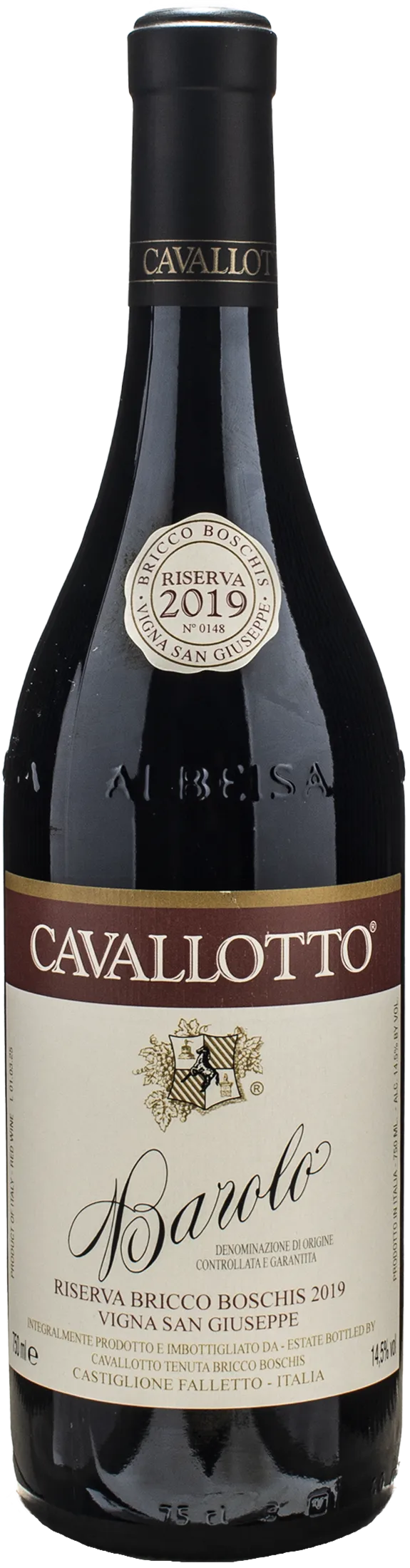
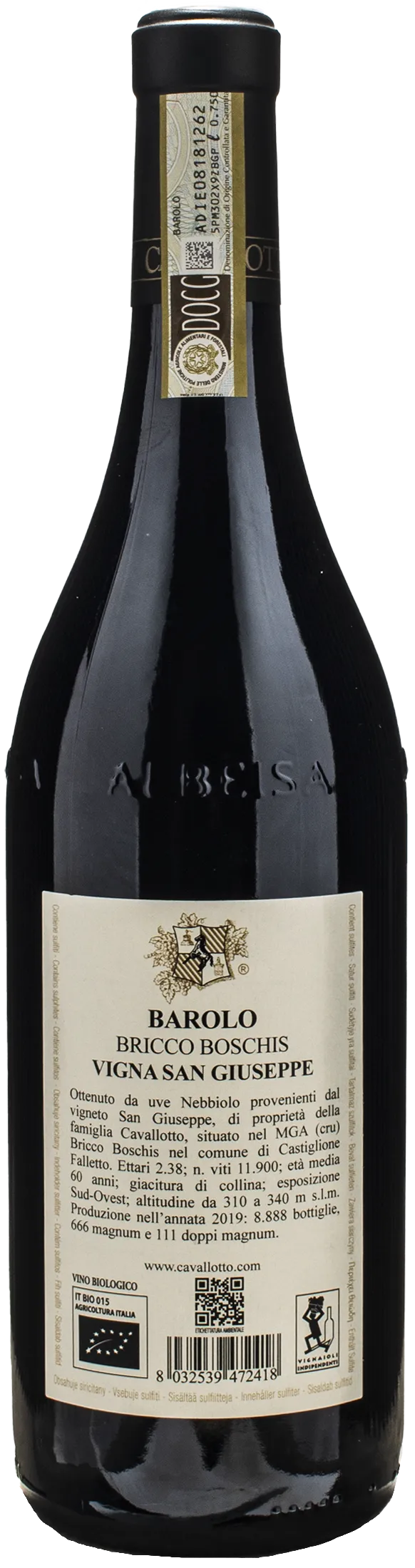
Barolo Bricco Boschis Vigna San Giuseppe Riserva 2019
| Denomination | DOCG Barolo Riserva |
|---|---|
| Size | 0,75 l |
| Alcohol content | 14.5% by volume |
| Area | Piedmont (Italy) |
| Grape varieties | 100% Nebbiolo |
| Aging | Traditional ageing in Slavonian oak barrels for 4–5 years, followed by one year in bottle. |
| Other years | 2017 , 2020 |
- Wine identity: Barolo DOCG Riserva 2019, 100% organic Nebbiolo, 14.5% vol
- Origin and producer: Tenuta Cavallotto, Castiglione Falletto, Bricco Boschis cru
- Aromatic profile: ripe fruit, followed by flowers and spices; intense garnet red colour
- Vinification: fermentation with indigenous yeasts, maceration for 18–35 days, malolactic fermentation in cement
- Ageing: 4–5 years in Slavonian oak plus 12 months in bottle; potential of 15–25 years
Description
What kind of wine it is
Cavallotto Barolo Riserva Bricco Boschis Vigna San Giuseppe is an organic red wine that enhances the essence of Nebbiolo. It displays an intense garnet colour and a broad bouquet, where vibrant fruity notes evolve into elegant floral and spicy hints. On the palate, it reveals a significant structure, combining elegance and complexity to ensure excellent longevity. It pairs ideally with red meats, game and mature cheeses, and is also surprisingly good with bold pairings such as raw shellfish or chocolate.
Where it comes from
This Barolo originates in Castiglione Falletto, in the renowned cru Bricco Boschis, from the specific plot Vigna San Giuseppe. It reflects the expertise of the Cavallotto winery, active in the sector since 1928. The vines, trained using the Guyot system and with excellent south-west exposure, maintain low yields. This careful vineyard management allows for the production of excellent grapes, fundamental in defining the precise character, structured texture and deep territorial vocation of this noble Piedmontese expression.
How it is produced
The vinification process begins with total destemming and spontaneous fermentation by indigenous yeasts, carried out at a controlled temperature in horizontal tanks. Maceration with a semi-submerged cap ensures a slow and gradual extraction of structural components. In spring, malolactic fermentation takes place in cement tanks. The long ageing in Slavonian oak barrels shapes the organoleptic profile, completed by a period of rest in glass, which is essential to refine the final taste balance.
History and Curiosities
Produced by the historic Cavallotto family in Castiglione Falletto, this organic Barolo DOCG Riserva originates from the renowned Bricco Boschis cru. The 2019 vintage enhances the purity of Nebbiolo through fermentation with indigenous yeasts and a slow maturation of 4-5 years in Slavonian oak barrels. This wine, characterised by extraordinary elegance and complexity and awarded 97 points by Robert Parker, offers intense floral and spicy aromas, guaranteeing collectors an exceptional ageing potential.
Awards
-
2019
 2
2This guide is highly respected and offers the most comprehensive review of Italian wines. It has a long tradition and is based on blind tastings carried out by over 100 experts.
-
2019
 97
97/100
The prestigious international wine guide from the renowned Robert Parker, the world's most experienced and trusted wine taster.
-
2019
 3
3One of the most prestigious wine guides in Italy.
-
2019
 96
96/100
Vinous is the online guide from Antonio Galloni, one of the world's leading wine connoisseurs.
-
2019
 4
4Italian Sommelier Association (AIS) guide
-
2019
 97
97/100
Wine spectator is the most influential wine guide on the internet.
Tasting notes

Perfume

Color

Taste
Serve at:
18 - 20 °C
Longevity:
15 - 25 years
Decanting time:
1 hour

- Start up year: 1928
- Oenologist: Alfio e Giuseppe Cavallotto
- Bottles produced: 100.000
- Hectares: 25
Today the children of Olivio – Laura, Giuseppe and Alfio, the 4th generation working the family farm – continue to exclusively vinify the grapes produced in their estate vineyards into DOC and DOCG wines: Barolo, Dolcetto d’Alba, Barbera d’Alba, Langhe Nebbiolo, Langhe Freisa, Langhe "Grign" made from Grignolino grapes, Langhe Chardonnay and "Pinner" made from Pinot Nero grapes. Read more


| Name | Cavallotto Barolo Riserva Bricco Boschis Vigna San Giuseppe 2019 |
|---|---|
| Type | Red organic still |
| Denomination | Barolo DOCG |
| Vintage | 2019 |
| Size | 0,75 l |
| Alcohol content | 14.5% by volume |
| Grape varieties | 100% Nebbiolo |
| Country | Italy |
| Region | Piedmont |
| Vendor | Cavallotto |
| Story | History and Curiosities Produced by the historic Cavallotto family in Castiglione Falletto, this organic Barolo DOCG Riserva originates from the renowned Bricco Boschis cru. The 2019 vintage enhances the purity of Nebbiolo through fermentation with indigenous yeasts and a slow maturation of 4-5 years in Slavonian oak barrels. This wine, characterised by extraordinary elegance and complexity and awarded 97 points by Robert Parker, offers intense floral and spicy aromas, guaranteeing collectors an exceptional ageing potential. |
| Origin | Castiglione Falletto (Bricco Boschis) |
| Cultivation system | Guyot |
| Yield per hectare | 38 hl/ha |
| Fermentation temperature | 29 °C |
| Production technique | Traditional vinification with total destemming; temperature-controlled fermentation with indigenous yeasts and semi-submerged cap maceration; malolactic fermentation in concrete tanks; ageing in Slavonian oak barrels and subsequent ageing in bottle. |
| Wine making | Total destemming; fermentation with indigenous yeasts in horizontal fermentation tanks with a maximum controlled temperature of 29°C; traditional fermentation with semi-submerged cap maceration (18–30 days); malolactic fermentation in concrete tanks in the spring following the harvest. |
| Aging | Traditional ageing in Slavonian oak barrels for 4–5 years, followed by one year in bottle. |
| Allergens | Contains sulphites |