


Zorah
Heritage Sireni 2020
Other years:
2019| Denomination | N/A |
|---|---|
| Size | 0,75 l |
| Alcohol content | 13.5% by volume |
| Area | Armenia (Armenia) |
| Grape varieties | Arati, Sireni |
| Aging | Assembled and aged for about two years in a mix of clay amphorae (karasses) and raw cement vats without epoxy coating; a further 12 months in bottle. |
| Other years | 2019 |
- Vintage and origin: Dry red wine from 2020 produced in the regions of Vayots Dzor and Artsakh
- Varietal composition: 80% Sireni and 20% Ararati, indigenous Armenian grapes
- Fermentation: In buried clay amphorae; Ararati ferments in contact with the skins
- Ageing: 2 years between amphorae and raw concrete, followed by 12 months in bottle
- Taste: Full-bodied with robust tannins; notes of black fruits, pomegranate and liquorice
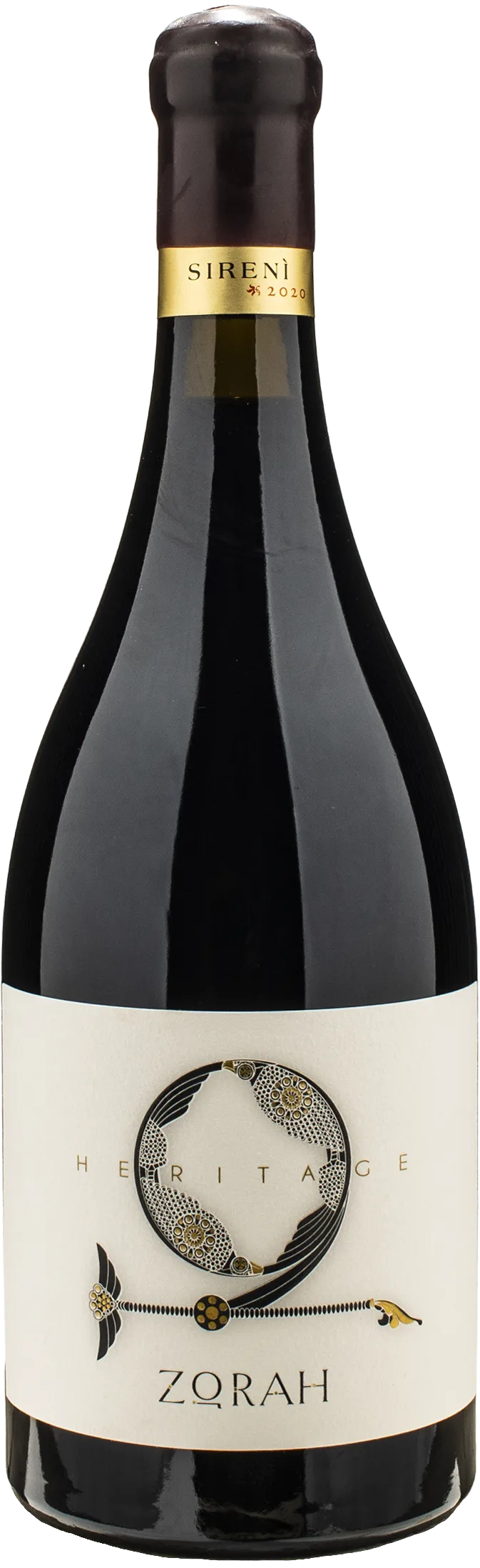
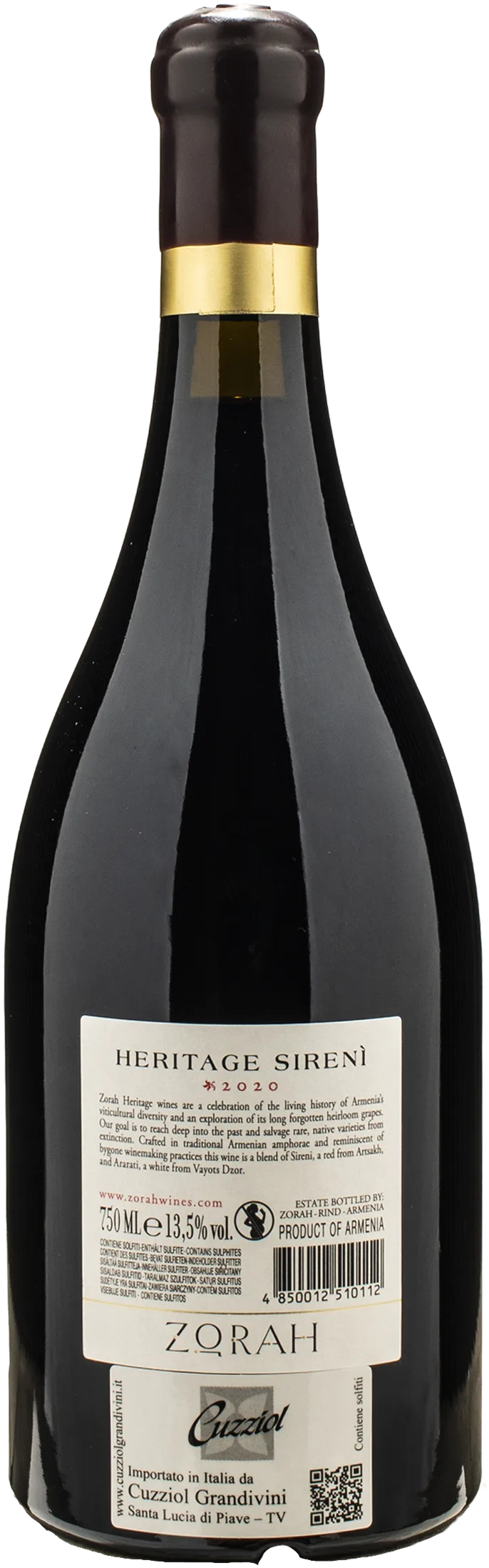
Description
What kind of wine it is
Zorah Heritage Sireni is an Armenian red wine created from a blend of Sireni and Ararati. In the glass, it appears full-bodied and lively, with a complex aromatic profile ranging from ripe black fruit to sweet spices, enriched by delicate toasted notes. On the palate, it reveals robust tannins and a vibrant acidity reminiscent of pomegranate, accompanied by earthy hints of liquorice. This structure ensures an elegant tension and excellent ageing potential.
Where it comes from
This wine originates from the mountainous regions of Vayots Dzor and Artsakh, on clay-loam sedimentary soils. The Sireni vines are grown at four hundred metres above sea level without irrigation, while the Ararati rows are situated at one thousand four hundred metres altitude. The mountain vineyards guarantee low yields and a pronounced expressive identity. The Zorah winery operates near the renowned Areni-1 cave, guardian of a millennia-old winemaking heritage.
How it is produced
Vinification follows ancestral techniques rooted in the region. The grapes ferment separately in traditional Armenian karasses, typical buried clay amphorae, with the white grape component left in contact with the skins. Maturation lasts for about two years between amphorae and raw cement vats without synthetic coatings, preserving the purity of the fruit. The wine is unfiltered and rests for a further year to harmonise every gustatory component.
History and Curiosities
Zorah Heritage Sireni is produced near the Areni-1 cave, celebrating Armenia's ancient winemaking tradition. This red wine combines the native Sireni and Ararati grape varieties through fermentation in buried clay amphorae. Ageing in traditional karas and raw concrete reveals a full-bodied structure with robust tannins, enhanced by notes of pomegranate, liquorice and dark fruits. An elegant tension that pairs perfectly with game and flavourful meats.
Tasting notes

Perfume

Color

Taste
Serve at:
16 - 18 °C
Longevity:
10 - 15 years
Decanting time:
1 hour

A marvelous idea began to take shape and never one to follow tradition, Zorik changed his mind about buying a vineyard in Tuscany in favour of returning to his ancestral roots in Armenia. He decided to restore traditional vinicultural values with a modern approach and create truly profound wines which would speak of this magical place. It took a dream, time, determination and a team of motivated professionals to make it all come together and after almost ten years of intense work the winery produced its first vintage.
With boundless enthusiasm and unshakable faith Zorik continues to step beyond the dream and take the adventure further. His powerful vision, of creating unique wines of undiluted quality, has become an integral part of the wineries philosophy and with each new chapter of its story Zorah wishes to expose Armenia’s potential in creating wines which rival the best in the world. Read more


| Name | Zorah Heritage Sireni 2020 |
|---|---|
| Type | Red green still |
| Denomination | N/A |
| Vintage | 2020 |
| Size | 0,75 l |
| Alcohol content | 13.5% by volume |
| Grape varieties | Arati, Sireni |
| Country | Armenia |
| Region | Armenia |
| Vendor | Zorah |
| Story | History and Curiosities Zorah Heritage Sireni is produced near the Areni cave, celebrating Armenia's ancient winemaking tradition. This red wine combines the native Sireni and Ararati grape varieties through fermentation in buried clay amphorae. Ageing in traditional karas and raw concrete reveals a full-bodied structure with robust tannins, enhanced by notes of pomegranate, liquorice and dark fruits. An elegant tension that pairs perfectly with game and flavourful meats. |
| Origin | Vayots Dzor and Artsakh, Armenia |
| Climate | Mild climate |
| Soil composition | Clay sedimentary soils |
| Production technique | Fermentation in Armenian karasses (clay amphorae) buried three quarters underground; ageing in clay amphorae and raw concrete vats without epoxy coating; unfiltered |
| Wine making | Both grape varieties are fermented separately in traditional Armenian karasses, which are three-quarters buried in the ground; the Ararati ferments in contact with the skins. Blending and ageing take place for about two years in a mix of clay amphorae (karasses) and raw concrete vats without epoxy coating, followed by a further 12 months in bottle; the wine is unfiltered. |
| Aging | Assembled and aged for about two years in a mix of clay amphorae (karasses) and raw cement vats without epoxy coating; a further 12 months in bottle. |
| Allergens | Contains sulphites |