


Casa Sartori 1898
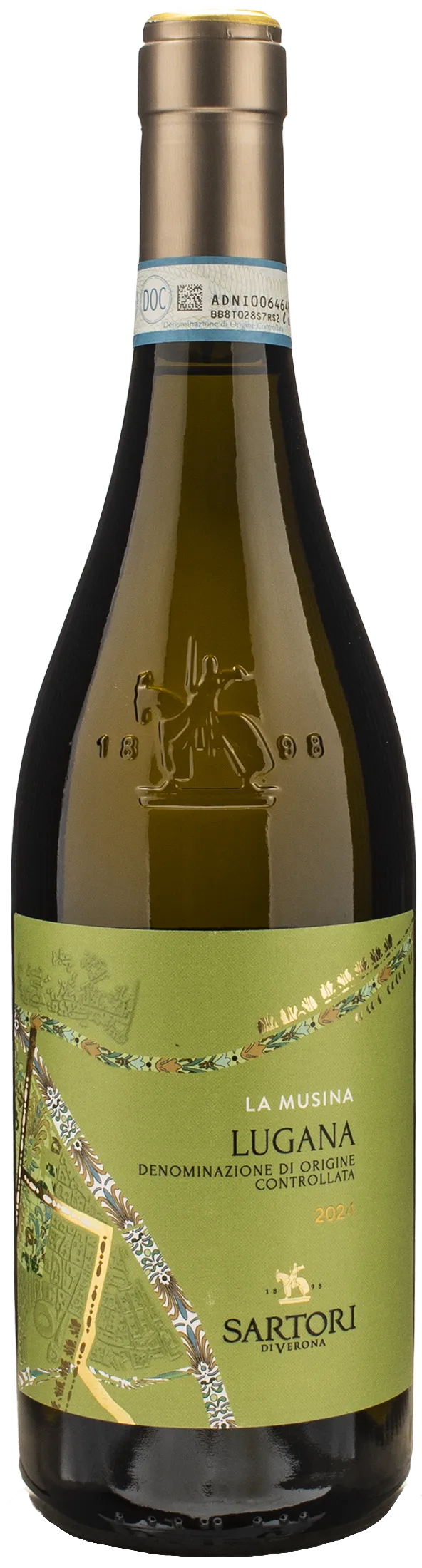
Lugana La Musina 2024
| Denomination | DOC Lugana |
|---|---|
| Size | 0,75 l |
| Alcohol content | 13.0% by volume |
| Area | Veneto (Italy) |
| Grape varieties | 100% Trebbiano |
| Aging | The wine then matures partly in steel, partly in cement and a small percentage in small oak barrels. |
Description
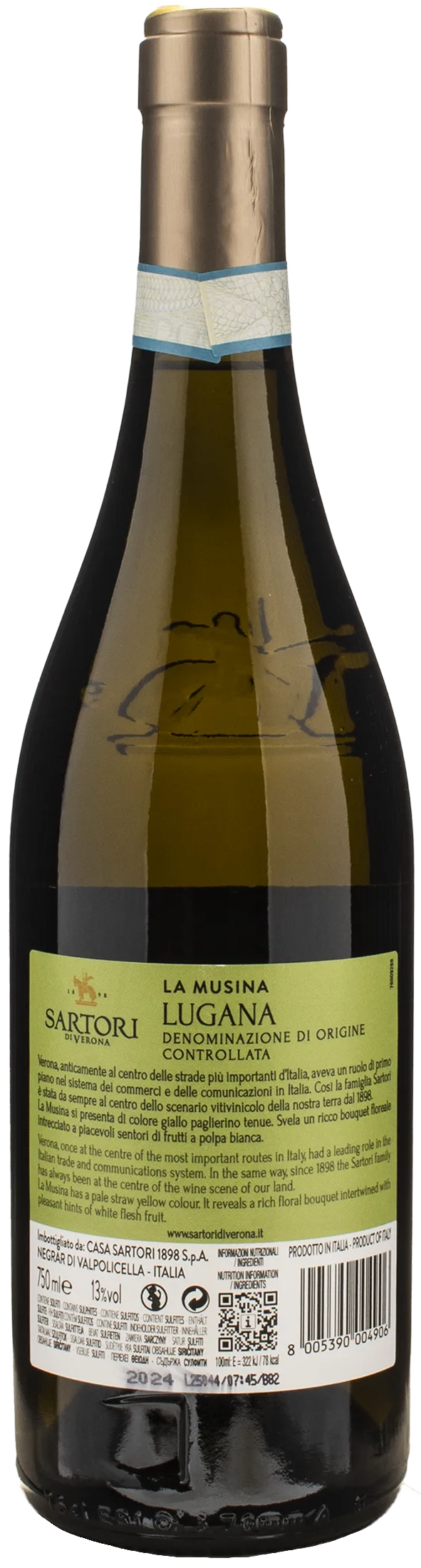
Still white Lugana, 13% ABV, produced by Casa Sartori 1898. 100% Trebbiano blend. 0.75L bottle, 2024 vintage. A Lugana grown on the shores of Lake Garda, in vineyards located in the heart of the Lugana zone. The calcareous-clayey soil of morainic origin gives the wine a distinctive minerality. The wine then ages partly in stainless steel, partly in cement, and a small percentage in small oak barrels. The nose opens with a surprising bouquet featuring notes of white-fleshed fruit and wildflowers. Straw yellow in color with light greenish reflections. On the palate, it is fresh, dry, elegant, pleasantly harmonious, and balanced.
Tasting notes

Perfume

Color

Taste
Serve at:
10 - 12 °C
Longevity:
03 - 05 years
- Start up year: 1898
- Oenologist: Marco Dell'Eva, Franco Bernabei consulente
- Bottles produced: 15.000.000
- Hectares: 2.040
The heir, endowed with a superfine palate, like a tailor, was able to 'sew' with extreme care the wines to propose to his clientele, which grew year after year.
After the Second World War, numbers also soared. Then, in 1952, when Regolo passed away, his two sons took over the business, opening it up to the foreign market.
The 1990s marked a turning point in the management of Casa Vinicola Sartori, which saw the entry of the Sartori family into the Board of Directors of the Colognola ai Colli winery to implement an ambitious growth project in the production and distribution of wines at a worldwide level. A goal successfully achieved. Read more


| Name | Sartori Lugana La Musina 2024 |
|---|---|
| Type | White still |
| Denomination | Lugana DOC |
| Vintage | 2024 |
| Size | 0,75 l |
| Alcohol content | 13.0% by volume |
| Grape varieties | 100% Trebbiano |
| Country | Italy |
| Region | Veneto |
| Vendor | Casa Sartori 1898 |
| Origin | Vineyards in the centre of the Lugana area on the south-west shore of Lake Garda |
| Soil composition | Calcareous, clayey of morainic origin. |
| Wine making | Careful selection of the best grapes is followed by soft crushing and subsequent fermentation of the must at a controlled temperature. |
| Aging | The wine then matures partly in steel, partly in cement and a small percentage in small oak barrels. |
| Allergens | Contains sulphites |