


San Polo Azienda Agricola (Allegrini)
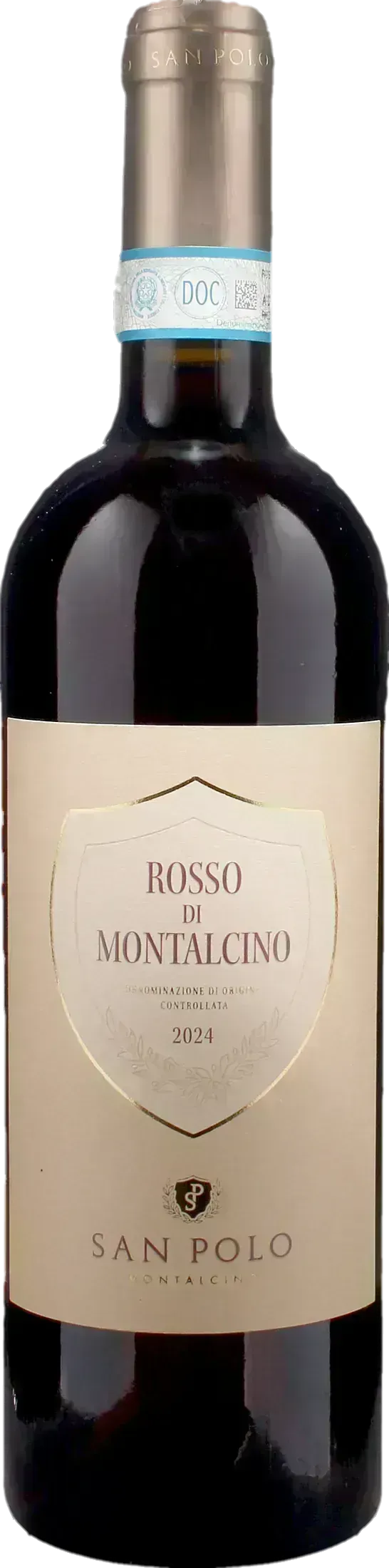
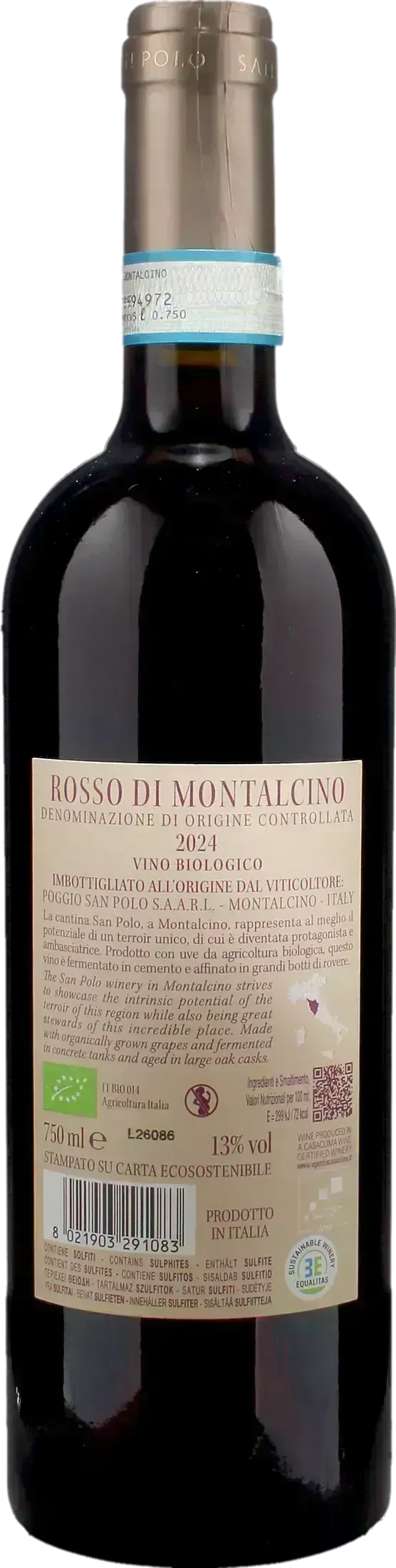
Rosso di Montalcino 2024
| Denomination | DOC Rosso di Montalcino |
|---|---|
| Size | 0,75 l |
| Alcohol content | 13.0% by volume |
| Area | Tuscany (Italy) |
| Grape varieties | 100% Sangiovese |
| Aging | 12 months in large 20 and 40 hl casks with a light toast, followed by ageing in the bottle before release. |
- Denomination and variety: Organic red wine DOC produced from Sangiovese grapes
- Aromas: hints of small red fruits, blackberry, black cherry and a light note of vanilla
- Flavour and structure: dry, warm and smooth taste, medium body and well-balanced tannins
- Vinification: fermentation in concrete and ageing for 12 months in large barrels
- Origin and soil: vineyards at 450m on calcareous-clay soils in Montalcino
Description
Type of wine
San Polo Rosso di Montalcino is a still organic red wine produced by the San Polo winery. This celebrated expression of Rosso di Montalcino is made exclusively from Sangiovese grapes grown in Tuscany. In the glass, it presents a clear ruby colour, revealing an aromatic profile focused on hints of small red fruits, black cherries, wild herbs and delicate notes of vanilla. On the palate, it is a warm and soft wine, medium-bodied, characterised by finely balanced tannins and a fragrant finish with good persistence.
Origin
This wine originates among the Tuscan hills of Montalcino, from vineyards situated at an altitude of approximately four hundred and fifty metres above sea level. The vines, trained using the spurred cordon system, benefit from optimal south and south-east exposure, ensuring excellent ripening of the grapes. The roots grow deep into calcareous and clay soils, particularly rich in calcium, which give the wine its marked freshness and clear aromatic definition. The estate operates under a rigorous organic production regime and is recognised for its deep commitment to environmental sustainability.
How it is produced
The production process begins in the final days of September with a manual harvest, followed by a careful selection of the grapes to ensure maximum fruit integrity. Subsequently, soft pressing is carried out before fermentation in temperature-controlled concrete vats. The cycle continues with malolactic fermentation and a period of ageing in large, lightly toasted barrels, which lasts for twelve months, guiding the wine towards a rounder flavour profile. The maturation process concludes with further refinement before commercial distribution.
History and trivia
Founded in Montalcino in 1990, the San Polo wine estate (Allegrini family) stands out for its sustainability. It is the first Tuscan winery with CasaClima Wine certification for its organic production. Led by oenologist Riccardo Fratton, the 16 hectares of vineyards at 450 metres offer an excellent expression of the terroir, awarded high scores by guides such as Decanter and Robert Parker.
Awards
-
2024
 91
/100
Wine spectator is the most influential wine guide on the internet.
Tasting notes

Perfume

Color

Taste
Serve at:
14 -16 °C
Longevity:
05 - 10 years
Decanting time:
1 hour
- Start up year: 1990
- Oenologist: Riccardo Fratton
- Bottles produced: 160.000
- Hectares: 16
Our goal was to transform the San Polo Estate into a premium quality winery. The year 2007 marked the beginning of a new era for San Polo: a prestigious, historic appellation was accompanied by an entrepreneurial approach and openness to multiple business opportunities. Subsequently, the importance of an eco-friendly approach was understood and developed, leading to a steadfast commitment to sustainability, which is now the hallmark of the Estate and pervades and informs all its practices and operations.
San Polo is situated in Podernovi, on the southern slope of Montalcino. The valley is called Sant’ Antimo and there too, almost at touching distance, stands Mount Amiata. The locals call this area a ‘Mezzopane’, meaning that to admire the beautiful view is to ‘take one’s fill’, like food for the soul. The windows, knolls and vantage points of the Estate’s two farmhouses look out over the breath-taking Tuscan landscape of the Old Masters. And finally, San Polo’s modern and innovative wine-making cellar, so cutting-edge as to have become synonymous with the Company itself.
First winery in Tuscany to be certified CasaClima Wine. Read more


| Name | San Polo Rosso di Montalcino 2024 |
|---|---|
| Type | Red organic still |
| Denomination | Rosso di Montalcino DOC |
| Vintage | 2024 |
| Size | 0,75 l |
| Alcohol content | 13.0% by volume |
| Grape varieties | 100% Sangiovese |
| Country | Italy |
| Region | Tuscany |
| Vendor | San Polo Azienda Agricola (Allegrini) |
| Story | History and trivia Founded in Montalcino in 1990, the San Polo wine estate (Allegrini family) stands out for its sustainability. It is the first Tuscan winery with CasaClima Wine certification for its organic production. Led by oenologist Riccardo Fratton, the 16 hectares of vineyards at 450 metres offer an excellent expression of the terroir, awarded high scores by guides such as Decanter and Robert Parker. |
| Origin | Montalcino, Tuscany |
| Soil composition | Rich in calcium and clays |
| Cultivation system | Spurred cordon |
| Plants per hectare | 7,000 |
| Yield per hectare | 49 hectolitres per hectare |
| Harvest | Last days of September |
| Fermentation temperature | 28 to 30 °C |
| Fermentation | 14 6 days |
| Production technique | Gentle pressing of the grapes with berry selection; fermentation in temperature-controlled concrete vats; malolactic fermentation in large 20 and 40 hl casks; ageing for 12 months in lightly toasted large casks, followed by ageing in the bottle. |
| Wine making | Soft pressing of the grapes preceded by a careful selection of the berries; fermentation in temperature-controlled concrete tanks; malolactic fermentation in large 20 and 40 hl casks; ageing for 12 months in large, lightly toasted casks, followed by bottle ageing before commercialisation. |
| Aging | 12 months in large 20 and 40 hl casks with a light toast, followed by ageing in the bottle before release. |
| Total acidity | 5.44 gr/L |
| PH | 3.57 |
| Residual sugar | 1.3 gr/L |
| Dry extract | 30.5 gr/L |
| Allergens | Contains sulphites |