

Noelia Ricci
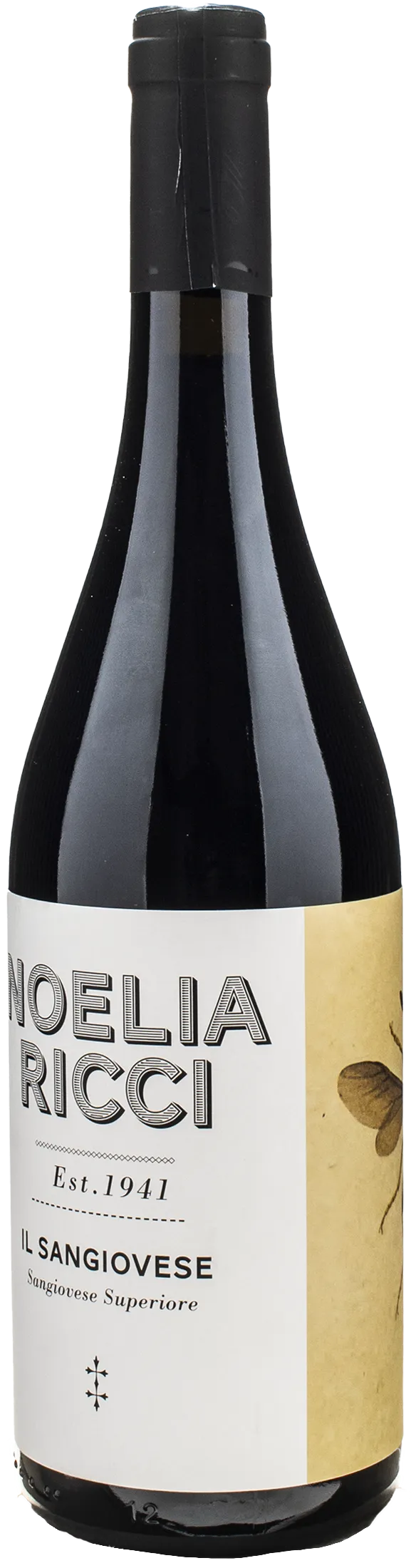
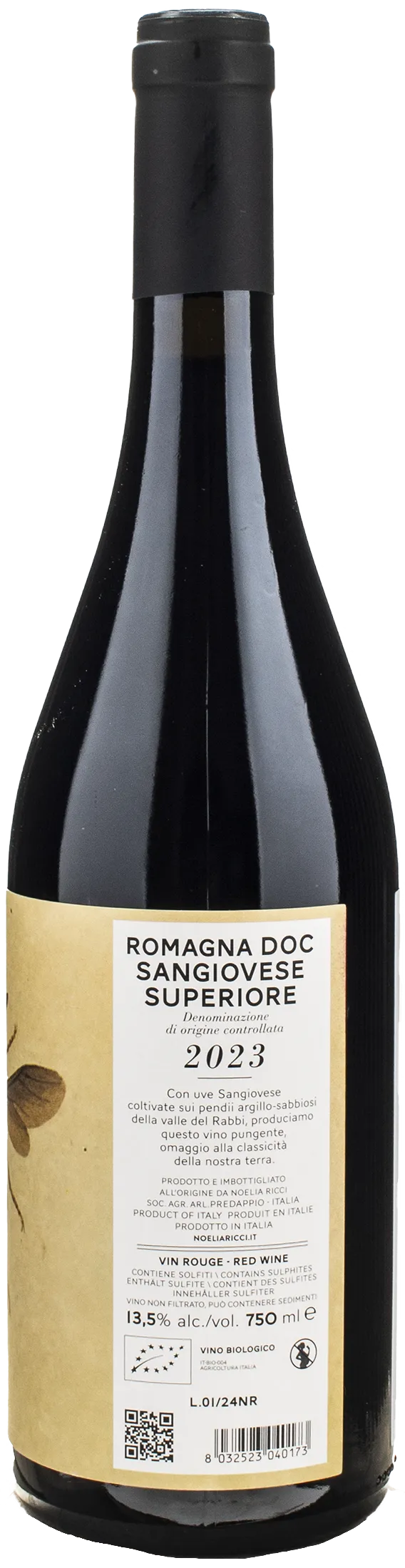
Il Sangiovese Romagna Sangiovese Superiore 2023
| Denomination | DOC Sangiovese di Romagna |
|---|---|
| Size | 0,75 l |
| Alcohol content | 13.5% by volume |
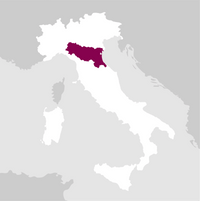
| Area | Emilia-Romagna (Italy) |
| Grape varieties | 100% Sangiovese |
| Aging | 70% steel and 30% cement for 8 months and a minimum of 4 months in bottle. |
| Year | 2023 |
| Biologic | Sì |
| Product name | Il Sangiovese Romagna Sangiovese Superiore 2023 |
| Color | Ruby red tending to garnet. |
| Perfume | Marked nose of ripe fruit. Earthy and vinous hints can be perceived. |
| Taste | Rich and creamy. Good softness and slightly accentuated tannin. Very fresh and dry finish. |
| History | THE SANGIOVESE is distinguished by the image of a wasp, the insect that more than any other inhabits the vineyard and protects its biodiversity. A vintage wine, fast and pungent, with the thirst-quenching, carefree drinking of yesteryear. |
| Pairings | Piadina, raw squacquerone cheese, tagliatelle with meat sauce, fish soup with tomato. Devilish with an aperitif in the evening: always imposes a second glass. |
| Region | Emilia-Romagna |
| Country | Italy |
Description
Traces of the use of Sangiovese vines in Romagna are lost in ancient times, but the first written mention of the existence of Sangiovese wine dates back to an ancient notarial deed from 1672, found in Faenza, Emilia Romagna, in which a woman leased a vineyard to the town priest: three rows of Sangiovese. It is therefore a grape variety that has long been cultivated in Romagna, and which was recognized as a Controlled Designation of Origin in 1967. The Sangiovese production area includes 55 municipalities in the provinces of Bologna, Forlì-Cesena, Ravenna, and Rimini; these areas are united by the presence of clayey soils and have high percentages of magnesium and tuff. For a wine to be called Romagna Sangiovese, it must be made from at least 85% Sangiovese di Romagna grapes grown in this area. The remaining 15% can be made from other red grape varieties from the Emilia-Romagna region. The Noelia Ricci winery has been producing Sangiovese on the family property in the Valle dei Rabbi since the 1970s.
Awards
-
2023
 4
4Italian Sommelier Foundation (FIS) guide This has been one of the most prestigious wine guides in Italy for over 10 years.
-
2023
 3
3One of the most prestigious wine guides in Italy.
-
2023
 3
3Italian Sommelier Association (AIS) guide
Details

Perfume

Color

Taste
Serve at:
16 - 18 °C.
Longevity:
10 - 15 years
Decanting time:
1 hour

Pairings
- Start up year: 2013
- Oenologist: Paolo Salvi
- Bottles produced: 58.000
- Hectares: 9
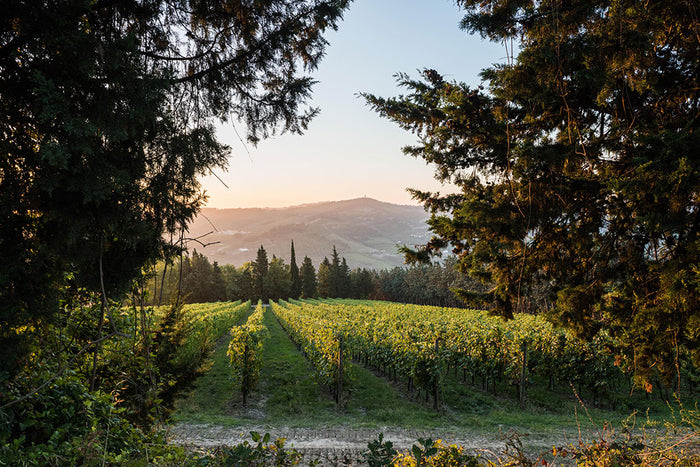
30 of these are cultivated with vineyards and are located between 80 and 250 metres above sea level, on a typically Predappiese soil, which is the result of the decay of ancient sandstones and calcareous marls rich in mineral salts and sulphur.
Pandolfa is also a place of historical importance in the territory, where the valley is dominated by an 18th century villa, also known as "Villa degli spiriti" and "Casa dalle 100 finestre".
The name Pandolfa seems to derive directly from Sigismondo Pandolfo Malatesta, also known as the "Wolf of Rimini", who would have stayed in these places for a long time before plundering the Castle of Fiumana in 1436.
From 1626 to 1941, the owners of the Estate were the Marquises Albicini.
In 1941 the property passed to Commendator Giuseppe Ricci, an entrepreneur from Forlì. In the years of the Second World War, the history of Pandolfa changed its mark. It was occupied by the Germans and then attacked by Polish troops, while many displaced people found refuge in its cellars. Once peace was restored, in the 50s, Giuseppe Ricci began the renovation of the Estate and also began to rethink agricultural production, he bought two adjacent farms and planted vines of Sangiovese, Trebbiano and Albana. Pandolfa is still owned by Ricci's granddaughter, Paola Piscopo, who has used all her enthusiasm to give the Estate back an important role in the territory.
Today it is her son, Marco Cirese - the fourth generation - who has taken over the ranks of this history, with the intention of making the winery a place of excellence, linking the family history with the territory, in a constant dialogue with the traditions of these places and the native grape varieties. Read more

| Name | Noelia Ricci Il Sangiovese Romagna Sangiovese Superiore 2023 |
|---|---|
| Type | Red organic still |
| Denomination | Sangiovese di Romagna DOC |
| Vintage | 2023 |
| Size | 0,75 l |
| Alcohol content | 13.5% by volume |
| Grape varieties | 100% Sangiovese |
| Country | Italy |
| Region | Emilia-Romagna |
| Vendor | Noelia Ricci |
| Story | THE SANGIOVESE is distinguished by the image of a wasp, the insect that more than any other inhabits the vineyard and protects its biodiversity. A vintage wine, fast and pungent, with the thirst-quenching, carefree drinking of yesteryear. |
| Origin | San Cristoforo - Predappio, Forlì |
| Climate | Altitude: 250-300 m. a.s.l. |
| Soil composition | Ochre-coloured clays and calcareous marls. |
| Plants per hectare | 4500 |
| Yield per hectare | 6700 kg. |
| Harvest | Second ten days of September, hand-picked, in 15 kg crates. |
| Wine making | The Sangiovese grapes of the different clones are vinified in racked tanks. Spontaneous fermentation and maceration in temperature-controlled steel vats. Contact of the wine with the skins lasts an average of 18 days; malolactic fermentation follows, no clarification or filtration. |
| Aging | 70% steel and 30% cement for 8 months and a minimum of 4 months in bottle. |
| Allergens | Contains sulphites |