


La Stoppa
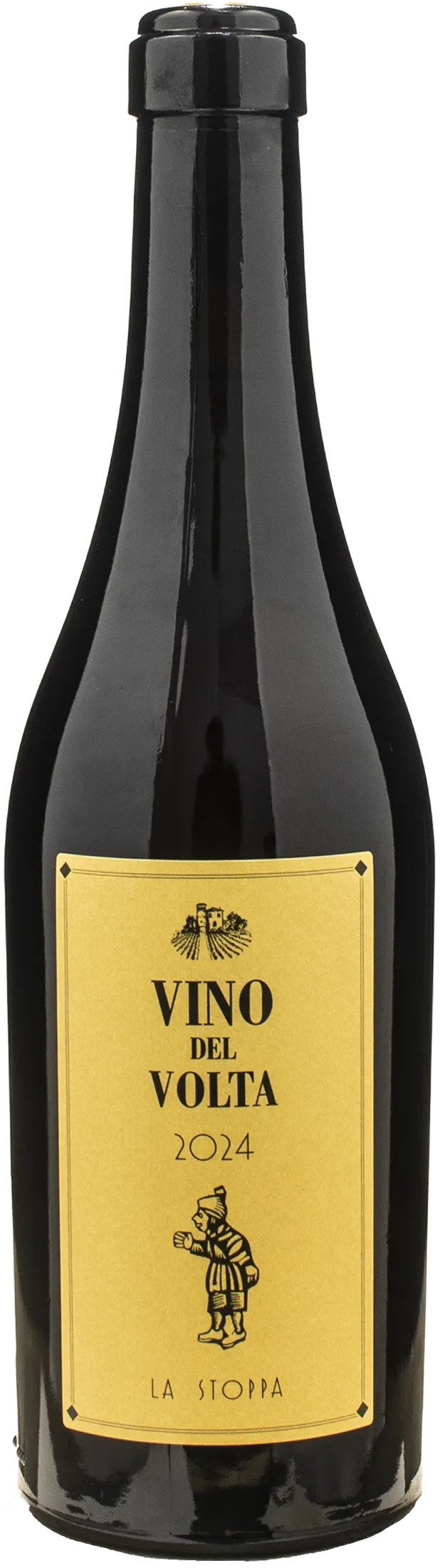
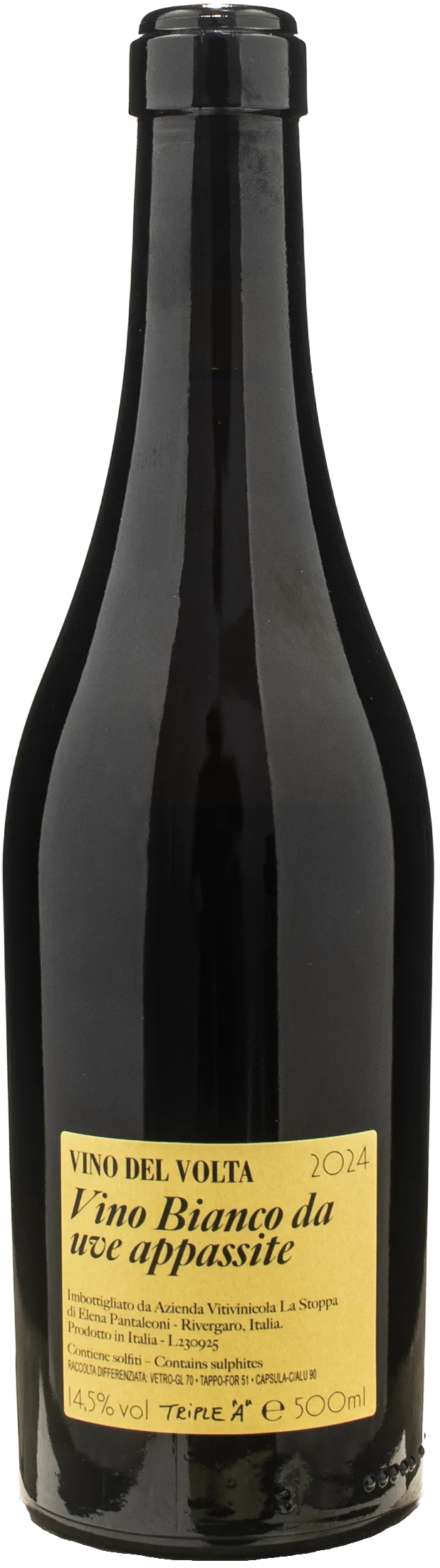
Vino del Volta 0.5L 2024
| Denomination | VdT |
|---|---|
| Size | 0,50 l |
| Alcohol content | 14.5% by volume |
| Area | Emilia-Romagna (Italy) |
| Grape varieties | 100% Malvasia di Candia |
| Aging | Aged in used French oak barriques and in bottle for the necessary period. |
- Type and grape variety: Sweet white dessert wine made from Malvasia di Candia Aromatica
- Origin and strength: Emilia-Romagna; 0.50 l bottle, 14.5% vol, 2024 harvest
- Processing: Grapes left to dry in the sun, 20 days maceration, spontaneous fermentation
- Ageing: Matured in used French oak barriques and subsequently rested in bottle
- Profile and pairings: Notes of apricot, figs and raisins; suitable for mature cheeses
Description
What kind of wine is it
Vino del Volta is a sweet white passito produced in Emilia-Romagna by La Stoppa, made from sun-dried Malvasia di Candia Aromatica grapes. In the glass, it displays a yellow hue enriched with brilliant golden highlights. The bouquet releases warm and enveloping aromas of apricot, then evolves towards notes of dried fruit such as figs and raisins. On the palate, it confirms a consistent character, offering a structured taste that envelops with natural sweetness and a balanced, clean flavour profile.
Where does it come from
It originates in Ancarano di Rivergaro, in Emilia-Romagna, where the Malvasia di Candia Aromatica vines grow on silty-clay soils. The vineyards follow the strict principles of organic farming, with spontaneous grassing and no synthetic fertilisers or pesticides. This terroir allows the grapes to reach perfect ripeness before drying, preserving their aromatic intensity and ensuring healthy fruit capable of expressing the full richness of the region.
How is it produced
Production begins with the sun-drying of the grape bunches, which are then gently pressed using a vertical hydraulic system. The must undergoes spontaneous fermentation with indigenous yeasts and macerates on the skins for about twenty days in steel and cement vats to maximise extraction. Ageing takes place in used French oak barrels, giving the wine an elegant structural breadth and an enveloping sip that finishes with a balanced and persistent aftertaste.
History and Curiosities
The Vino del Volta from La Stoppa pays tribute to the rural tradition of Emilia-Romagna, taking its name from the sharecropper who cared for the historic vineyard for many years. This fine dessert wine is produced in Ancarano di Rivergaro from Malvasia di Candia Aromatica grapes expertly dried in the sun. The vines, around twenty-five years old, grow on silty-clay soils using organic farming methods, without pesticides or herbicides. A limited production of about 5,000 bottles encapsulates the authentic and warm expressiveness of this fascinating region.
Tasting notes
Perfume

Color

Taste
Serve at:
10 - 12 °C
Longevity:
10 - 15 years
- Start up year: 1973
- Oenologist: Giulio Armani
- Bottles produced: 160.000
- Hectares: 30
In 1973 La Stoppa was bought by the Pantaleoni family, and from the mid-nineties, Elena Pantaleoni leads the company. Elena, flanked by Giulio Armani, focused the work in the vineyards, managed accordingly to the organic method certified by Suolo and Salute. The naturally low yields, due to the average age of the vines and the poor soil, and the intrinsic quality of the grapes make it possible to obtain very characterized wines, born in the vineyard and transformed in the cellar through a minimalist approach. Read more


| Name | La Stoppa Vino del Volta 0.5L 2024 |
|---|---|
| Type | White green dessert wine dessert wine aromatic |
| Denomination | VdT |
| Vintage | 2024 |
| Size | 0,50 l |
| Alcohol content | 14.5% by volume |
| Grape varieties | 100% Malvasia di Candia |
| Country | Italy |
| Region | Emilia-Romagna |
| Vendor | La Stoppa |
| Story | History and Curiosities The Vino del Volta from La Stoppa pays tribute to the rural tradition of Emilia-Romagna, taking its name from the sharecropper who cared for the historic vineyard for many years. This fine dessert wine is produced in Ancarano di Rivergaro from Malvasia di Candia Aromatica grapes expertly dried in the sun. The vines, around twenty-five years old, grow on silty-clay soils using organic farming methods, without pesticides or herbicides. A limited production of about 5,000 bottles encapsulates the authentic and warm expressiveness of this fascinating region. |
| Origin | Loc. Ancarano di Rivergaro (PC) |
| Soil composition | Silty clay |
| Cultivation system | Single Guyot and GDC |
| Plants per hectare | 6000 |
| Production technique | Organic farming (natural grassing, no fertilisation, no herbicides or pesticides); pressing of sun-dried grapes with a vertical hydraulic press; maceration on the skins for about 20 days in steel and/or concrete tanks; spontaneous fermentation with indigenous yeasts; ageing in used French oak barriques and in bottle |
| Wine making | Pressing of sun-dried grapes with a vertical hydraulic press; maceration on the skins for about 20 days in steel and/or concrete tanks; spontaneous fermentation with indigenous yeasts; ageing in used French oak barriques and in bottle for the necessary period. |
| Aging | Aged in used French oak barriques and in bottle for the necessary period. |
| Year production | 5000 bottles |
| Allergens | Contains sulphites |